
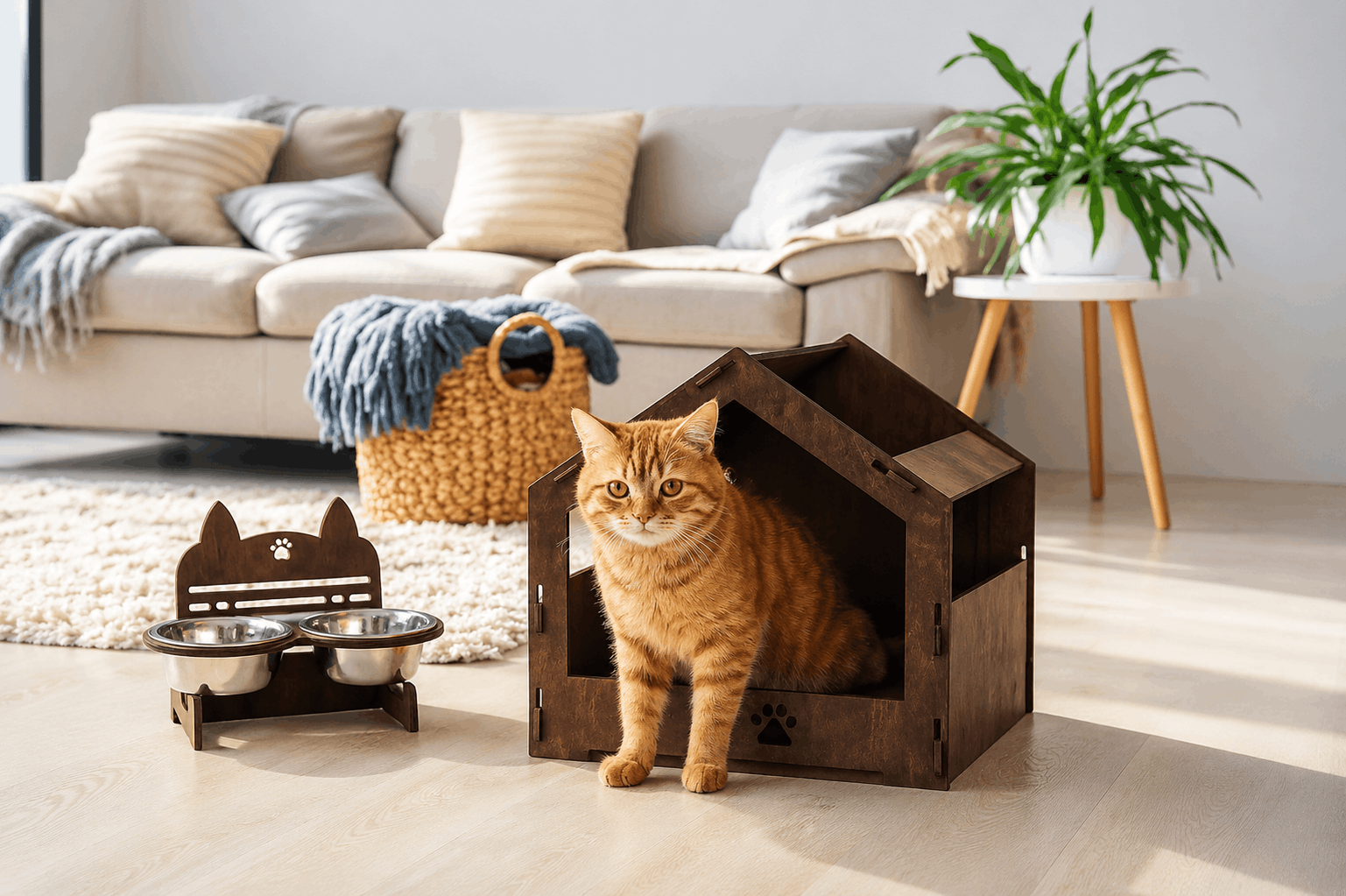
Pet-Friendly Rooms
For many of us, pets are much more than animals that live in our homes. They are loyal companions, playmates for our children, and valued members of the family. Pets are like a family. And if you share your home with a dog, a cat, or a whole crew of furry companions, you already know that your living space needs to work for everyone — not just the humans.
Creating pet-friendly rooms isn’t just about allowing your pet on the couch or putting a food bowl in the corner. It’s about building spaces that actually support your pet’s health, happiness, and natural instincts — while keeping your home looking great and staying easy to manage.
The good news? You don’t have to choose between a stylish home and a pet-friendly one. With the right materials, a bit of smart planning, and a few clever ideas, you can have both. Whether you live in a spacious house or a small apartment, this guide walks you through everything you need to know about pet-friendly home design — room by room, step by step.
This guide explores everything you need to know about pet friendly home design. You’ll discover practical solutions for creating dog-friendly living rooms, cat-friendly home ideas, and family friendly pet spaces that support the needs of every member of your household.
At TerraPawHome, we believe that the best homes are designed with compassion, functionality, and sustainability in mind. Our goal is to help you build an environment where pets feel secure, families feel relaxed, and beautiful living spaces remain easy to maintain.
Table of Contents
- 1. What Are Pet-Friendly Rooms?
- 2. Benefits of Pet-Friendly Room Design
- 3. Essential Principles of Pet-Friendly Home Design
- 4. Pet-Friendly Living Room Ideas
- 5. Designing Dog-Friendly Bedrooms
- 6. Creating Cat-Friendly Spaces
- 7. Indoor Pet Spaces for Exercise and Enrichment
- 8. Pet-Friendly Apartment Living Solutions
- 9. Small Space Pet Living Strategies
- 10. Choosing Pet-Safe Materials and Furniture
- 11. Pet Proof Room Ideas for Everyday Living
- 12. Family-Friendly Pet Spaces for Multi-Pet Homes
- 13. Common Mistakes to Avoid
- 14. Frequently Asked Questions
- 15. Our Commitment to Accurate, Trustworthy Information
- 16. Conclusion
- 17. Research References
What Are Pet-Friendly Rooms?
Pet-friendly rooms are spaces intentionally designed to meet the needs of both pets and people. They provide a safe, comfortable environment where pets can behave naturally while ensuring the home remains functional, attractive, and easy to maintain.
Rather than reacting to problems after they happen, effective pet safe room design anticipates them. A well-planned room reduces everyday challenges such as scratched furniture, slippery floors, or access to harmful household items.
A successful pet-friendly room focuses on five key principles:
1. Promote Safety
Reduce potential hazards by:
• Covering exposed electrical cords
• Keeping cleaning products out of reach
• Removing toxic houseplants
• Securing dangerous objects and chemicals
2. Encourage Natural Behaviors
Support instincts that are essential for your pet’s wellbeing.
Dogs benefit from:
• Appropriate chew toys
• Comfortable resting areas
• Opportunities to stay close to family activities
Cats need spaces to:
• Climb
• Scratch
• Hide
• Observe from elevated areas
3. Improve Durability
Choose materials that can withstand everyday pet life, including:
• Muddy paws
• Pet hair
• Scratching
• Occasional spills
4. Simplify Cleaning
Look for features that make maintenance easier, such as:
• Washable covers
• Stain-resistant fabrics
• Easy-to-clean flooring
• Organized pet storage solutions
5. Support Family Living
The goal is not to separate pets from family spaces but to integrate them thoughtfully so that:
• Children can play safely
• Adults can relax comfortably
• Pets can participate in daily life without causing disruption
Ultimately, pet friendly interior design creates harmony between human lifestyles and animal wellbeing, helping every member of the household feel truly at home.
Benefits for Pets
Investing a little time and thought into pet friendly home design pays off in ways you might not expect. Here’s what both your pets and your family stand to gain.
1: Reduced Stress and Anxiety
Pets thrive in environments that feel predictable and secure.
When they have:
• Familiar resting areas
• Consistent routines
• Safe retreat spaces
they often experience lower stress levels.
This can lead to:
• Better behavior
• Improved sleep quality
• Stronger confidence
2: Increased Safety
A thoughtfully designed home reduces the risk of common household accidents.
Simple changes such as:
• Using non-slip rugs
• Securing cords
• Removing hazardous plants
can significantly improve your pet’s safety.
3: Better Physical Health
The right environment encourages movement and activity.
Features such as:
• Indoor play areas
• Climbing opportunities
• Comfortable bedding
• Supportive flooring
can contribute positively to long-term health.
4: Mental Enrichment
Mental stimulation is just as important as physical exercise.
Interactive environments help reduce boredom and may decrease behaviors such as:
• Excessive barking
• Furniture chewing
• Over-grooming
• Destructive scratching
Benefits for Families
1 Easier Cleaning and Maintenance
Pet-friendly homes are designed to accommodate daily life.
Choosing the right materials can reduce the time spent:
• Vacuuming
• Spot cleaning
• Washing upholstery
• Managing odors
2: Protection for Furniture and Flooring
Preventive measures often save money over time.
Protective solutions such as:
• Sofa covers
• Scratch-resistant flooring
• Washable rugs
help preserve valuable household items.
3: Improved Organization
Dedicated storage areas for pet supplies create a tidier home.
This may include:
• Toy baskets
• Feeding stations
• Grooming supply organizers
• Built-in pet storage
4: Stronger Family Bonds
When pets feel secure and included, family interactions become more positive.
A well-designed home encourages shared experiences and strengthens the connection between pets and their people.
Investing in family friendly pet spaces is ultimately an investment in your family’s overall wellbeing.
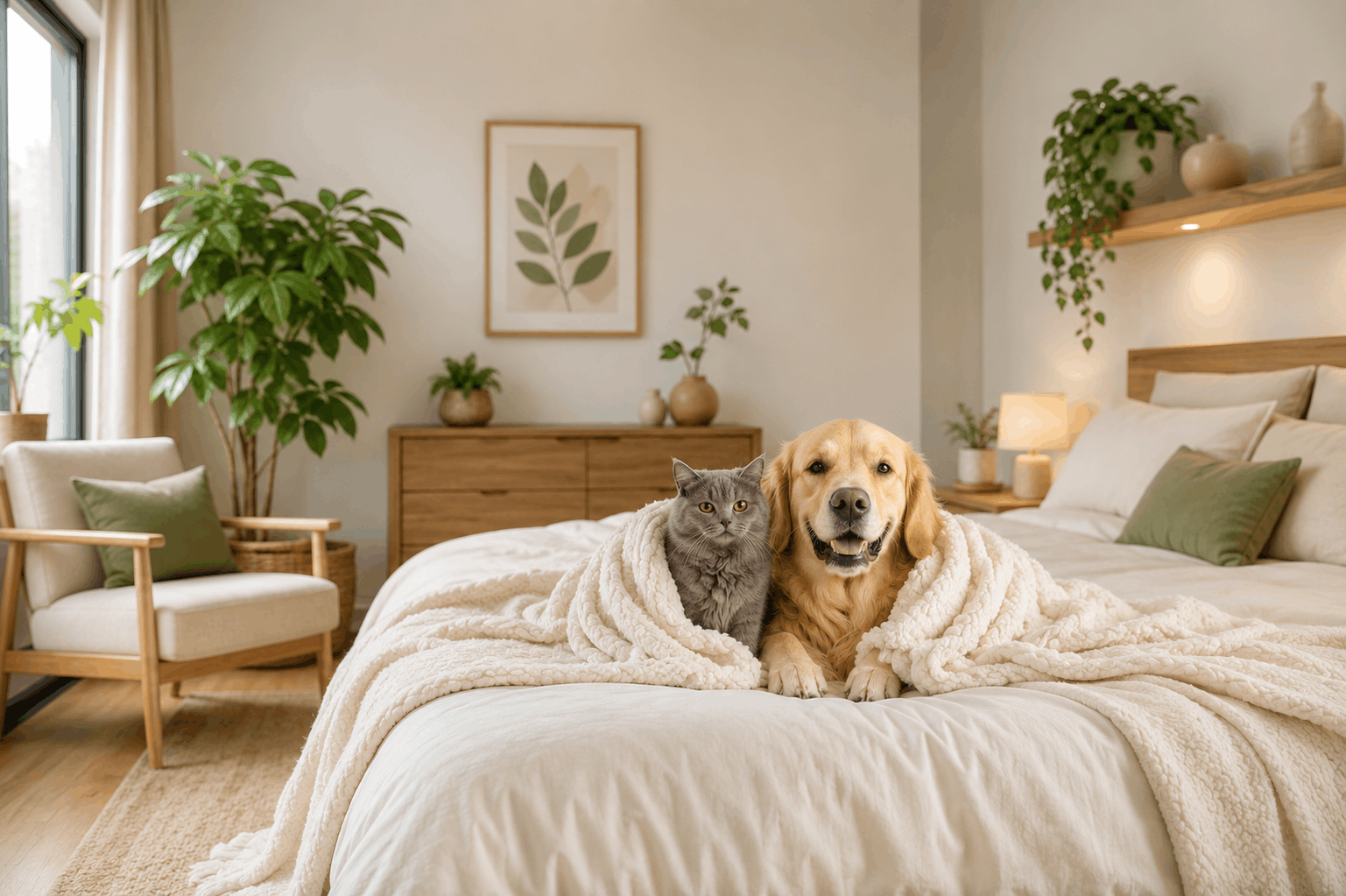
Essential Principles of Pet-Friendly Home Design
Before redesigning any room, it helps to understand the principles behind effective pet friendly home design. These four foundations create safer, more functional spaces for both pets and people.
Safety First
Every room should minimize potential hazards. Walk through your home from your pet’s perspective and identify anything that could cause harm.
Common safety considerations include:
• Removing toxic plants such as lilies, sago palms, and philodendrons
• Covering exposed electrical cords with cord protectors or cable channels
• Storing cleaning products and medications inside secure cabinets
• Choosing furniture with rounded edges to reduce injuries during play
A safe environment allows pets to explore confidently while giving owners greater peace of mind.
Durability Matters
Pets naturally place extra wear on household surfaces. Selecting durable materials from the beginning helps reduce maintenance and prolongs the life of your furnishings.
Look for:
• Scratch-resistant flooring such as luxury vinyl plank, bamboo, or sealed hardwood
• Moisture-resistant surfaces that handle occasional spills and accidents
• Performance fabrics designed to withstand everyday use
Practical materials support long-term success in pet-friendly homes.
Comfort and Accessibility
Pets’ needs evolve throughout their lives, so comfort should remain a priority.
Consider providing:
• Beds suited to your pet’s size and age
• Easy access to food and water stations
• Non-slip rugs for improved stability
• Ramps and orthopedic bedding for senior pets
Small adjustments can significantly improve your pet’s quality of life.
bamboo, or sealed hardwood
• Moisture-resistant surfaces that handle occasional spills and accidents
• Performance fabrics designed to withstand everyday use
Practical materials support long-term success in pet-friendly homes.
Easy Maintenance
A pet-friendly home should also be easy to maintain.
Helpful features include:
• Machine-washable covers
• Stain-resistant materials
• Easy-to-clean flooring
• Organized storage for toys and pet supplies
The easier a room is to clean, the more enjoyable it becomes for the entire family.
Pet-Friendly Living Room Ideas
The living room is often where pets spend the most time. It serves as a gathering place for families, guests, and furry companions alike. Fortunately, creating a dog friendly living room doesn’t mean sacrificing style.
Create a Dedicated Pet Zone
Giving pets a designated area provides comfort and structure.
This space may include:
• A comfortable bed
• A basket for toys
• Access to fresh water
• A favorite blanket
Having a predictable spot helps pets feel secure within shared family spaces.
Choose Durable Furniture
Furniture is a significant investment, so practicality should guide your choices.
Look for:
• Performance fabrics that resist stains and moisture
• Tightly woven upholstery that is less likely to snag
• Removable, washable covers for easier maintenance
These materials hold up better to everyday life with pets.
Protect Existing Furniture
If replacing furniture isn’t an option, simple protective measures can extend its lifespan.
Useful solutions include:
• Sofa covers
• Washable throws
• Furniture protectors
These additions preserve your furnishings without compromising comfort.
Select Pet-Friendly Rugs
Rugs should provide both safety and convenience.
Choose options with:
• Low-pile construction
• Non-slip backing
• Easy-to-clean materials
Avoid thick shag rugs, which tend to trap pet hair and are difficult to maintain.
Keep Pathways Clear
Pets often move quickly during play, making clear walkways essential.
Avoid overcrowding rooms with:
• Fragile decorations
• Unstable furniture
• Tight furniture arrangements
An open layout improves safety and allows everyone to move comfortably throughout the space.
For more inspiration and practical ideas, explore our complete guide to Pet-Friendly Living Rooms.
Pet-Friendly Living Room Ideas
The living room is often where pets spend the most time. It serves as a gathering place for families, guests, and furry companions alike. Fortunately, creating a dog friendly living room doesn’t mean sacrificing style.
Create a Dedicated Pet Zone
Giving pets a designated area provides comfort and structure. This space may include:
• A comfortable bed
• A basket for toys
• Access to fresh water
• A favorite blanket
Having a predictable spot helps pets feel secure within shared family spaces.
Choose Durable Furniture
Furniture is a significant investment, so practicality should guide your choices.
Look for:
• Performance fabrics that resist stains and moisture
• Tightly woven upholstery that is less likely to snag
• Removable, washable covers for easier maintenance
These materials hold up better to everyday life with pets.
Protect Existing Furniture
If replacing furniture isn’t an option, simple protective measures can extend its lifespan.
Useful solutions include:
• Sofa covers
• Washable throws
• Furniture protectors
These additions preserve your furnishings without compromising comfort.
Select Pet-Friendly Rugs
Rugs should provide both safety and convenience.
Choose options with:
• Low-pile construction
• Non-slip backing
• Easy-to-clean materials
Avoid thick shag rugs, which tend to trap pet hair and are difficult to maintain.
Keep Pathways Clear
Pets often move quickly during play, making clear walkways essential.
Avoid overcrowding rooms with:
• Fragile decorations
• Unstable furniture
• Tight furniture arrangements
An open layout improves safety and allows everyone to move comfortably throughout the space.
For more inspiration and practical ideas, explore our complete guide to Pet-Friendly Living Rooms. [Read the Guide]
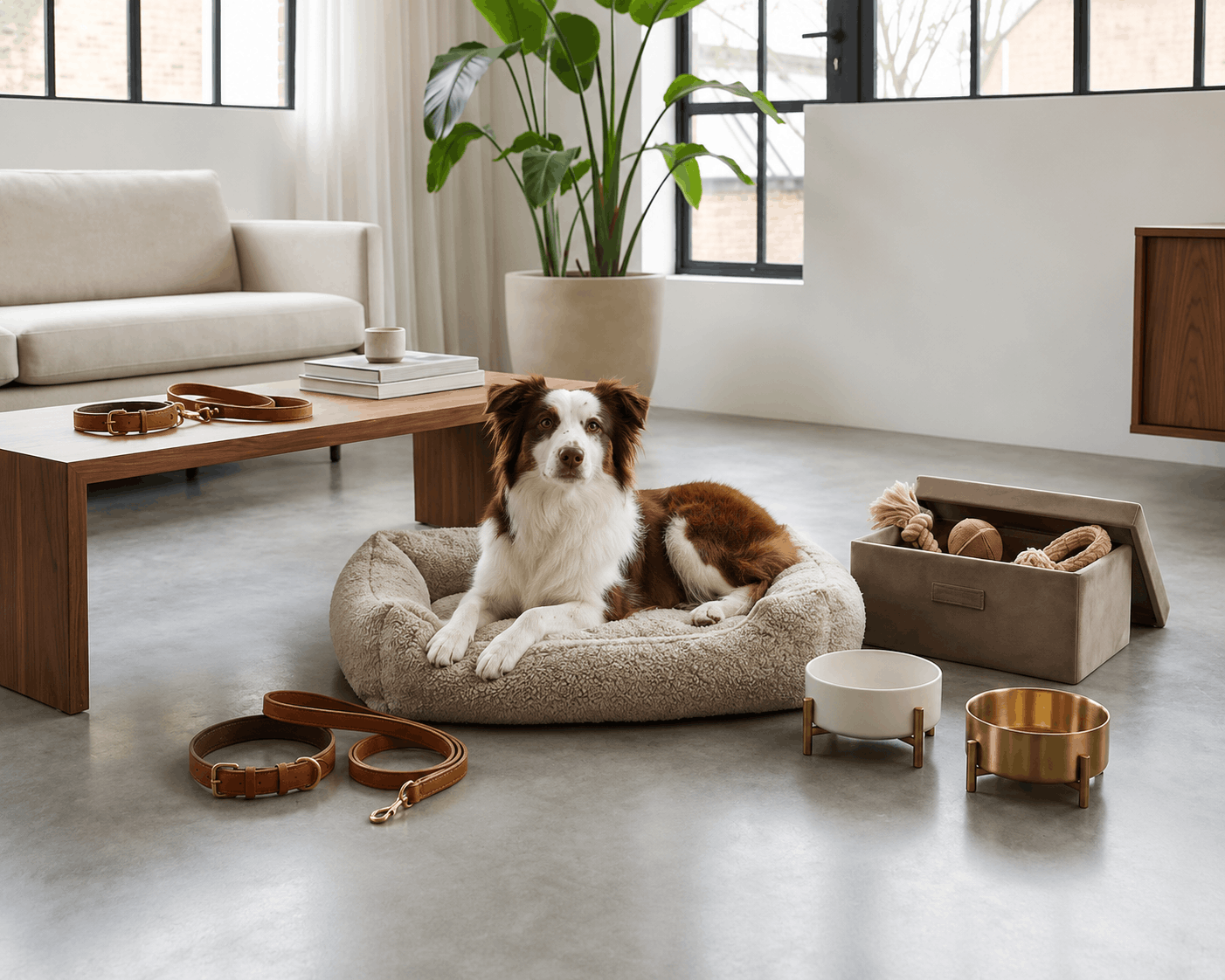
Designing Dog-Friendly Bedrooms
A well-designed bedroom should offer comfort and security for every family member, including your dog. Whether your dog shares your bedroom or has their own sleeping space, thoughtful design can improve rest, reduce anxiety, and support overall wellbeing.
Create a Comfortable Sleeping Area
Choose a bed that suits your dog’s age, size, and needs. Consider:
• Orthopedic beds for senior dogs
• Memory foam mattresses for larger breeds
• Washable covers for easy cleaning
• Elevated cooling beds for thick-coated dogs
Place the bed in a quiet corner where your dog can observe the room while feeling safe and protected.
Organize Dog Essentials
Keeping supplies in one place reduces clutter and simplifies daily routines. Store items such as:
• Leashes and harnesses
• Grooming tools
• Favorite toys
• Training treats
A basket, drawer, or dedicated cabinet can help keep everything organized.
Support Senior Dogs
Older dogs often benefit from small adjustments, including:
• Non-slip rugs for better traction
• Ramps for beds and furniture
• Elevated feeding stations
• Orthopedic bedding
These changes can improve comfort and independence.
Create a Calm Environment
Avoid placing dog beds near televisions, speakers, or noisy household equipment. Soft lighting and quieter surroundings encourage deeper rest and help reduce stress
For more ideas and room-specific inspiration, explore our complete guide to Dog-Friendly Bedrooms. [Read the Guide]
Creating Cat-Friendly Spaces
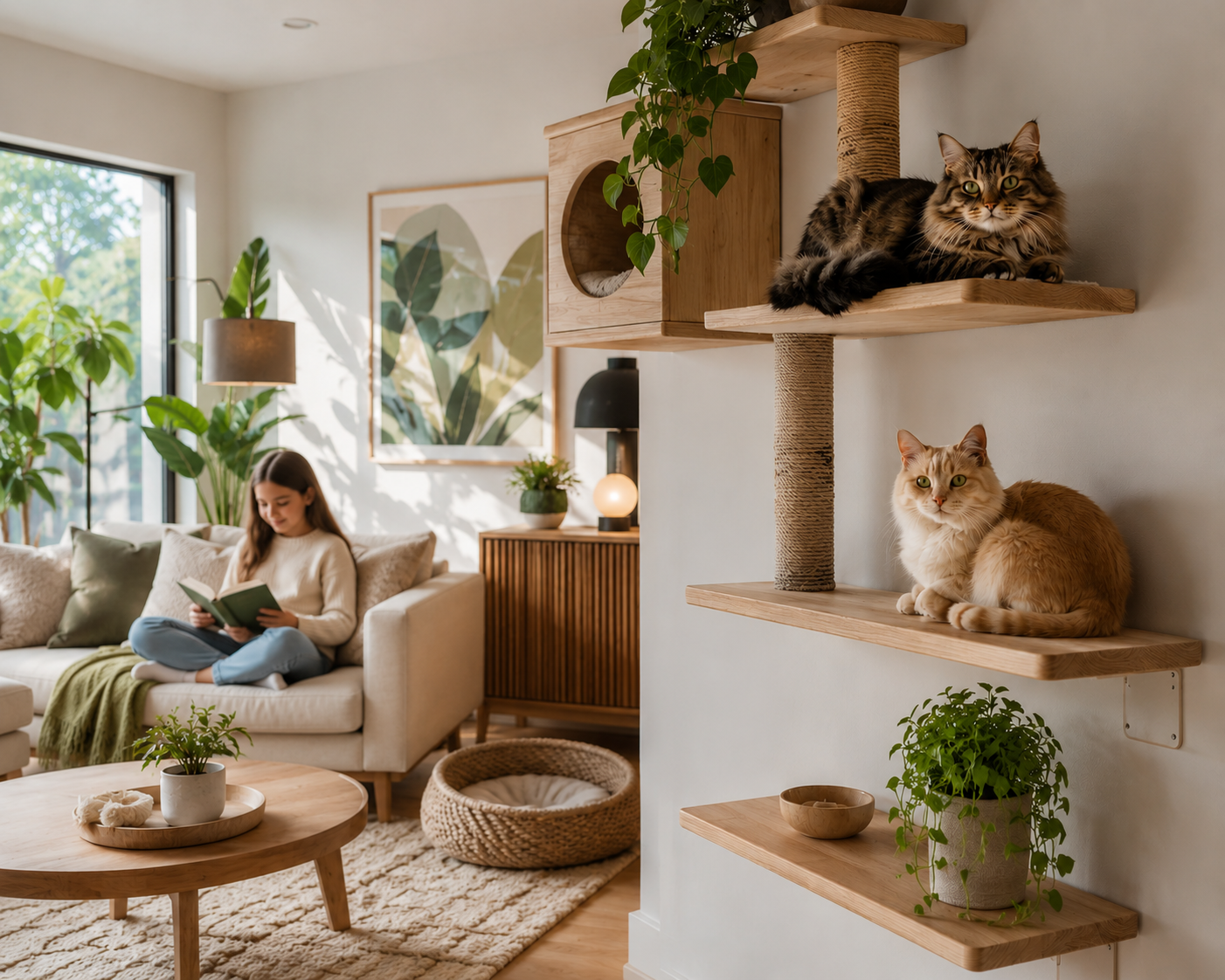
Cats experience their environment differently than dogs. While dogs often focus on floor-level activities, cats naturally seek height, privacy, and observation points. Effective cat friendly home ideas should support these instincts by providing opportunities to climb, scratch, hide, and explore.
Think Vertically
Vertical space is one of the most important elements of feline-friendly design. Cats enjoy observing their surroundings from elevated areas, which helps them feel secure while encouraging exercise.
Consider adding:
• Floating wall shelves
• Window perches
• Cat trees
• Multi-level climbing structures
Create Safe Hideaways
Cats also need quiet places where they can retreat and relax.
Suitable options include:
• Covered cat beds
• Enclosed furniture spaces
• Decorative pet caves
• Sheltered shelves
Private spaces become especially valuable in busy or multi-pet households.
Provide Scratching Opportunities
Scratching is a natural and necessary behavior that helps cats stretch, maintain claw health, and relieve stress.
Provide appropriate outlets such as:
• Sisal scratching posts
• Wall-mounted scratching panels
• Scratching ramps
• Multi-functional cat trees
Choose the Right Litter Box Location
Litter boxes should be:
• Easy to access
• Located in quiet areas
• Well ventilated
• Positioned away from food and water stations
A thoughtfully designed feline environment supports both physical and emotional wellbeing while helping prevent unwanted behaviors.
For more ideas and room-specific inspiration, explore our complete guide to Cat-Friendly Spaces. [Read the Guide]
Indoor Pet Spaces for Exercise and Enrichment
Bad weather, busy schedules, or limited outdoor access shouldn’t prevent pets from staying active and engaged. Creating dedicated indoor pet spaces helps support both physical health and mental wellbeing while reducing boredom-related behaviors.
Why Indoor Enrichment Matters
Indoor activities can provide many benefits, including:
• Reduced boredom
• Lower stress and anxiety
• Improved confidence
• Better physical fitness
• Fewer destructive behaviors
Even short enrichment sessions can positively impact your pet’s daily life.
Use Interactive Toys and Puzzle Feeders
Enrichment feeding encourages pets to think and problem-solve.
Popular options include:
• Puzzle feeders
• Snuffle mats
• Treat-dispensing toys
• Food mazes
These activities help satisfy natural foraging instincts while providing valuable mental stimulation.
Encourage Indoor Exercise
Active pets benefit from opportunities to move and explore indoors.
Simple setups may include:
• Soft tunnels
• Balance discs
• Small hurdles
• Obstacle courses
Even a hallway or spare room can become a useful activity space.
Keep Experiences Fresh
Rotating toys regularly helps maintain interest and engagement. You can also introduce different textures, scents, and interactive games to provide additional sensory enrichment.
Thoughtfully designed indoor pet spaces support healthier, happier pets while helping prevent common behavioral problems.
Pet-Friendly Apartment Living Solutions
Living in an apartment doesn’t mean your pet has to compromise on comfort or quality of life. Successful pet friendly apartment living focuses on making the most of available space while maintaining routine, enrichment, and organization.
Maximize Vertical Space
When floor space is limited, think vertically. Consider adding:
• Wall-mounted cat shelves
• Elevated pet furniture
• Multi-purpose storage units
• Furniture with open bases for cozy pet retreats
These solutions increase usable space without creating clutter.
Maintain Consistent Routines
Predictable schedules help pets feel secure, especially in smaller homes.
Establish regular times for:
• Meals
• Walks
• Play sessions
• Rest periods
Consistency supports better behavior and reduces stress.
Minimize Noise and Distractions
Apartment pets are often exposed to hallway activity, traffic, and neighboring sounds. Creating quiet areas can help pets relax.
Simple solutions include:
• White noise machines
• Curtains and soft furnishings
• Designated resting areas
Keep Spaces Organized
Use practical storage solutions such as:
• Hidden compartments
• Storage benches
• Wall organizers
• Multi-functional furniture
A clutter-free environment benefits both pets and people.
Prioritize Daily Exercise
Apartment pets still need opportunities to stay active. Combine walks, indoor play, training sessions, and puzzle toys to support both physical and mental wellbeing.
With thoughtful planning, pet friendly apartment living can provide a safe, comfortable, and enriching environment for your pets.
For more ideas and apartment-specific tips, explore our complete guide to Pet-Friendly Apartment Living and Small Space Living. [Read the Guide]
Small Space Pet Living Strategies
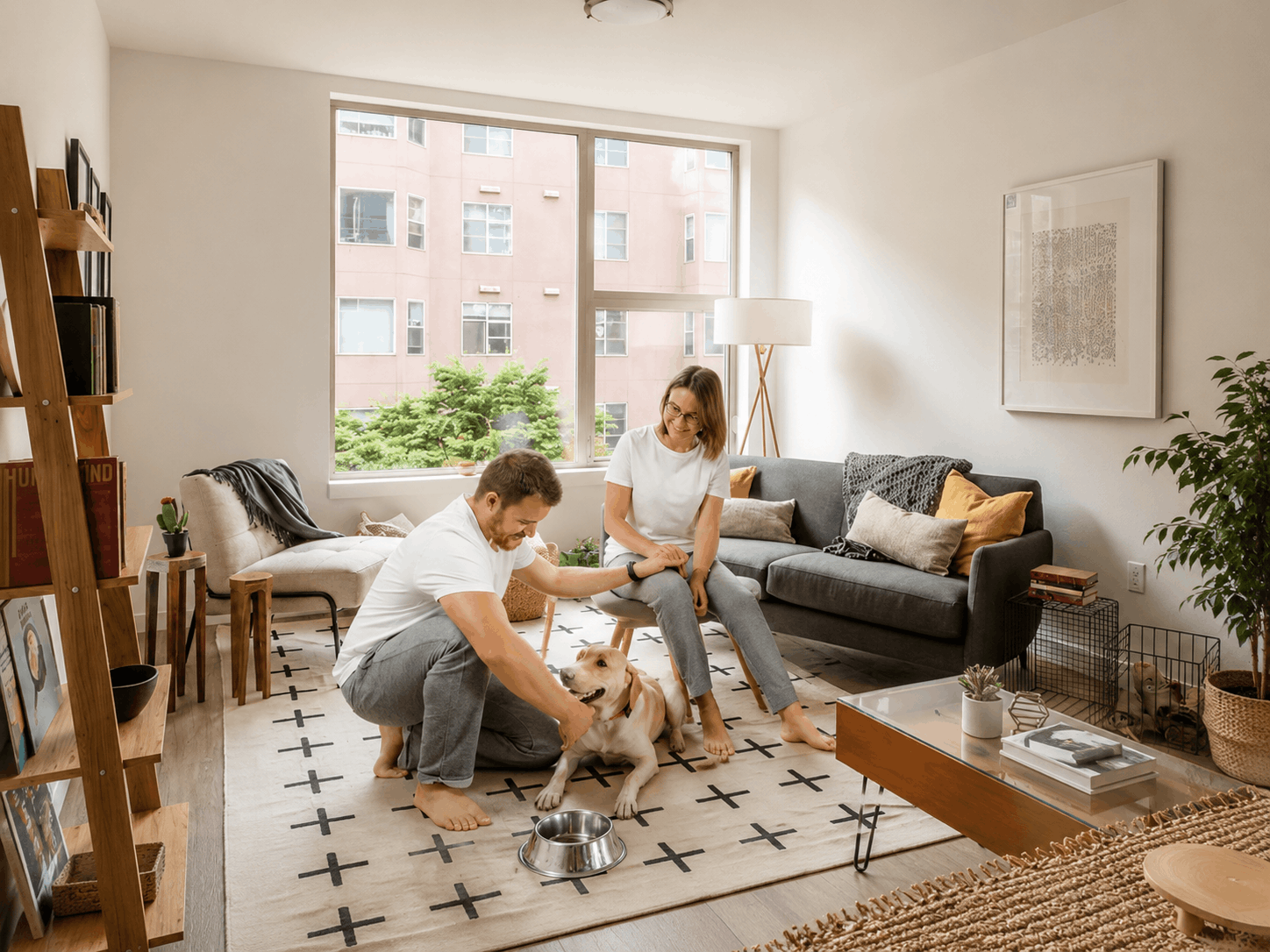
Compact homes can be wonderfully pet-friendly. The key is choosing furniture and layouts that serve double duty — meeting your needs and your pet’s needs in one thoughtful design.
Multi-Functional Furniture
Every piece in a small home should earn its place:
• Storage bench in the entryway — opens for gear storage, has a built-in pet sleeping nook underneath
• Side table with a slide-out tray holding food and water bowls — hidden away between meals
• Built-in alcove under the stairs converted into a dedicated pet bedroom that blends into the architecture
Cut the Clutter
Keep only a few toys accessible at a time, rotating the rest from storage weekly. This keeps your pet interested without creating a floor scattered with things to trip over. Store food in sealed, stackable containers tucked in a pantry or closet — much better than flimsy paper bags that let odors escape.
Claim the Forgotten Spaces
The dead corner behind a door, the deep windowsill, the space under the bed — these are all opportunities. A custom corner-shaped cushion, a set of steps to a window perch, a low storage basket under the bed frame. None of these take up any new footprint in your home.
Choosing Pet-Safe Materials and Furniture
The materials you choose can significantly impact the success of your pet friendly home design. The right flooring and furnishings make your home safer, easier to maintain, and more comfortable for both pets and people.
When selecting materials, prioritize options that are:
• Durable
• Easy to clean
• Resistant to scratches and stains
• Comfortable underfoot
• Free from harmful chemicals
Best Flooring Options for Pet-Friendly Rooms
1: Luxury Vinyl Plank (LVP)
A practical choice for busy households because it is:
• Waterproof
• Scratch-resistant
• Easy to maintain
• Available in various designs
2: Strand-Woven Bamboo
An eco-friendly flooring option known for its:
• High durability
• Resistance to dents and scratches
• Attractive natural appearance
3: Cork Flooring
Increasingly popular in pet friendly interior design, cork offers:
• A softer surface for aging joints
• Noise reduction
• Natural warmth
• Sustainable sourcing
4: Sealed Hardwood
Hardwood remains a timeless choice when properly protected.
For better performance:
• Choose harder wood species such as maple or hickory
• Apply protective sealants
• Clean spills promptly
Best Fabrics for Pet-Friendly Homes
Furniture fabrics should balance comfort with durability.
Consider materials such as:
1: Microfiber
• Easy to clean
• Resistant to staining
• Less likely to trap pet hair
2: Canvas
• Strong and long-lasting
• Often available with washable slipcovers
3: Performance Fabrics
• Moisture resistant
• Stain resistant
• Designed for active households
Materials to Avoid
Some materials require excessive maintenance in homes with pets.
Avoid:
• Loop-pile and shag carpets that trap hair and snag easily
• Untreated natural stone that absorbs moisture and odors
• Silk and delicate linen that stain and tear more easily
Choosing practical, pet-safe materials helps create beautiful spaces that support both everyday living and long-term durability.
Pet Proof Room Ideas for Everyday Living
Even the most beautiful room benefits from practical protection. These pet proof room ideas help create safer spaces while preserving your home's appearance. Pet proofing isn't about restricting your pets—it's about allowing them to explore confidently in a secure environment.
Secure Household Hazards
Reduce common risks by:
• Anchoring tall furniture such as bookshelves and dressers to the wall
• Covering electrical cords with cable channels or protective tubing
• Installing child-proof latches on cabinets containing cleaning products, medications, or other hazardous items
Protect Valuable Belongings
Keep fragile items out of reach by displaying them on higher shelves or inside secure cabinets. Choose décor with sturdy, wide bases that are less likely to tip over during play.
Set Clear Boundaries
Designated pet zones help establish structure and consistency.
Consider using:
• Stylish pet gates
• Furniture placement to guide movement
• Positive reinforcement training to teach household rules
These simple strategies support both safety and harmony within the home.
Thoughtful pet proof room ideas help prevent accidents, protect your belongings, and create an environment where pets and families can live comfortably together.

Family-Friendly Pet Spaces for Multi-Pet Homes
Designing for one pet presents challenges.
Designing for multiple pets requires additional planning.
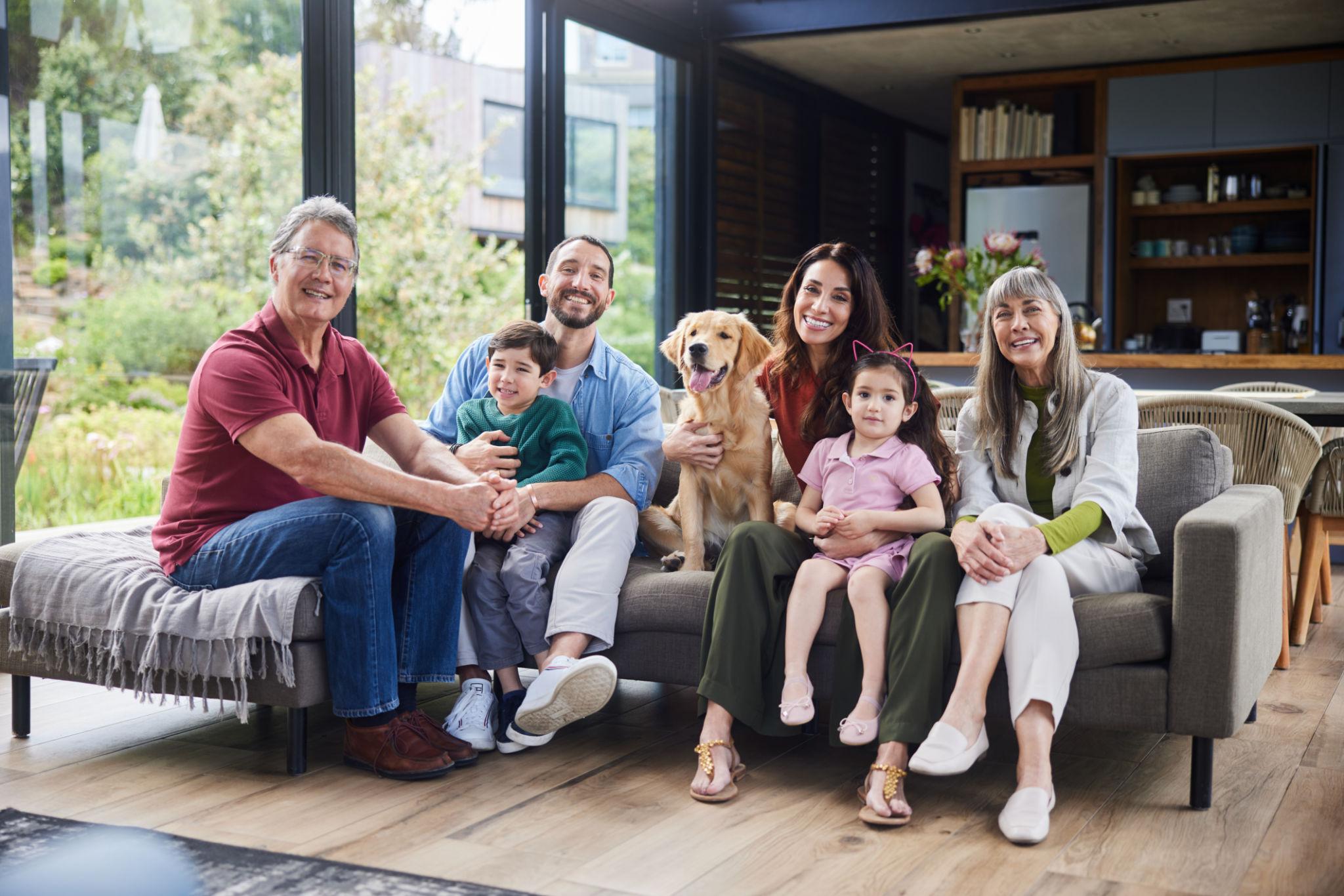
Successful family friendly pet spaces ensure that everyone has access to essential resources while minimizing competition and stress.
Separate Feeding Areas
Many pets prefer privacy during meals.
Providing multiple feeding locations can:
• Reduce resource guarding
• Improve mealtime comfort
• Support healthier eating habits
Whenever possible, allow each pet to eat in their own designated space.
Follow the Litter Box Rule
For households with cats, experts commonly recommend the “N + 1” approach.
This means:
Number of Cats + One Additional Litter Box
Examples:
• 1 cat = 2 litter boxes
• 2 cats = 3 litter boxes
• 3 cats = 4 litter boxes
Distributing boxes throughout the home encourages consistent use.
Provide Multiple Water Stations
Easy access to fresh water benefits all pets.
Consider placing water bowls in:
• Kitchens
• Living rooms
• Bedrooms
• Outdoor areas (where appropriate)
This strategy promotes hydration while reducing competition.
Respect Individual Personalities
Not all pets enjoy constant interaction.
Some animals appreciate:
• Quiet retreat areas
• Elevated resting spots
• Private sleeping zones
Others prefer social environments.
Providing choice supports emotional wellbeing.
Design Safe Shared Spaces
Family gathering areas should encourage positive interactions.
Focus on:
• Open floor plans
• Clear pathways
• Supervised play opportunities
• Comfortable seating for everyone
Remember that successful family friendly pet spaces accommodate individual needs while promoting harmony within the household.
Common Mistakes to Avoid
- Prioritizing looks over safety — always check if a plant, material, or product is pet-safe before buying
- Choosing fabrics that require dry cleaning for high-traffic areas — you'll regret it quickly
- Cramming too much into small spaces — streamlined, multi-functional pieces work far better
- Forgetting mental enrichment — a beautiful room can still be boring without puzzle toys or viewing spots
- Ignoring your pet's natural instincts — a cat with no scratching post will use your sofa instead
- Not adapting as your pet ages — what worked at 2 may not work at 10; plan for ramps and softer surfaces
Frequently Asked Questions
What makes a room pet-friendly?
A pet-friendly room prioritizes safety, comfort, durability, easy maintenance, and support for natural pet behaviors while remaining practical for family life.
What flooring works best in homes with pets?
Luxury Vinyl Plank, cork flooring, bamboo, and sealed hardwood are among the most popular options because they offer durability and easier maintenance.
How can I pet-proof a living room?
Secure cords, anchor heavy furniture, protect valuable items, use washable accessories, and create designated pet areas.
What are the best cat-friendly room ideas?
Providing climbing opportunities, scratching posts, window perches, hideaways, and well-placed litter boxes supports feline wellbeing.
How can I design dog-friendly bedrooms?
Focus on comfortable bedding, organized storage, non-slip flooring, and accommodations that support aging dogs.
Can small homes still be pet-friendly?
Absolutely. Strategic organization, multifunctional furniture, and efficient use of available space allow even compact homes to support pets comfortably.
How can families create pet-friendly spaces at home?
Provide separate resources, respect individual personalities, establish routines, and create shared spaces that encourage positive interactions.
Are indoor plants safe for pets?
Some indoor plants can be toxic to cats and dogs. Always choose pet-safe varieties and place plants in areas that prevent accidental chewing.
Why Trust TerraPawHome?
At TerraPawHome, our content is created through extensive research from organizations such as ASPCA, AVMA, EPA, veterinary resources, and pet wellness experts. Each guide is reviewed regularly to ensure information remains accurate and practical for modern pet owners. We care about you lovely family members.
• The recommendations here are meant for educational and planning purposes. They’re designed to complement — not replace — advice from your veterinarian, a certified animal behaviorist, or a licensed contractor for any structural changes.
• Every pet is different. Please adapt these ideas to fit your specific animals, your home, and your lifestyle.
TerraPawHome Team
Conclusion
Designing pet-friendly rooms is one of the most rewarding things you can do for your home — and for your animals. When your space works for everyone in it, daily life just feels better. Less stress, less mess, more of the good moments you got a pet for in the first place.
You don’t have to do everything at once. Pick one room. Make a few intentional changes — better flooring, a proper bed in the right spot, a scratching post for your cat, a toy basket instead of chaos on the floor. Notice the difference. Then keep going.
Whether you’re working with a big house, a small apartment, a single dog, or a whole zoo of animals, the principles in this guide will help you build something that truly works. A home where your pets aren’t just tolerated — they’re genuinely at home.
Your pets are family. Design your space like it.