Safe, Durable & Sustainable Choices
Eco-Friendly Materials for Pet Homes
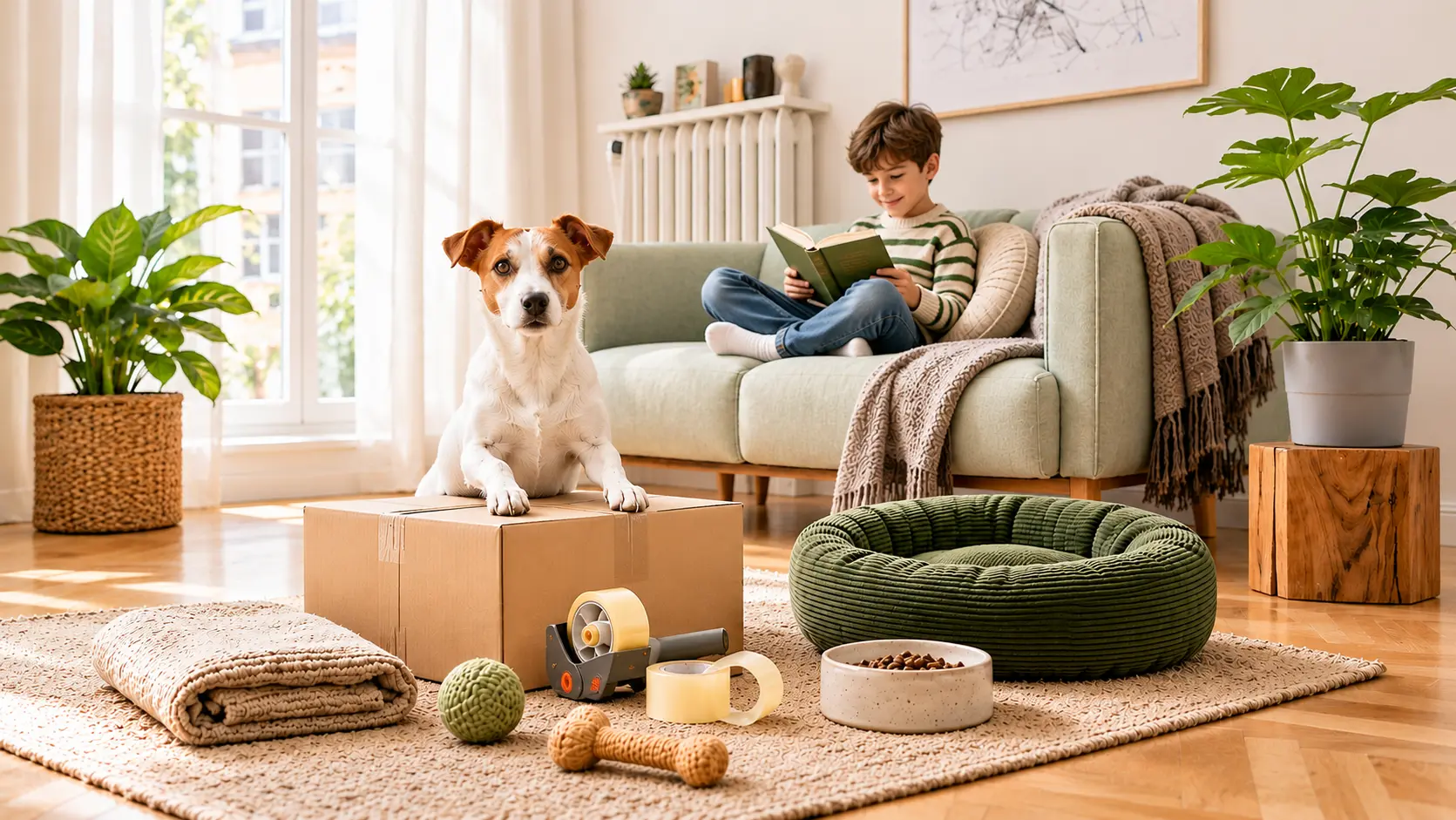
Creating a greener home with pets involves more than choosing natural fabrics or recycled furniture. The best eco-friendly materials for pet homes should balance environmental responsibility with everyday comfort, durability, cleaning needs, and the way dogs and cats interact with their surroundings.
A beautiful bamboo floor may scratch under an active dog’s claws. A natural fiber rug may be difficult to clean after an accident. Even sustainably sourced furniture can contain finishes or adhesives that deserve closer attention.
The goal isn’t to replace everything you own. It’s to understand which materials make sense for your household, what claims are worth checking, and when maintaining existing products is the better choice.
✦ Quick Summary
- Choose materials based on pet safety, durability, maintenance, and environmental impact, not labels alone.
- Bamboo, cork, reclaimed wood, natural linoleum, and responsibly sourced textiles may be suitable, depending on the finished product.
- Check surface coatings, adhesives, moisture resistance, and relevant certifications.
- Consider your pet's scratching, chewing, grooming, and mobility needs.
- Repairing or maintaining existing materials may be more sustainable than replacing them.
What Makes a Material Eco-Friendly and Pet-Friendly?
A material can be environmentally responsible without being suitable for every pet household. Likewise, a durable, easy-to-clean product may not have the smallest environmental footprint.
The most useful approach is to consider both qualities together.
Environmental Impact and Material Lifespan
Eco-friendly materials generally aim to reduce environmental harm through responsible sourcing, efficient production, longer service life, or reduced waste.
Several characteristics deserve attention:
- Renewable resources: Materials such as cork, bamboo, and wool come from resources that can regenerate, although harvesting and processing practices matter.
- Recycled or reclaimed content: Reusing existing materials can reduce demand for new raw materials.
- Responsible sourcing: Independent certifications may help verify specific forestry or textile-production practices.
- Durability: Materials that remain useful for years can reduce replacement-related waste.
- Repairability: Products that can be refinished, repaired, or reupholstered may offer advantages over disposable alternatives.
Environmental impact also includes manufacturing, transportation, maintenance, and disposal. A natural material shipped long distances or replaced frequently is not automatically preferable to a durable alternative.
The New Zealand government’s guidance on sustainable home materials highlights the importance of considering material properties and ongoing maintenance.
Pet Safety, Durability, and Maintenance
Dogs and cats experience household materials differently from people.
They walk barefoot across floors, rest directly on upholstery, groom their fur, and may scratch or chew surfaces. These behaviors make material selection particularly important.
Key Facts: Sustainable Does Not Automatically Mean Pet-Safe
A material's environmental characteristics do not establish its safety for animals. Evaluate three separate questions:
- Environmental suitability: How is the material sourced, manufactured, maintained, and disposed of?
- Pet suitability: Could scratching, chewing, slipping, or swallowing damaged material create problems?
- Household practicality: Can the material tolerate everyday wear, moisture, and cleaning?
Which Sustainable Flooring Materials Work Best for Pets?
Flooring is one of the most important material decisions in a pet-friendly home. It must tolerate claws, movement, moisture, and frequent cleaning while remaining comfortable underfoot.
No flooring material performs best in every situation. The right choice depends on the animal, surface finish, installation, and maintenance requirements.
Bamboo flooring
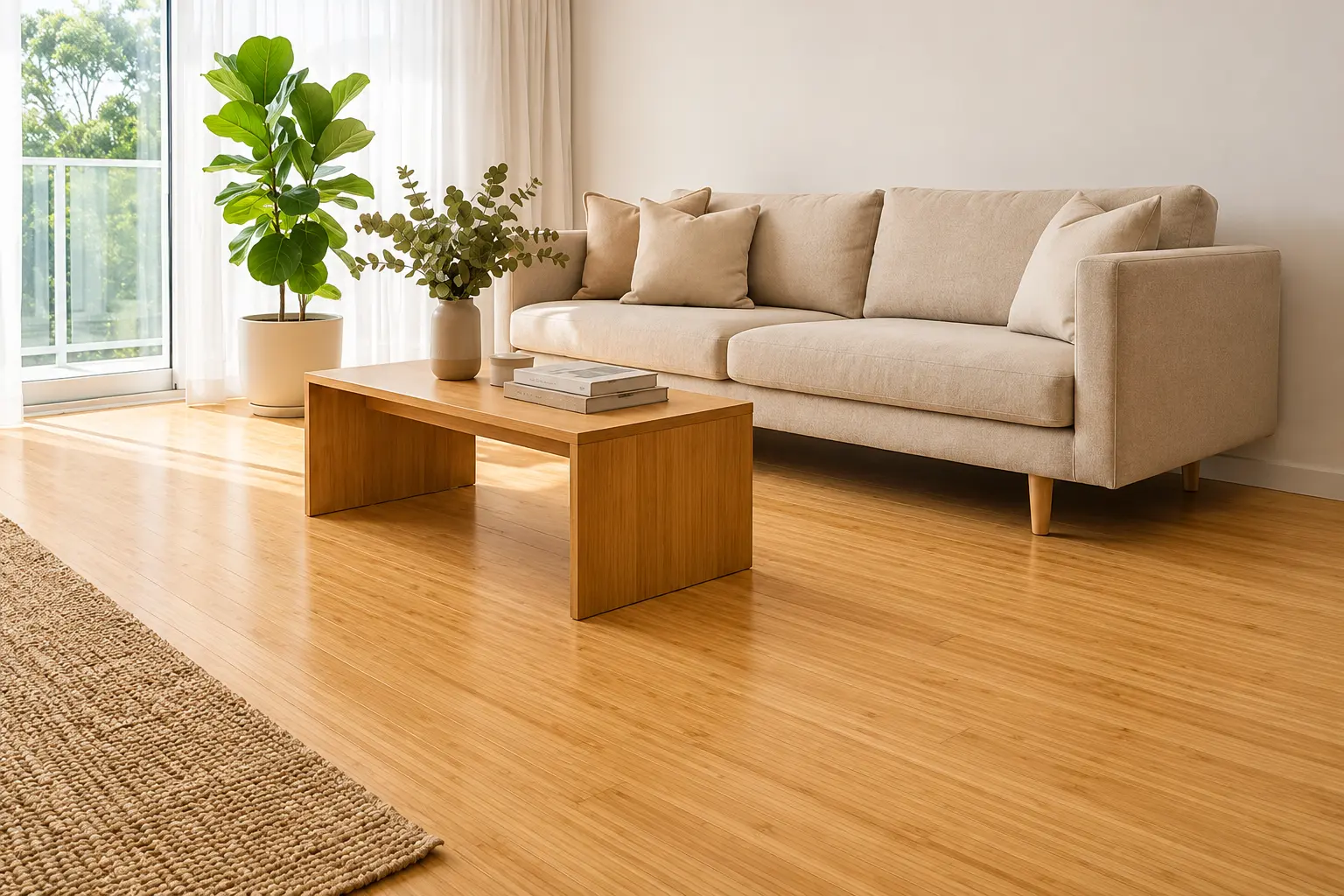
Bamboo is a rapidly renewable plant material used in engineered flooring products.
Some strand-woven bamboo products offer strong resistance to everyday wear, but performance varies considerably. Hardness ratings, protective coatings, and manufacturing quality are more informative than the word bamboo alone.
Potential limitations include visible scratches, moisture damage, and slippery finishes.
Cork flooring
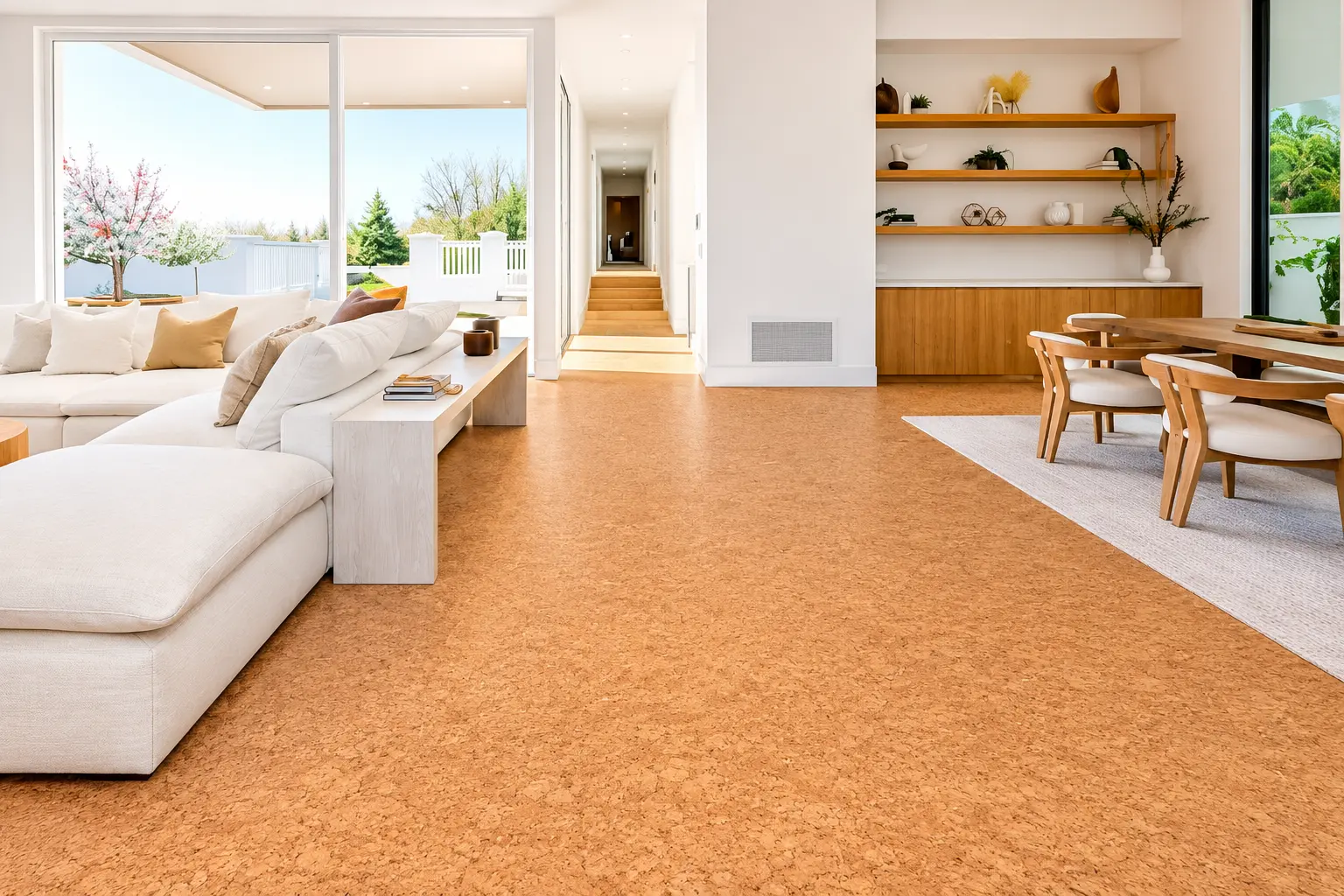
Cork is harvested from the bark of cork oak trees and offers a relatively soft, resilient walking surface.
Its cushioning characteristics may appeal to households seeking a more comfortable floor. However, sharp claws can damage certain cork surfaces, and moisture protection depends on the flooring construction and finish.
Cork should not be assumed to be waterproof.
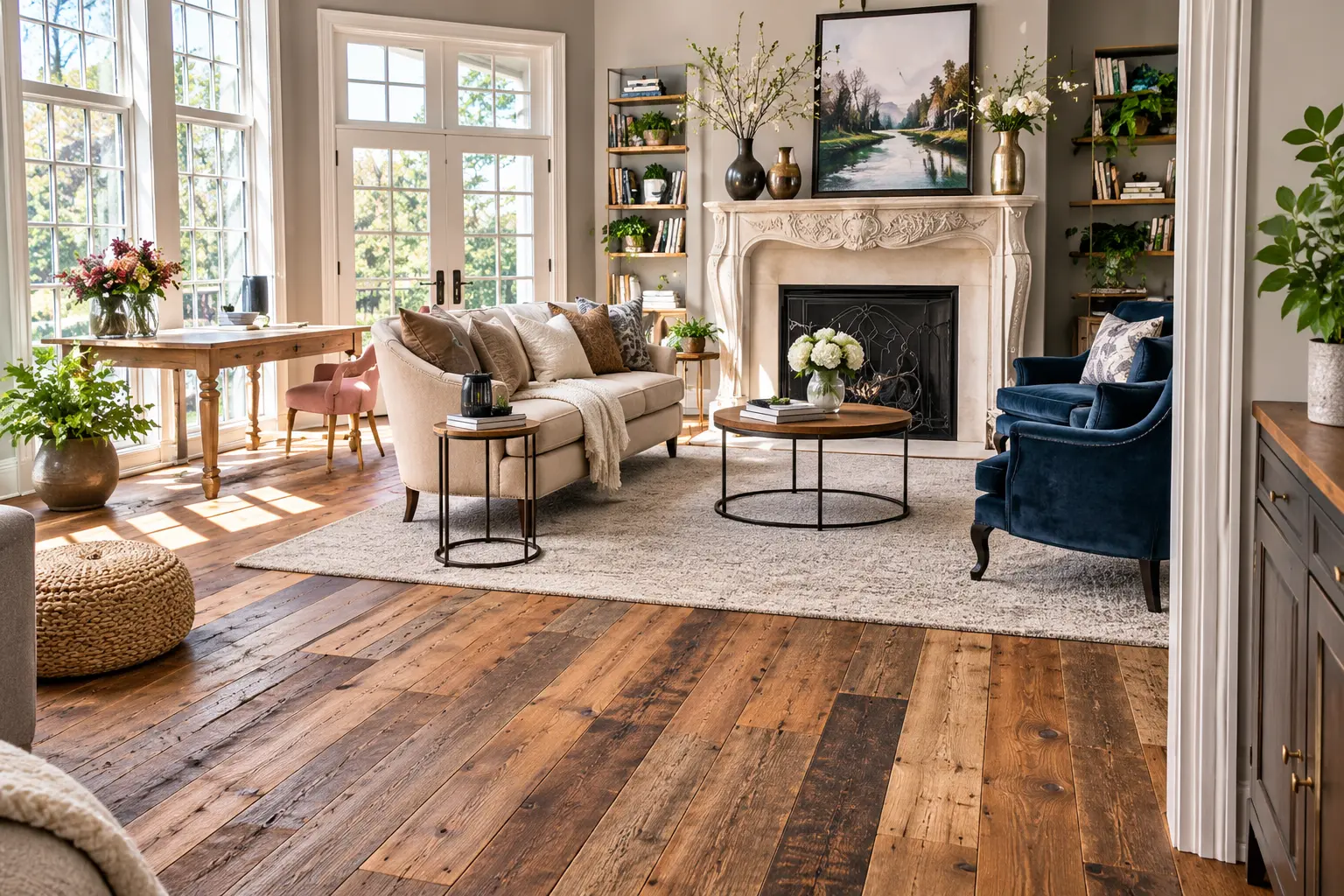
Reclaimed wood
Reclaimed wood gives previously used timber another purpose and may reduce demand for newly harvested material.
Its suitability depends on wood hardness, surface condition, and protective treatment. Older timber may contain unknown coatings or residues, so its history should be investigated before installation.
Reclaimed wood can be attractive and repairable, but it is not automatically safer than new wood.
Natural linoleum
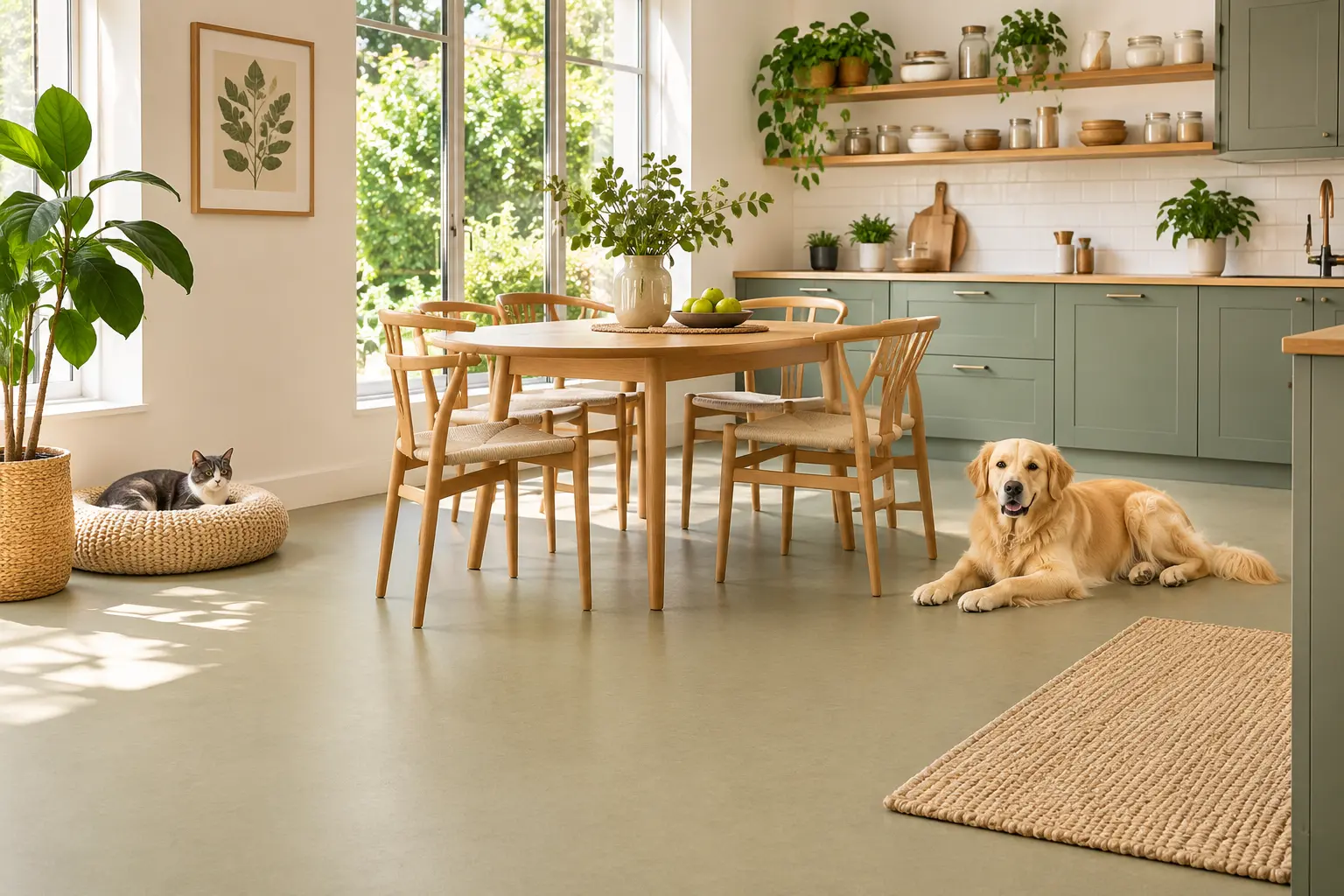
Genuine linoleum is typically manufactured using ingredients such as linseed oil, wood flour, mineral fillers, and a backing material.
It can offer a durable, maintainable surface, although water exposure, installation quality, and product-specific cleaning instructions still matter.
Natural linoleum should not be confused with vinyl flooring, which has a different composition.
Ceramic and porcelain tile
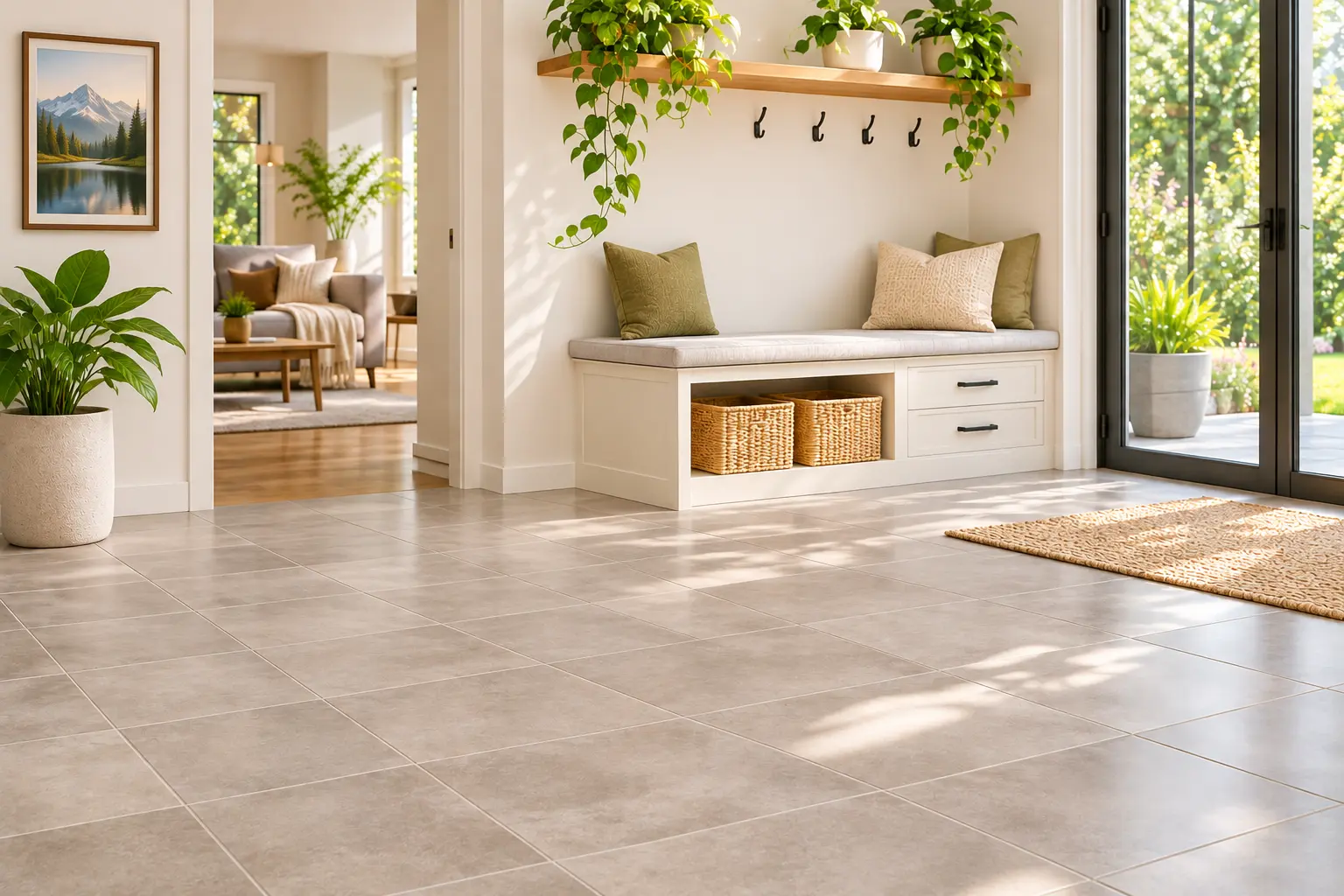
Tile is not necessarily a renewable material, but its durability and long service life can make it worth considering.
Many tile surfaces tolerate moisture and routine cleaning well. However, highly polished tiles may be slippery, while hard surfaces can be uncomfortable for pets that struggle with mobility.
Textured finishes, appropriate grout, and comfortable resting areas can improve practicality.
Sustainable Flooring Comparison
| Material | Environmental Consideration | Pet-Related Advantage | Main Limitation |
|---|---|---|---|
| Bamboo | Rapidly renewable source | Some products offer good wear resistance | Scratches, moisture, and slippery finishes |
| Cork | Renewable bark harvest | Resilient walking surface | Claw damage and moisture sensitivity |
| Reclaimed Wood | Reuses existing timber | Repairable in many cases | Unknown previous treatments |
| Natural Linoleum | Contains renewable ingredients | Durable and relatively easy to maintain | Product and installation requirements vary |
| Ceramic or Porcelain Tile | Long service life | Moisture resistance and easy cleaning | Hardness and possible slipperiness |
For Homes With Energetic Dogs
Prioritize verified scratch resistance and traction.
For Senior Pets
Comfortable movement and secure footing may matter more than appearance.
What Eco-Friendly Furniture and Fabric Materials Should You Consider?
Furniture and textiles face different challenges from flooring. They collect pet hair, absorb spills, experience repeated washing, and may be scratched or chewed.
A sustainable fabric is most useful when it also performs well in daily life.
Sustainable Upholstery Fabrics
Organic Cotton
Organic cotton can be a useful option for removable, washable covers. Its comfort and versatility make it appealing for sofas, cushions, and pet bedding.
However, cotton can absorb moisture, stain, and wear. Fabric thickness, weave, and cleaning instructions determine how practical it is.
Hemp
Hemp is a plant-based textile fiber that can be used in durable woven fabrics.
Its performance depends on construction and finishing. A tightly woven hemp blend may be more suitable for certain furniture applications than a loosely woven fabric that catches claws.
Wool
Wool is renewable and can offer durability and comfort in suitable applications.
However, some wool fabrics require specialized cleaning. Loose fibers, moisture retention, and a pet's chewing habits should also be considered.
Recycled Polyester
Recycled polyester uses recovered plastic feedstock, but its environmental benefits depend on the manufacturing process and product lifespan.
Some tightly woven synthetic fabrics are practical for furniture protection because they resist snagging and are easier to maintain. Potential microfiber shedding and finishing treatments remain relevant considerations.
Wood Furniture, Rugs, and Pet Bedding
Responsibly Sourced Wood Furniture
Responsibly sourced solid wood furniture can offer long service life, especially when it is repairable.
The Forest Stewardship Council provides labeling systems that help identify specified responsible forestry and recycled-content claims.
However, wood certification does not verify whether a furniture finish is appropriate for every pet.
Natural-Fiber Rugs
Natural-fiber rugs made from jute, sisal, cotton, or wool may suit certain households, but their maintenance requirements vary.
Coarse fibers, loose strands, and difficult stain removal can make some options impractical.
Washable Pet Bedding
For pet bedding, washable covers and durable construction may be more useful than choosing a particular natural fiber.
Prioritize products that can be cleaned thoroughly and maintained without frequent replacement.
The ASPCA Animal Poison Control Center provides additional information about animal poisoning concerns.
How Can You Check Materials for Pet Safety and Indoor Air Quality?
A product’s base material is only part of its composition.
Flooring, furniture, and textiles may also contain adhesives, backing layers, surface coatings, dyes, or protective treatments. These components can affect emissions, cleaning requirements, and suitability.
Finishes, Adhesives, and Chemical Emissions
Some building products and furnishings release volatile organic compounds (VOCs) into indoor air.
According to the U.S. Environmental Protection Agency, potential indoor VOC sources include paints, adhesives, furnishings, and certain building materials.
The amount and type of emissions vary by product and conditions.
When evaluating materials:
- Review available product-emissions information.
- Check adhesives, coatings, and installation products.
- Follow manufacturer ventilation and curing instructions.
- Avoid assuming that natural materials are emission-free.
- Keep pets away from installation areas until hazards have been addressed.
Important Pet Safety Warning
Fresh adhesives, paints, construction dust, exposed materials, and loose debris can create hazards during home improvements.
The ASPCA’s home repair safety guidance explains why pets should be protected from construction-related substances and materials.
If your pet may have swallowed a material or developed symptoms after exposure, contact a veterinarian promptly. Do not rely on an eco-friendly label as evidence of safety.
For broader environmental guidance, see TerraPawHome’s Indoor Air Quality resource.
What Material Certifications Actually Verify
Certifications can help buyers assess product claims, but different programs evaluate different attributes.
| Certification | What It Helps Verify |
|---|---|
| FSC | Defined forestry sourcing and chain-of-custody claims. |
| UL GREENGUARD | Compliance with specified chemical-emissions criteria. |
| GOTS | Defined organic textile processing and production requirements. |
| OEKO-TEX STANDARD 100 | Testing against specified harmful-substance criteria. |
A certified product may meet a particular environmental or chemical-testing standard without being universally safe for every animal.
For example, GREENGUARD certification addresses chemical emissions. It does not establish whether a flooring surface provides enough traction for an elderly dog.
Always check the certification's exact scope and whether it applies to the finished product being purchased.
How Do You Choose the Right Material for Your Pet and Home?
The most useful material is one that fits your household’s actual needs.
Instead of asking which material is universally best, consider how your pets use the space and what problems the material must solve.
Match Materials to Pet Behavior and Household Needs
For active dog
Look for durable flooring with appropriate traction, moisture resistance, and manageable cleaning requirements. A highly polished surface may look attractive but provide less secure footing.
For cats that scratch
Choose upholstery with tightly constructed surfaces and avoid fabrics with loose loops that catch claws easily. Provide appropriate scratching areas rather than expecting furniture materials alone to prevent damage.
For puppies and pets that chew
Pay particular attention to loose fibers, accessible edges, damaged coatings, and detachable components. No common household furnishing should be assumed safe to chew or swallow.
For senior pets
Comfort, stability, and movement deserve priority. Rugs or other traction solutions may help on slippery surfaces, provided they are securely positioned. For pets with mobility difficulties, ask a veterinarian about appropriate environmental adjustments.
For multi-pet households
Durability, cleaning frequency, replaceable covers, and repairability become especially valuable.
Pet-Friendly Material Decision Framework
Identify the Problem
Scratches, moisture, slippery flooring, difficult cleaning, or worn furniture.
Assess Your Pet's Behavior
Consider chewing, scratching, grooming, activity level, and mobility.
Compare Material Performance
Review durability, cleaning requirements, coatings, and product evidence.
Evaluate Environmental Claims
Check sourcing, certifications, repairability, and expected service life.
Choose the Least Wasteful Practical Option
Maintain, repair, protect, or replace based on actual need.
Real-life examples, a family with a scratching cat may benefit more from washable, replaceable sofa covers than from purchasing an entirely new sofa marketed as sustainable.
Similarly, a homeowner with structurally sound wood flooring might consider appropriate maintenance or refinishing rather than immediate replacement.
These decisions can reduce unnecessary spending while extending the useful life of existing materials.
What Should You Check Before Buying or Replacing Materials?
Before purchasing sustainable flooring, furniture, or textiles, review the product's full specifications and consider whether it solves a genuine household problem.
The following checklist can help.
Eco-Friendly Pet Home Material Checklist
0 of 9 reviewedFor planned renovations, follow the product manufacturer's instructions and keep pets away from dust, chemicals, and unfinished surfaces.
TerraPawHome's Green Home Upgrades and Pet-Safe Renovations guides provide additional context for larger household improvements.
Frequently Asked Questions
Are natural materials automatically safer for pets?
No. Natural materials may still contain irritating substances, unsuitable finishes, or components that create hazards if chewed or swallowed.
Pet suitability depends on the finished product, how it is used, and the animal’s behavior—not simply whether its ingredients come from nature.
Is low-VOC the same as non-toxic?
No. Low-VOC generally refers to a defined level of volatile organic compound content or emissions, depending on the claim or standard.
It does not mean a product is completely free from chemicals or incapable of causing harm. Product-specific testing, proper installation, and appropriate ventilation remain important.
Should pet owners replace existing flooring with sustainable materials?
Not necessarily. If existing flooring is in good condition, suitable for your pets, and manageable to maintain, replacement may create unnecessary cost and waste.
Consider cleaning, repair, refinishing, or targeted improvements before replacing an entire floor. If the existing material presents a genuine safety or functional problem, compare replacement options using durability, pet suitability, and environmental evidence.
The best eco-friendly pet home is not necessarily the one filled with the newest sustainable products. It is one where materials are chosen thoughtfully, maintained responsibly, and suited to the animals and people who use them every day.
Continue Your Eco Pet Home Journey
Explore All Pet Home Guides designed to help you create a cleaner, greener, and more pet-friendly home.
Core TerraPawHome Guides
Explore our foundational guides for building a cleaner and more pet-friendly home.