
How to Create a Safe, Comfortable Home for Your Cat
Cat-Friendly Spaces
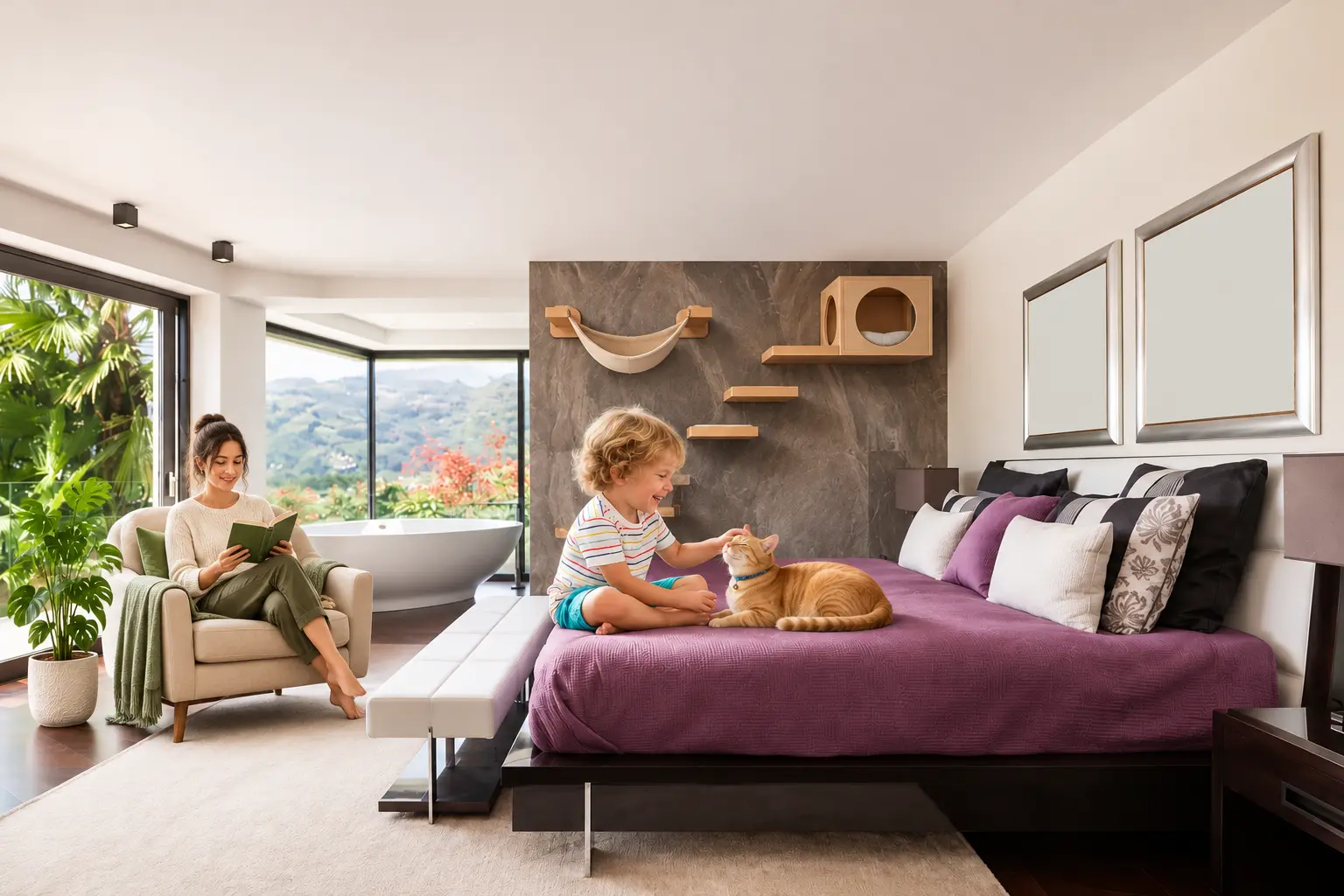
A cat-friendly home is more than a comfortable bed, a scratching post, or a collection of toys. It is a living environment where cats can rest, explore, play, hide, and access essential resources without unnecessary stress or danger.
Whether you live in a spacious house or a small apartment, creating cat-friendly spaces does not require expensive furniture or major renovations. Thoughtful arrangements, safe materials, and an understanding of natural feline behavior can make everyday living more comfortable for both you and your cat.
This guide explains how to evaluate your home, arrange essential resources, improve safety, and make practical changes that suit your cat’s individual needs.
Quick Summary
- Provide quiet hiding places, comfortable resting areas, and opportunities to climb or observe.
- Keep food, water, litter boxes, and scratching surfaces accessible and appropriately separated.
- Secure furniture, windows, and climbing equipment while checking for household hazards.
- Adapt the environment to your cat's age, mobility, personality, and relationships with other pets.
- Start with practical improvements and observe how your cat responds before purchasing more equipment.
What Makes a Space Truly Cat-Friendly?
A truly cat-friendly space supports natural feline behavior while allowing cats to feel secure and comfortable in their surroundings.
Cats need opportunities to rest undisturbed, explore, scratch, play, and withdraw from situations they find uncomfortable. A beautiful room may still be unsuitable if essential resources are difficult to reach or a cat has nowhere to hide.
The AAFP/ISFM Feline Environmental Needs Guidelines identify five important areas of environmental wellbeing, including safe places, appropriate resource distribution, opportunities for play, positive human interaction, and respect for feline sensory needs.
What Are a Cat's Essential Environmental Needs?
Security
A quiet place to retreat without being disturbed.
Choice
Access to different resting places, routes, and activities.
Essential resources
Reliable access to food, water, litter facilities, and scratching surfaces.
Natural behavior
Opportunities to climb, explore, scratch, and engage in play.
Sensory comfort
An environment that avoids overwhelming noise, strong fragrances, and unnecessary disruption.
These needs can be met in different ways. One cat may prefer a covered bed near the sofa, while another chooses a quiet shelf overlooking the room.
Why Do Choice, Security, and Predictability Matter?
Cats often feel more comfortable when they can decide where to rest, how to move through a room, and whether to interact with people or other animals.
Predictable routines and familiar surroundings can also support their sense of security. Sudden changes in furniture placement, unfamiliar smells, or restricted access to favorite areas may unsettle some cats.
When introducing a new bed, climbing structure, or room arrangement, allow your cat to investigate voluntarily. Avoid forcing interactions or removing familiar resting places before suitable alternatives are available.
For additional ideas about quiet retreats, explore TerraPawHome’s Calm Pet Spaces resources.
How Should You Arrange Essential Resources for Your Cat?
Providing the right resources is only part of creating a cat-friendly home. Their location and accessibility are equally important.
Cats may avoid otherwise suitable equipment when it is placed in a noisy location, difficult to reach, or too close to another resource.
Where Should Food, Water, and Litter Boxes Go?
Place feeding and drinking stations in accessible, relatively quiet locations. Many cats prefer their water away from food, while litter boxes should be positioned separately from both.
Litter boxes need convenient access, adequate privacy, and a clear route for entering and leaving. Avoid placing every box in one crowded location, especially in multi-cat households.
| Resource | Recommended Placement | What to Avoid |
|---|---|---|
| Food | Quiet, accessible feeding location | Busy walkways and litter areas |
| Water | Fresh water in one or more convenient locations | Dirty bowls and inaccessible corners |
| Litter box | Accessible, calm area with a clear exit | Trapped corners, loud appliances, and food stations |
| Resting area | Comfortable, quiet location with a choice of shelter | Constant disturbance or forced interaction |
| Scratching surface | Near resting spots or commonly used routes | Unstable posts and inaccessible locations |
A commonly used starting guideline is one litter box per cat, plus one additional box. However, the best arrangement also depends on the home's layout, accessibility, and relationships between cats.
How Can You Provide Comfortable Resting and Hiding Places?
Cats need places where they can rest without being approached unexpectedly. A covered bed, accessible shelf, quiet corner, or sturdy cat furniture can provide useful options.
Offer more than one resting location when possible. Some cats prefer elevated viewpoints, while others feel safer in enclosed spaces near the floor. Allow your cat to choose where to relax.
Where Should Scratching and Play Areas Be Located?
Position stable scratching posts or pads near places your cat already spends time. Different cats may prefer vertical or horizontal scratching surfaces.
Create a small play area with enough room for supervised interactive play. Rotate suitable toys to maintain interest, and store string-like toys safely after use.
For detailed furniture-specific solutions, consult TerraPawHome’s Cat Scratch Prevention and Furniture Protection guides.
How Can You Make Better Use of Vertical and Small Spaces?
Cats can benefit from usable space above floor level, particularly when floor space is limited.
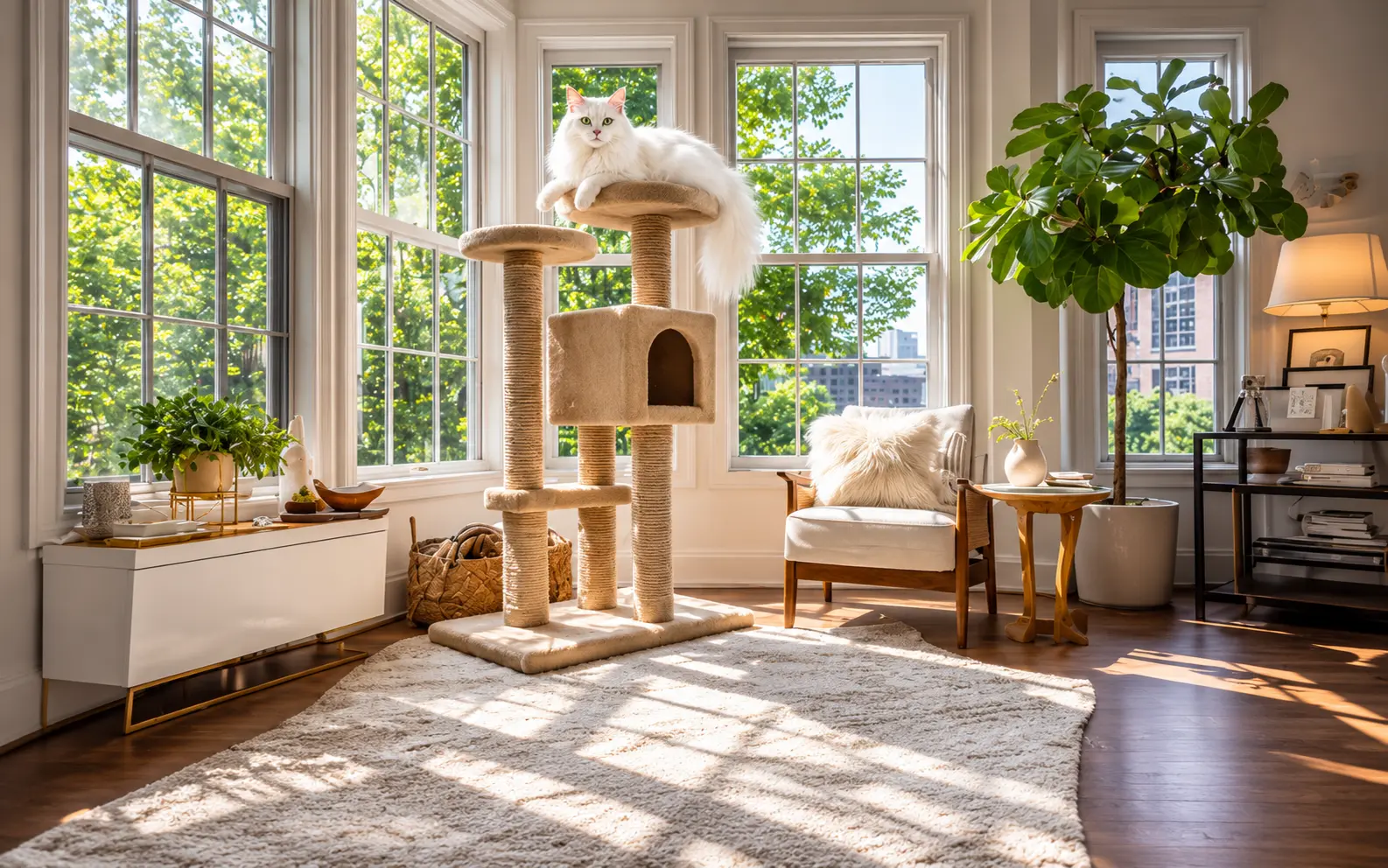
Vertical areas may offer opportunities for observation, climbing, resting, and avoiding unwanted interactions. However, height is useful only when the cat can access and use it safely.Cats often benefit from elevated resting places and opportunities to observe their surroundings. Even small homes can support these needs with thoughtful arrangements that balance safety, accessibility, and comfort.
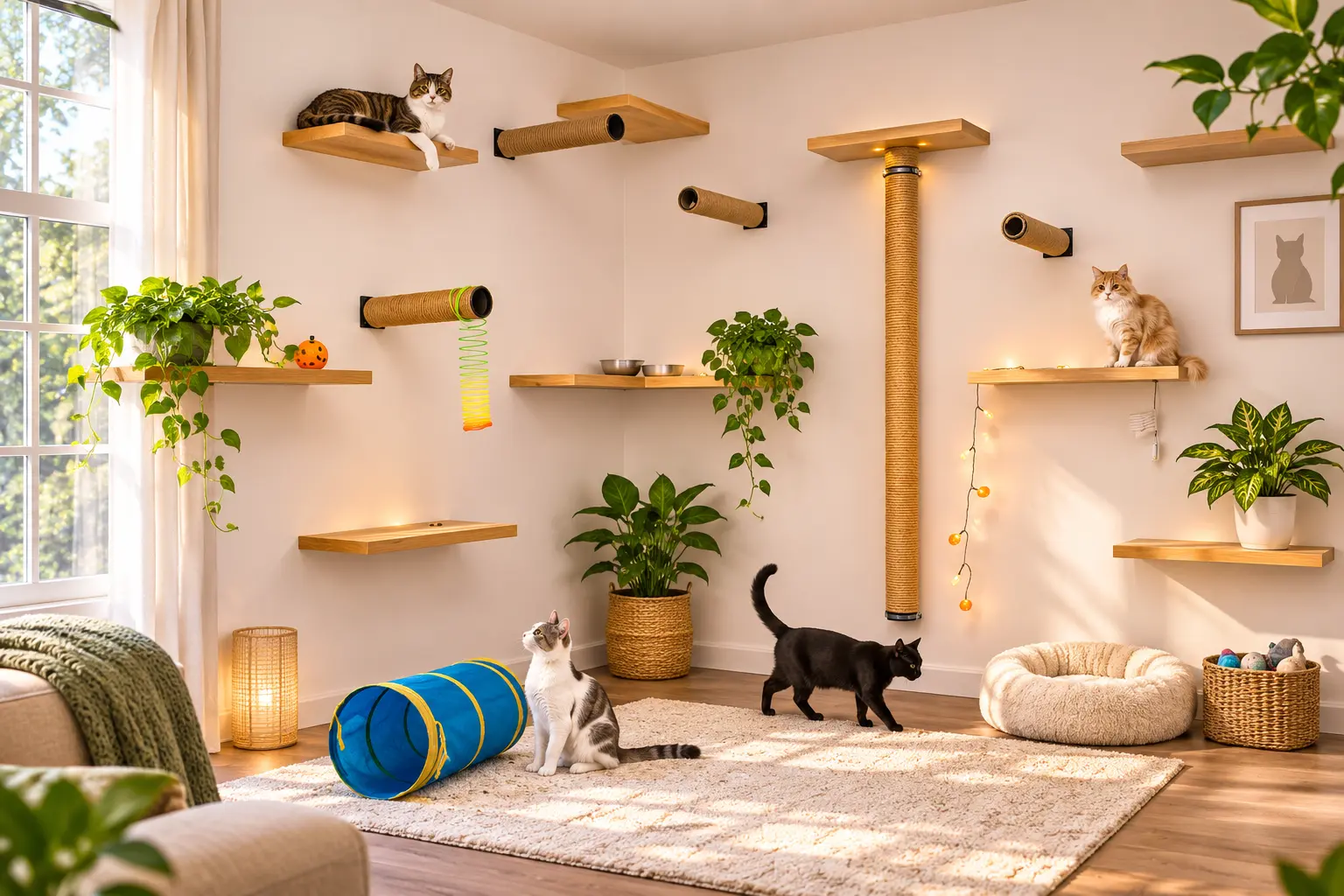
Stable Climbing
Secure shelves and cat trees.
Comfortable Perches
Safe places to rest and observe.
Accessible Routes
Manageable distances and surfaces.
Smart Use of Space
More choices without clutter.
How Do You Create Safe Climbing and Perching Opportunities?
Cats often use elevated positions to observe their surroundings, rest, and move away from activity. A stable cat tree, secure shelf, or suitable window perch can help meet these needs.
The goal is not to create the tallest climbing structure. Instead, focus on safe access, reliable support, and comfortable places to pause.Cat trees, stable shelving, and window perches can provide additional usable space without occupying much floor area.
Secure tall furniture and install platforms according to manufacturer instructions.
Arrange platforms with manageable distances and non-slip surfaces.
Keep climbing areas away from unsecured windows, dangling cords, and unstable objects.
For related maintenance strategies, explore TerraPawHome’s furniture protection resources.
What Works Best in Apartments and Shared Living Rooms?
Location
Recommended improvement
- Window areas
Add a secure observation perch, ensuring windows and screens are safe.
- Quiet corners
Provide a covered bed or sheltered resting area.
- Wall Space
Install suitable shelves where the structure and tenancy permit.
- Shared seating areas
Position a scratching surface near commonly used furniture.
How Can You Make Your Home Safer for Cats?
A comfortable home must also minimize preventable hazards. Cats may climb, jump, investigate narrow spaces, chew objects, and contact surfaces that people rarely consider dangerous.
Safety checks are particularly important when introducing new furniture, plants, decorations, or household products.
Which Household Hazards Should You Check?
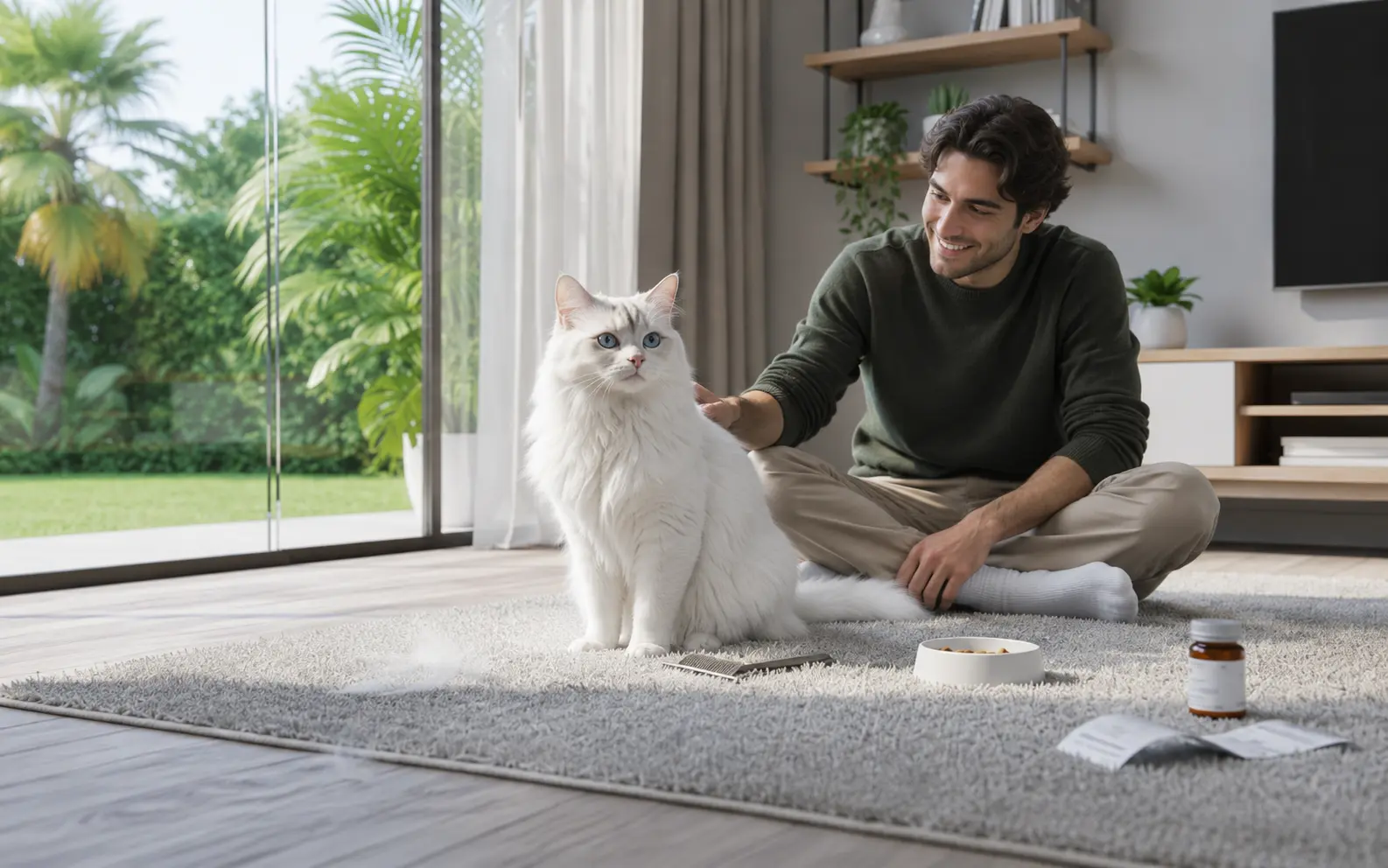
Cats are naturally curious and may climb furniture, explore narrow spaces, or investigate unfamiliar household objects. Regularly checking for potential hazards can help reduce preventable risks and create safer cat-friendly spaces without compromising everyday comfort.
Windows and Balconies
Secure windows, balconies, and unstable climbing furniture.
Unstable Furniture
Secure tall furniture and climbing structures.
Electrical Cords
Keep electrical cords and hazardous small objects out of reach.
Toxic Houseplants
Check plants for species-specific toxicity before bringing them indoors.
Household Chemicals
Store cleaning products, medications, and chemicals securely.
Small and Loose Objects
Keep swallowable objects out of reach.
Important Safety Note
True lilies and daylilies are extremely toxic to cats. Even exposure to pollen or vase water can be dangerous. Contact a veterinarian immediately if exposure is suspected.
The ASPCA Toxic and Non-Toxic Plants Database is a useful reference for checking botanical names. For additional guidance, see TerraPawHome’s Pet-Safe Plants resources.
How Do You Choose Suitable Furniture and Materials?
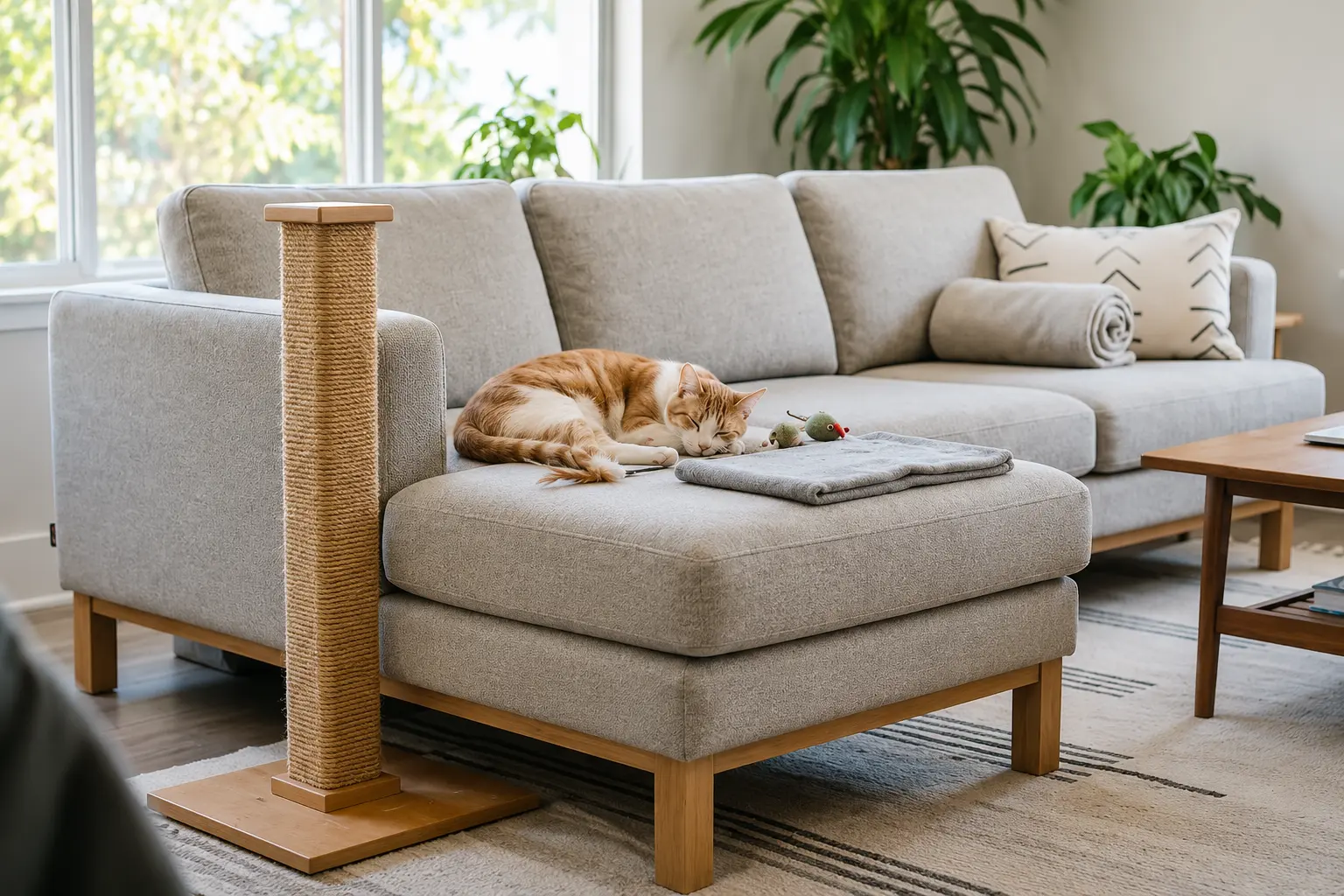
Choosing suitable furniture and materials for cat-friendly spaces involves balancing durability, comfort, safety, and everyday maintenance. Look for stable furniture, practical upholstery, and surfaces that accommodate your cat’s natural behaviors while complementing your home’s interior.
What to Look For
- Stable and sturdy furniture
- Durable upholstery fabrics
- Easy-to-clean surfaces
- Lower-emission materials
- Appropriate scratching surfaces
- Comfortable, non-slip flooring
How Should Cat-Friendly Spaces Adapt to Different Cats?
There is no single home arrangement that works equally well for every cat.
Age, physical ability, temperament, previous experiences, and relationships with other animals can influence how cats use their surroundings.
Well-designed cat-friendly spaces should remain flexible, allowing adjustments as your cat’s needs change throughout its life.
What Changes Help in Multi-Cat Households?
Cats living together do not necessarily share the same preferences or social relationships.
Some rest comfortably near one another, while others prefer distance. Even cats that appear peaceful may compete over access to food, litter boxes, doorways, or favored resting locations.
Provide multiple access points to essential resources where possible. Avoid layouts in which one cat can block another from reaching a litter box, food station, or preferred resting area.
The 2024 AAFP Intercat Tension Guidelines emphasize recognizing subtle signs of tension and considering environmental resource arrangements.
Separate Feeding Areas
Provide individual feeding locations to reduce competition.
Multiple Resting Places
Offer independent resting and hiding spaces.
Alternative Access Routes
Allow cats to move around without being blocked by other pets.
Distributed Resources
Position litter boxes, water bowls, and scratching surfaces in different locations.
How Can You Accommodate Kittens, Senior Cats, and Limited Mobility?
A young, active cat may enjoy climbing and exploration, while an older cat may need easier access to familiar resting places.
Cats with reduced mobility may benefit from lower platforms, stable steps or ramps, and essential resources on the same floor.
- Supervised interactive play
- Low, stable climbing platforms
- Secure surroundings and accessible resources
- Climbing and observation opportunities
- Appropriate scratching surfaces
- Interactive play and quiet retreats
- Low-entry litter boxes
- Soft, comfortable bedding
- Non-slip surfaces and accessible resting areas
- Stable ramps and low platforms
- Clear, unobstructed pathways
- Easily accessible food and water
Adapt your home gradually, paying attention to your cat's comfort, preferences, and physical abilities rather than age alone.
Pay Attention to Behavioral Changes
Sudden reluctance to jump, changes in litter box habits, or reduced activity may indicate discomfort or illness rather than a simple preference. Arrange a veterinary assessment when these changes appear.
How Can You Improve Your Cat's Space Without Major Renovations?
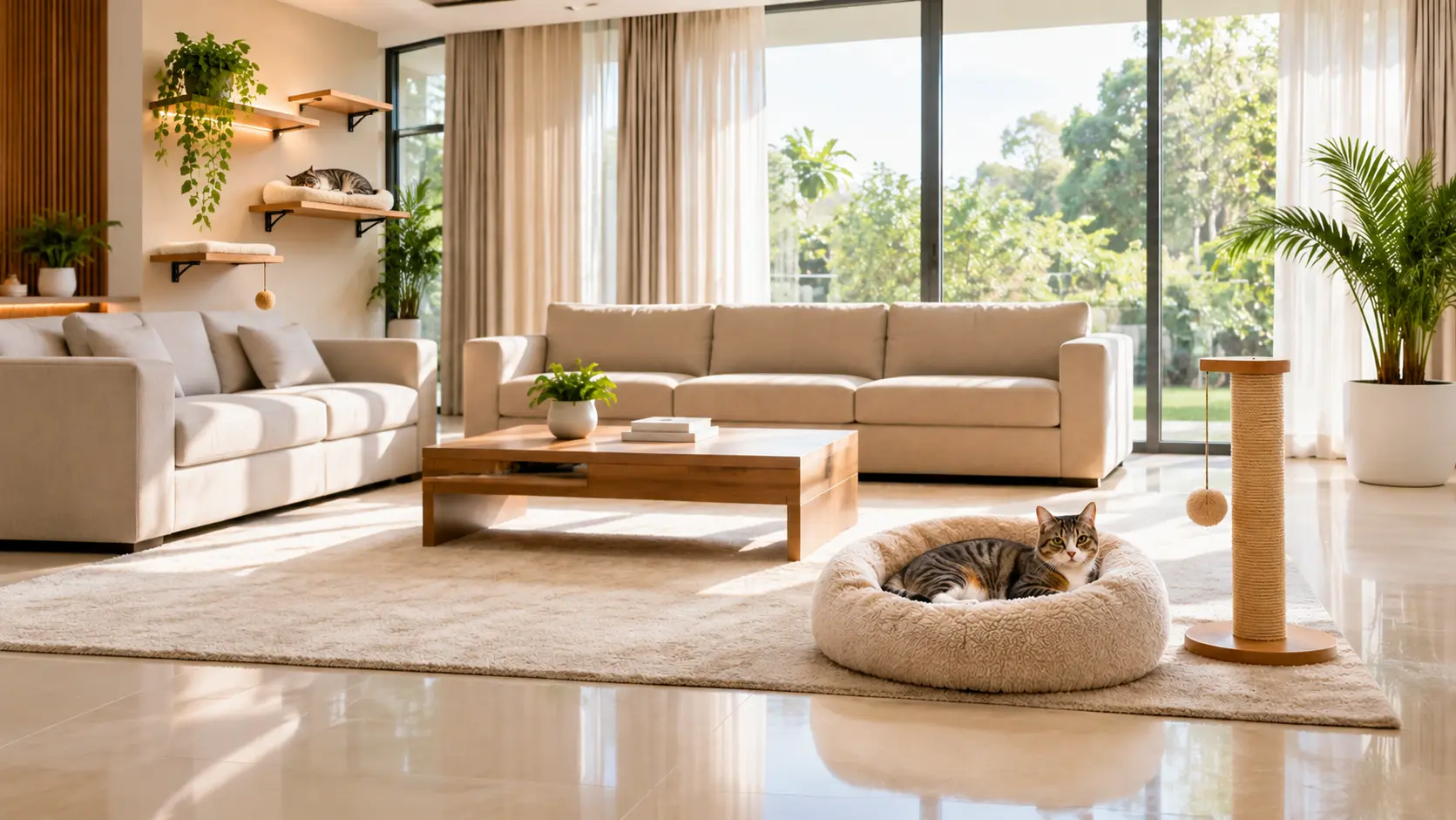
Creating cat-friendly spaces does not necessarily require expensive furniture, structural alterations, or a dedicated room. Small, thoughtful adjustments to your existing home can improve your cat’s comfort, accessibility, and opportunities for natural behavior.
Start by identifying what your cat needs rather than purchasing additional accessories.
Which Improvements Should You Prioritize First?
Begin with changes that address safety, access to essential resources, and everyday comfort. Once these needs are met, consider additional enrichment opportunities based on your cat’s individual preferences.
Address immediate safety risks
Secure unstable furniture, hazardous items, and unsafe access points.
Improve essential resource access
Resolve inconvenient litter box, food, water, and resting arrangements.
Provide meaningful choices
Add suitable retreats, scratching options, or enrichment opportunities.
Evaluate affordability and sustainability
Consider rearrangement, maintenance, repair, or carefully selected purchases.
Observe and adjust
Allow time for exploration and assess whether your cat uses the changes comfortably.
For larger improvements involving materials, flooring, or renovation, TerraPawHome’s Green Home Upgrades resources provide additional environmental considerations.
Budget-friendly improvements
Repurpose Existing Items
Use sturdy cardboard boxes and washable blankets.
Utilize Window Areas
Provide a stable observation perch beside a secure window.
Reuse Existing Furniture
Adapt stable furniture to create accessible resting and observation areas.
Rotate Toys
Introduce variety by rotating suitable toys regularly.
How Can You Tell Whether the Changes Are Working?
Observe how your cat uses the environment over time.
Positive signs may include voluntarily using new resting places, exploring comfortably, engaging in normal play, and accessing resources without obvious avoidance.
However, a cat ignoring a new bed or scratching post does not automatically mean the entire setup is unsuitable. Location, material, familiarity, and personal preference can all affect use.
Introduce changes gradually where possible. If your cat becomes unusually withdrawn, stops eating normally, eliminates outside the litter box, or shows persistent behavioral changes, consult a veterinarian.
Environmental improvements support wellbeing, but they are not substitutes for medical assessment when health concerns arise.
Positive Indicators
- Relaxed resting behavior
- Voluntary exploration
- Regular scratching and play
- Comfortable resource access
- Normal eating and litter box habits
Signs to Investigate
- Increased hiding
- Avoidance of new areas
- Reluctance to climb
- Repeated conflict between cats
- Changes in appetite or litter habits
Small Changes, Meaningful Improvements: Introduce changes gradually and allow your cat to explore at its own pace. Consult your veterinarian if sudden or persistent behavioral changes occur.
Cat-Friendly Home Checklist
Review your current living environment
Small, thoughtful changes can make a meaningful difference. Start with safety and essential resources, then improve comfort and enrichment based on how your cat actually uses the home.
Frequently Asked Questions
Does a cat need a separate room?
Not necessarily. Cats can thrive in shared living spaces when they have suitable resources, safe retreats, and opportunities to express natural behaviors.
Can a small apartment be cat-friendly?
Yes. Thoughtful resource placement, stable vertical areas, and regular enrichment can make limited space more functional.
How do I know if my cat is uncomfortable at home?
Watch for persistent hiding, avoidance, tension around resources, or changes in normal behavior. Seek veterinary advice for sudden or concerning changes.
References
- Ellis, S. L. H., et al. (2013). AAFP and ISFM Feline Environmental Needs Guidelines. Journal of Feline Medicine and Surgery, 15(3), 219–230. Full publication
- Feline Veterinary Medical Association. (2024). AAFP Intercat Tension Guidelines. Official resource
- ASPCA. Toxic and Non-Toxic Plants. Plant safety database
- U.S. Environmental Protection Agency. Volatile Organic Compounds’ Impact on Indoor Air Quality. EPA guidance
Continue Your Eco Pet Home Journey
Explore All Pet Home Guides designed to help you create a cleaner, greener, and more pet-friendly home.
Core TerraPawHome Guides
Explore our foundational guides for building a cleaner and more pet-friendly home.