Complete Home Guide:Create a cleaner, safer, and more comfortable home for Pets
Healthy Indoor Environment for Pets
Keeping your dog or cat healthy involves more than nutritious food and regular veterinary visits. The environment inside your home plays an equally important role. Since most pets spend a large portion of their lives indoors, the air they breathe, the surfaces they walk on, the products they encounter, and the spaces where they rest all influence their overall wellbeing.
A healthy indoor environment supports physical health, reduces everyday hazards, encourages natural behaviors, and creates a calmer, more comfortable home for both pets and people. Whether you live in a spacious house or a small apartment, thoughtful choices can make a meaningful difference.
This guide explains the essential elements of a healthy indoor environment, common risks to avoid, and practical steps you can take to create a safer, cleaner, and more pet-friendly home.
📌 Quick Summary
A healthy indoor environment for pets is a home that promotes safety, comfort, cleanliness, and mental wellbeing. It combines clean air, fresh water, appropriate temperature and humidity, pet-safe materials, regular cleaning, and daily enrichment.
This guide is designed for:
• Dog owners
• Cat owners
• Multi-pet households
• Apartment pet owners
• Families with pets
• First-time pet owners
• Eco-conscious homeowners
Why Your Indoor Environment Matters for Pet Health
Creating a healthy home isn’t about making everything spotless or buying expensive products. It’s about providing an environment that supports your pet’s natural needs while reducing unnecessary risks. Every room in your home contributes to your pet’s daily experience, from the air they breathe to the places where they sleep and play.
A well-designed indoor environment helps pets feel secure, stay active, and enjoy a better quality of life throughout every stage of life.
Physical Health
Maintain a proper healthy environment for the physical wellness
Mental Wellbeing
Emotional health is an important part of peaceful living.
Hidden Risks
A lot of actions that can endanger the pet lives .
Physical Health Benefits
The condition of your indoor environment directly influences many aspects of your pet’s physical wellbeing.
Clean air can help reduce exposure to airborne irritants such as dust, mold spores, and excessive pet dander. Proper ventilation also helps maintain fresher indoor air and reduce moisture that may encourage mold growth. Educational resources from the United States Environmental Protection Agency explain that biological contaminants, including mold and dust mites, can affect indoor air quality and should be managed through good ventilation and moisture control.
Comfortable flooring helps reduce slips and falls, especially for puppies, kittens, senior pets, and animals recovering from injuries. Clean bedding and feeding areas reduce exposure to dirt and bacteria, while fresh drinking water supports normal hydration throughout the day.
Although no home can eliminate every health risk, maintaining a clean, organized environment gives pets the best opportunity to stay comfortable and active.
Mental & Emotional Wellbeing
Physical comfort is only one part of wellness. Dogs and cats also need an environment that supports their emotional health.
Pets thrive when they have predictable routines, quiet places to rest, opportunities to explore, and activities that encourage natural behaviors. Dogs enjoy sniffing games, interactive toys, and regular family interaction, while cats benefit from climbing spaces, scratching posts, hiding areas, and elevated resting spots.
Environmental enrichment helps reduce boredom and can decrease unwanted behaviors that often result from frustration or insufficient stimulation.
Even small changes—such as rotating toys, creating a cozy resting corner, or offering short daily play sessions—can improve your pet’s overall happiness.
Why Indoor Risks Are Often Overlooked
Many household hazards don’t appear dangerous because they are part of everyday life.
A decorative plant may be toxic if chewed. A favorite air freshener might release strong fragrances that some pets find irritating. Loose electrical cords, unstable furniture, or improperly stored cleaning products can also create unnecessary risks.
Some problems develop gradually rather than suddenly. Poor ventilation, excessive humidity, or neglected pet bedding may slowly affect comfort without obvious warning signs.
Because these issues are easy to overlook, many owners focus only on obvious dangers while missing the smaller environmental factors that influence long-term wellness.
Taking time to evaluate your home from your pet’s perspective often reveals simple improvements that make everyday living safer and more comfortable.
The Core Elements of a Healthy Indoor Environment
A healthy pet home isn’t defined by a single product or cleaning routine. Instead, it is built around several essential elements that work together to support your pet’s wellbeing.
Focusing on these foundations helps create an environment that is easier to maintain and more enjoyable for both pets and their families.
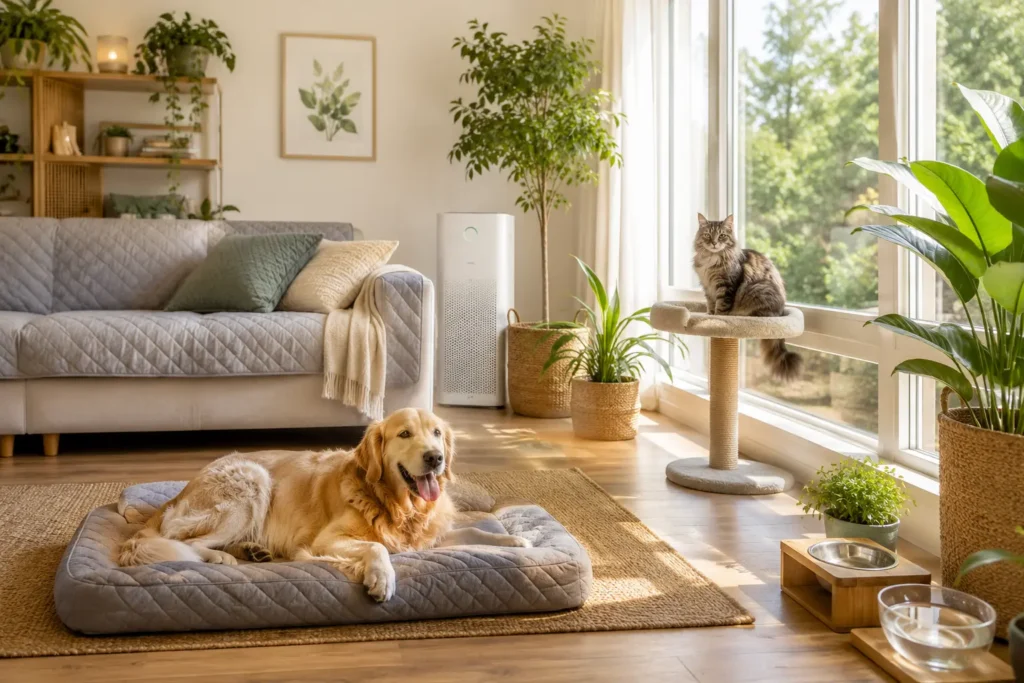
01 — HEALTHY AIR
Clean Indoor Air
Indoor air may contain dust, pet dander, pollen, mold spores, cooking fumes, and volatile organic compounds (VOCs) released from certain paints, furniture, fragrances, or cleaning products. While occasional exposure is part of everyday life, reducing unnecessary pollutants contributes to a healthier indoor environment.
- Open windows when outdoor conditions are suitable
- Use kitchen and bathroom exhaust fans
- Replace HVAC filters on schedule
- Vacuum with HEPA filtration when practical
- Wash pet bedding regularly
- Manage humidity to discourage mold growth
02 — INDOOR COMFORT
Comfortable Temperature & Humidity
Pets are generally most comfortable in homes that maintain a stable indoor climate.
Large temperature swings can cause discomfort, while excessive humidity encourages mold growth and dust mites. Air that is too dry may also contribute to dry skin and irritation in some animals.
- Maintain a comfortable year-round temperature
- Provide shade during warmer periods
- Provide warm resting areas during colder weather
- Manage humidity with ventilation or dehumidification when needed