Eco Pet Home: Create a Cleaner, Greener & Pet-Friendly Home
The way we live with our pets is changing. A generation ago, a dog bed was simply a dog bed—often mass-produced, made from synthetic materials, and replaced without much thought. Today, more pet owners are asking an important question: How do the choices we make at home affect our pets, our families, and the planet?
Pet ownership in the United States alone exceeds 90 million households. When you multiply that number by the beds, toys, cleaners, flooring materials, and furniture that come with each pet, the environmental footprint becomes staggering. Synthetic materials off-gas volatile organic compounds (VOCs) into indoor air. Conventional cleaning products leave chemical residues on the surfaces where pets eat, sleep, and play. Cheap, disposable products fill landfills at an alarming rate. And yet many pet owners remain unaware of these hidden costs — until a pet develops a respiratory condition, a skin allergy, or a behavioral problem linked to indoor toxins.
Creating an eco-friendly pet home is not about perfection. It is about making intentional choices that reduce harm — to your animal, to your family, and to the environment — while building a living space that is genuinely healthier for everyone inside it. The demand for greener homes is growing. According to the Pet Sustainability Coalition, consumer interest in sustainable pet products has increased significantly year on year, and green home certifications are now influencing real estate purchasing decisions across North America and Europe.
This complete guide explores practical ways to create an eco pet home through safer cleaning routines, sustainable materials, better indoor air quality, and environmentally conscious pet ownership. We’ll explore practical strategies to help you create a pet friendly home that balances comfort, wellness, and environmental responsibility. You’ll learn how to create an eco friendly pet home through safer cleaning routines, sustainable design ideas, better indoor air practices, and mindful purchasing habits that support both your pets and the planet.
At TerraPawHome, we understand that balancing sustainability with everyday pet care can feel overwhelming. Through extensive research into environmentally conscious pet ownership and pet-safe living practices, our goal is to simplify the process and provide realistic solutions that work for modern families. Together, we can build a green pet home where pets thrive, families feel confident, and small changes contribute to a healthier future.
What Is an Eco Pet Home?
An eco-friendly pet home is a living environment designed, furnished, and maintained with sustainability, health, and responsible consumption as guiding principles. It is not a single product or a design aesthetic — it is a philosophy applied across every material choice, cleaning habit, and purchasing decision that affects the shared space between humans and animals.
Instead, it begins with small, intentional choices that support sustainable pet living and promote a healthy home environment for everyone under your roof. Whether it’s switching to pet-safe cleaning solutions, choosing natural materials, or making simple green home upgrades, every step can make a meaningful difference.
In practical terms, a green pet home prioritizes:
- Sustainable design: flooring, furniture, and structural materials that are renewable, recycled, or responsibly sourced.
- Healthy indoor environments: low-VOC finishes, natural ventilation, air filtration, and non-toxic cleaning products that protect both pet and human respiratory systems.
- Responsible consumption: buying less, buying better, and choosing products designed to last — reducing the waste cycle that cheap, disposable pet goods perpetuate.
- Eco-conscious pet ownership: understanding the full lifecycle of what you bring into your home and making choices that reflect both your values and your pet’s wellbeing.
The cleanest home for your pet is usually also the cleanest home for you — and for the planet.
Why Eco-Friendly Homes Matter for Pets and Families
The environment inside your home plays a major role in the health and well-being of both pets and people. Dogs and cats spend most of their lives indoors, sleeping on floors, relaxing on furniture, and exploring every corner of the house. Because they are in close contact with household surfaces, the products and materials we use every day can directly affect their quality of life.
Better Indoor Air Quality
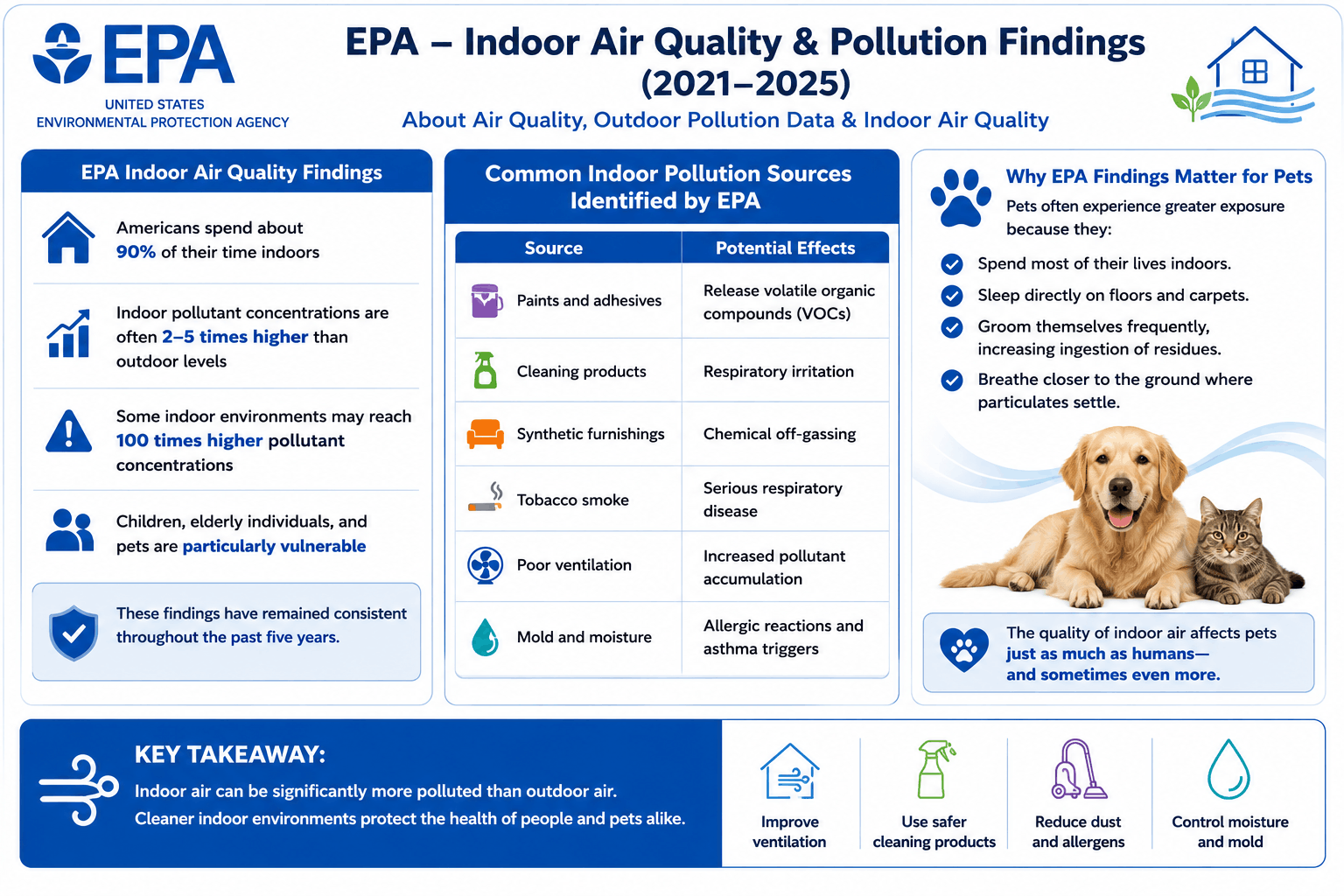
One of the biggest benefits of an eco-friendly pet home is improved indoor air quality. According to the Environmental Protection Agency (EPA), indoor air can sometimes be more polluted than outdoor air. Conventional paints, cleaning products, adhesives, and synthetic furnishings may release volatile organic compounds (VOCs) into the environment.
Choosing low-VOC paints, improving ventilation, and using natural materials can help create a healthy home environment where pets and families breathe easier.
Reduced Exposure to Harmful Chemicals
Traditional cleaning sprays, artificial fragrances, and chemically treated fabrics can leave residues on the surfaces where pets eat, play, and rest. Since pets often groom themselves and spend time close to the floor, reducing exposure to unnecessary chemicals is an important part of pet-safe cleaning and environmentally conscious pet ownership.
Opting for fragrance-free cleaners, organic textiles, and safer household products supports a more non-toxic home environment for pets.
Lower Environmental Impact
A green pet home also helps reduce household waste. Disposable pet products, excessive packaging, and low-quality items that require frequent replacement all contribute to environmental pollution.
Adopting sustainable pet living practices—such as choosing durable products, reducing single-use plastics, and supporting responsible brands—can significantly lower your family’s environmental footprint.
Long-Term Cost Savings
Many sustainable choices provide excellent value over time. Durable flooring materials like bamboo and cork can last for years, while high-quality pet accessories often outlast cheaper alternatives. Energy-efficient lighting and better home insulation may also reduce utility costs.
Creating an eco pet home isn’t about being perfect. It’s about making thoughtful choices that support healthier pets, happier families, and a more sustainable future for everyone.
Green Home Upgrades for Pet Owners
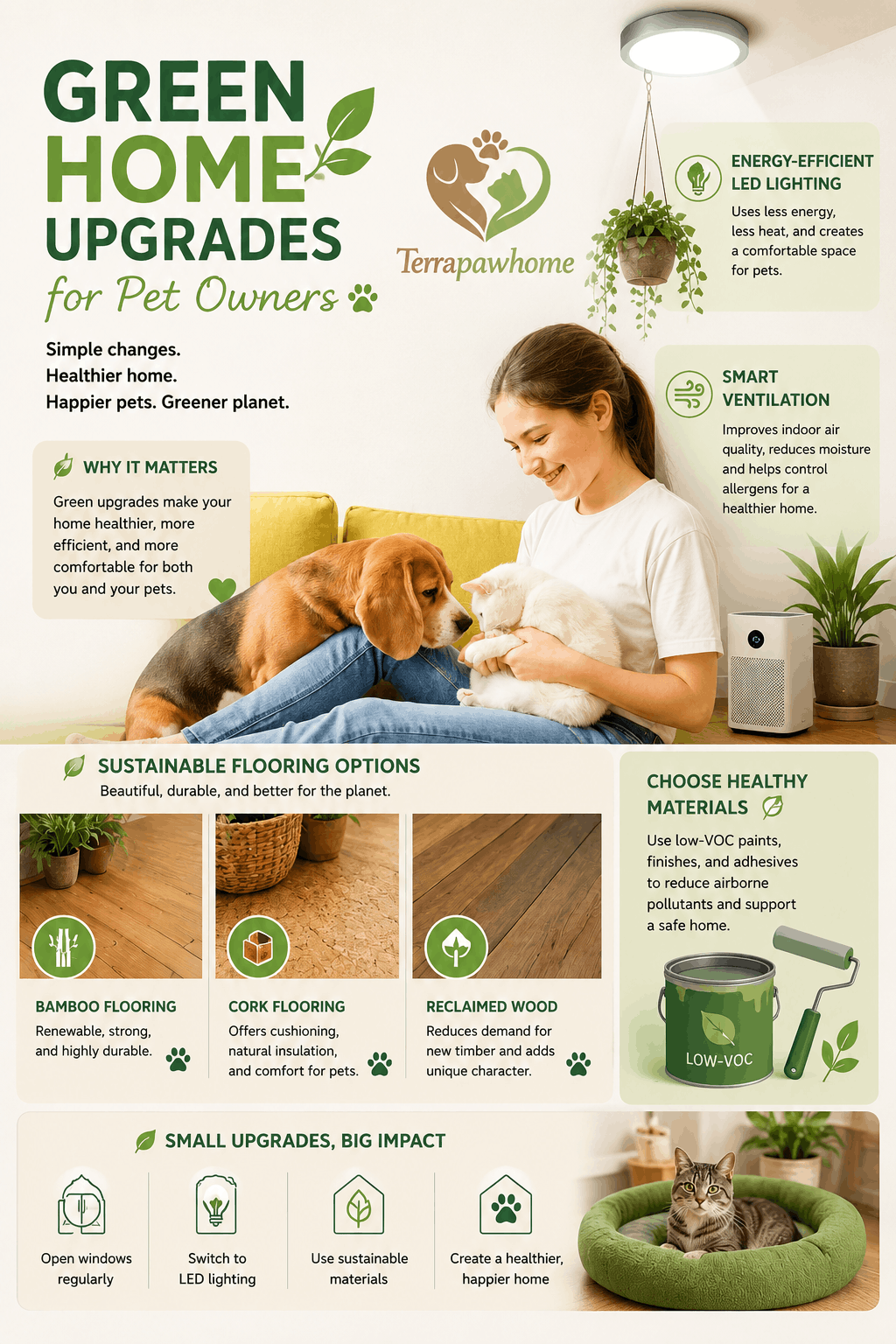
Green home upgrades are simple improvements that make your home healthier, more efficient, and more comfortable for pets and people alike. The good news is that you don’t need a complete renovation to begin creating an eco pet home.
One of the easiest upgrades is switching to energy-efficient LED lighting. LEDs consume less electricity, generate less heat, and provide consistent illumination throughout your home. This can create a more comfortable environment for pets while lowering energy costs.
Ventilation is another important consideration. Proper airflow improves indoor air quality, reduces moisture buildup, and helps control allergens that affect both pets and their owners. Opening windows regularly and using smart ventilation systems can make a significant difference.
Flooring also plays a major role in creating a pet friendly home. Sustainable materials such as bamboo, cork, and reclaimed wood provide durable surfaces while reducing exposure to harmful chemicals often found in synthetic alternatives.
- Bamboo flooring is renewable and highly durable.
- Cork flooring offers cushioning and natural insulation.
- Reclaimed wood reduces demand for newly harvested timber.
When renovating, choose low-VOC paints, finishes, and adhesives whenever possible. These products contribute to a healthy home environment by reducing airborne pollutants.
Creating a greener home doesn’t happen overnight. Small upgrades completed over time can improve your pet’s comfort while supporting a more sustainable lifestyle. Many eco-friendly home ideas for pet owners begin with simple changes, such as improving ventilation, upgrading to energy-efficient lighting, and choosing sustainable materials for everyday living.
🔵 Explore our Green Home Upgrades guide for practical renovation ideas and room-by-room inspiration.
Eco Materials for Pet Homes
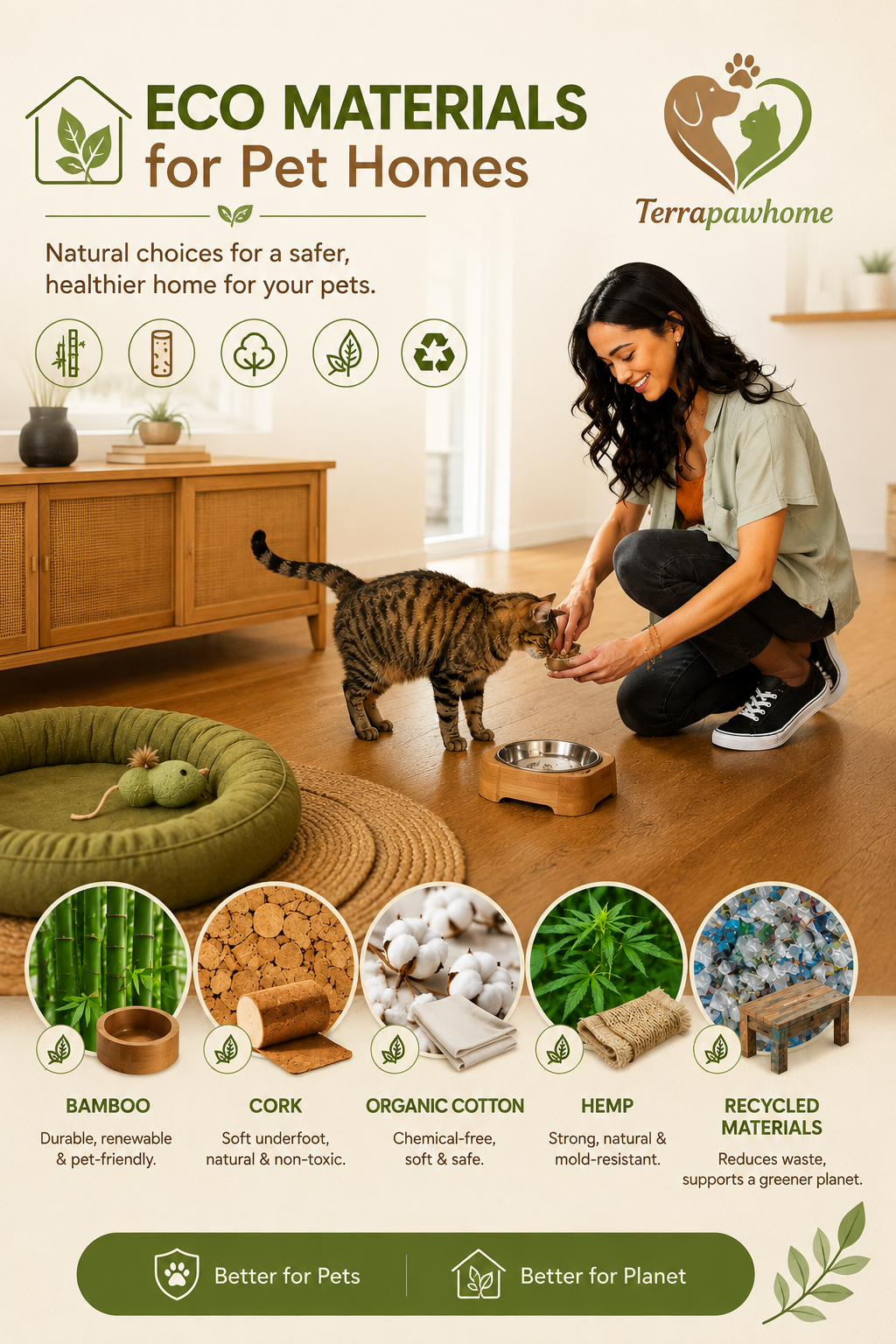
Choosing the right materials is one of the most important steps in creating an eco-friendly pet home. Pets interact with floors, furniture, bedding, and fabrics every day, making material selection essential for both comfort and safety.
Bamboo
Bamboo is one of the fastest-growing renewable resources in the world. It is durable, naturally attractive, and commonly used for flooring, feeding stations, and furniture accessories.
Cork
Cork provides a softer surface underfoot, making it particularly beneficial for older pets or breeds prone to joint problems. It also offers natural insulation and resistance to mould.
Organic Cotton
Organic cotton is a popular choice for pet bedding, cushion covers, and furniture throws. Because it is produced without synthetic pesticides, it contributes to a non-toxic home environment for pets.
Hemp
Hemp is durable, naturally resistant to mould, and requires minimal water during cultivation. It works well for pet accessories and heavy-use household textiles.
Recycled Materials
Products made from recycled plastics or reclaimed wood help reduce landfill waste and conserve valuable resources.
By selecting natural materials and responsibly sourced products, pet owners can build a green pet home that balances functionality, comfort, and sustainability.

.
Sustainable Pet Living
Sustainable pet living is about making thoughtful decisions that support both your pet’s wellbeing and the environment.
One of the simplest ways to begin is by changing buying habits. Instead of frequently replacing inexpensive items, focus on purchasing durable products designed to last. Quality beds, feeding accessories, and enrichment toys often provide better long-term value.
Another important principle is reducing waste. Consider reusable food storage containers, washable cleaning cloths, and refillable household products whenever possible. Small adjustments can significantly reduce your household’s environmental footprint.
Environmentally conscious pet ownership also means supporting companies that prioritize sustainable sourcing, ethical manufacturing, and reduced packaging.
Remember that sustainable living tips for pet families don’t require perfection. Progress happens through everyday choices.
Examples include:
- Choosing long-lasting toys.
- Reducing single-use plastics.
- Purchasing products with minimal packaging.
- Repairing rather than replacing when possible.
Building an eco pet home is a journey, and every positive decision contributes to a healthier future.
🔵 Visit Sustainable Pet Living for practical habits and eco-friendly lifestyle inspiration.
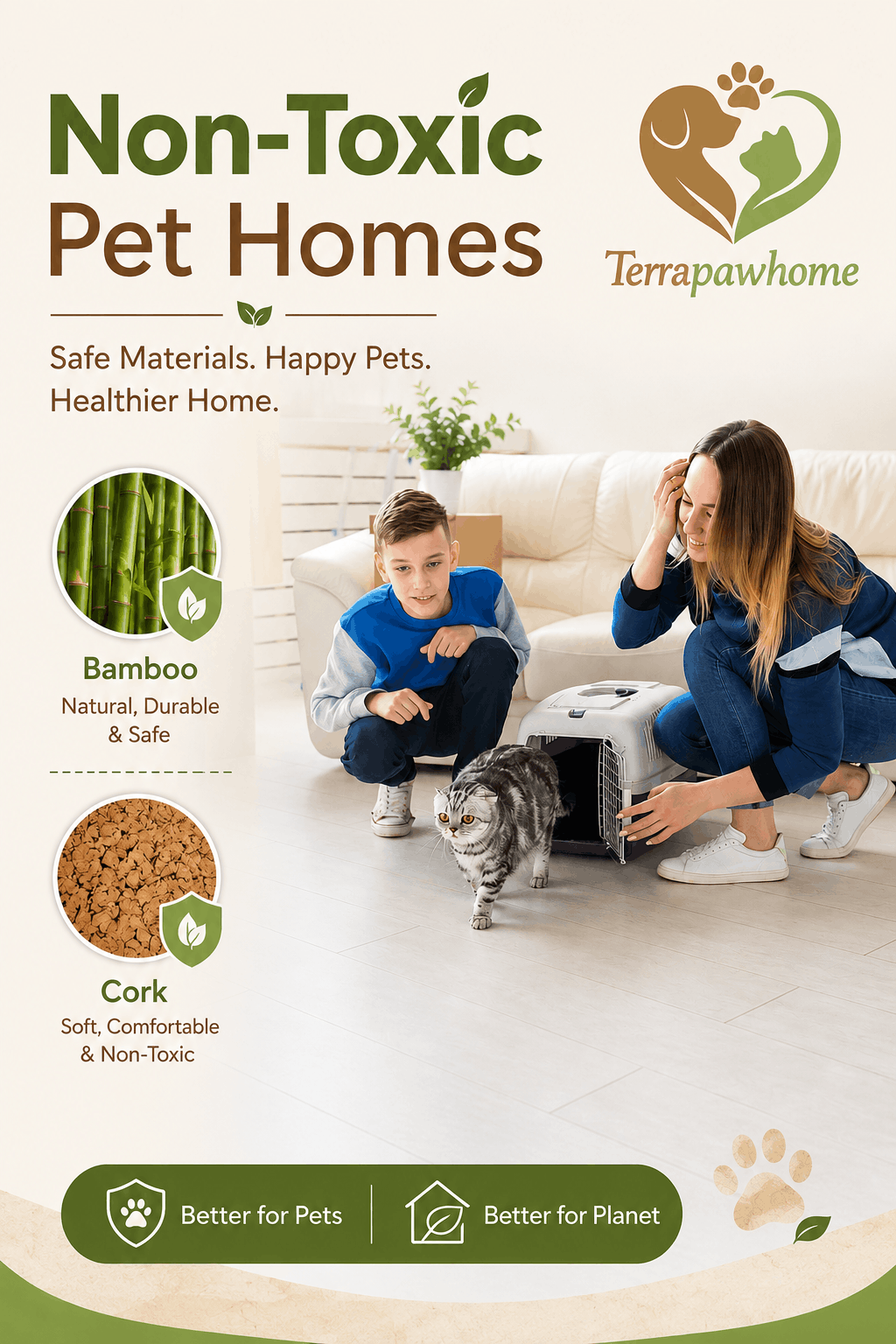
Non-Toxic Pet Homes
Creating a non-toxic home environment for pets is one of the most effective ways to protect their health.
Pets spend much of their lives close to floors and furniture, increasing their exposure to chemical residues and airborne particles. Improving indoor air quality should therefore be a priority.
Simple strategies include:
- Opening windows regularly.
- Using HEPA filtration systems.
- Controlling indoor humidity.
- Choosing low-VOC renovation materials.
When decorating or renovating, select low-VOC paints, adhesives, and finishes whenever possible. These products release fewer airborne pollutants and support a healthy home environment.
Cleaning choices also matter. Many traditional products contain strong chemicals that may irritate pets.
Safer alternatives include:
- Plant-based cleaners.
- Fragrance-free products.
- Baking soda solutions.
- Castile soap.
Pet owners should also research household plants carefully, as some decorative species may be toxic to animals.
Small adjustments made over time can dramatically reduce unnecessary chemical exposure while creating a safer, more comfortable home. If you’re wondering how to make your home safer for pets naturally, start by improving indoor air quality, reducing harsh chemicals, and selecting pet-friendly materials throughout your home.
🔵 Read our Non-Toxic Pet Homes guide to discover pet-safe products and room-specific recommendations.
Minimalist Pet Homes
Minimalism complements sustainable pet living by encouraging quality over quantity. A clutter-free environment is easier to clean, reduces dust accumulation, and creates calmer surroundings for pets.
Benefits include:
- Fewer surfaces collecting pet hair.
- Reduced reliance on cleaning products.
- Better organization.
- Lower stress levels for sensitive animals.
Designate purposeful spaces for sleeping, feeding, and play to improve daily routines for both pets and owners.
🔵 Explore Minimalist Pet Homes for practical decluttering ideas and pet-friendly design inspiration.
Common Mistakes Pet Owners Make When Creating an Eco Pet Home
Building an eco pet home doesn’t require perfection, but there are a few common mistakes that can prevent pet owners from creating the healthier environment they envision. By recognizing these pitfalls early, you can make more informed choices that support both your pet’s wellbeing and sustainable living goals.
1: Choosing “Green” Products Without Checking Ingredients
Not every product marketed as “natural” or “eco-friendly” is truly safe for pets. Some items may still contain synthetic fragrances, harsh preservatives, or unnecessary chemicals. Always read labels carefully and look for transparent ingredient lists, trusted certifications, and brands committed to responsible manufacturing.
2: Relying on Disposable Pet Products
Convenience often comes at an environmental cost. Single-use puppy pads, disposable wipes, and low-quality toys contribute to unnecessary waste. Whenever possible, choose durable alternatives such as washable bedding, reusable cleaning cloths, and long-lasting pet accessories that align with sustainable pet living principles.
3: Ignoring Indoor Air Quality
Many pet owners focus on food and toys while overlooking the importance of indoor air quality. Poor ventilation, synthetic air fresheners, and high-VOC household products can negatively affect both pets and people. Improving airflow and selecting low-toxin products can help create a healthy home environment.
4: Overlooking Pet-Safe Plants
Houseplants can enhance a green pet home, but some common varieties may be harmful if chewed or ingested. Before introducing new plants into your space, verify that they are safe for the specific pets in your household.
5: Prioritizing Style Over Practicality
Beautiful design should never come at the expense of comfort or functionality. A truly pet friendly home balances aesthetics with durability, easy maintenance, and the everyday needs of pets. Choosing natural materials, washable fabrics, and thoughtfully designed spaces creates a home that works well for everyone.
Remember, creating an eco-friendly pet home is a journey of continuous improvement. Small, intentional changes often have the greatest long-term impact.
Eco Pet Home Checklist
- Switch to pet-safe cleaning products.
- Improve indoor air quality through ventilation.
- Choose sustainable flooring and furnishings.
- Reduce single-use plastics.
- Create calm, organized pet spaces.
- Buy durable, high-quality pet products.
- Prioritize regular veterinary care.
- Support brands with transparent sustainability practices.
Conclusion: Building A Better Home For Your Pet And The Planet
Creating an eco-friendly pet home is one of the most meaningful investments you can make in your animal’s long-term health — and in your own. Every material choice, cleaning habit, and purchasing decision in a home shared with pets has direct consequences for indoor air quality, chemical exposure levels, and resource consumption. The good news is that the healthiest choices for your pet are, in virtually every case, also the most sustainable ones.
Healthier pets live in homes with cleaner air, safer surfaces, and fewer toxic products. Healthier homes use durable, natural materials that last longer and generate less waste. Lower environmental impact comes from choosing renewable, recycled, and responsibly sourced alternatives over conventional products with hidden ecological costs. And better long-term value comes from buying well once rather than replacing cheap goods repeatedly.
You do not need to transform your home overnight. Begin with the highest-impact changes — air quality, cleaning products, flooring — and build from there. Every choice compounds over time, and the cumulative effect of millions of eco-conscious pet owners making better decisions is genuinely significant.
Continue Your Eco Pet Home Journey
Creating a cleaner and greener home is only one part of responsible pet ownership. Explore more practical guidance through our other expert resources:
Expert & Research References
This guide references and is informed by guidance from the following expert organisations:
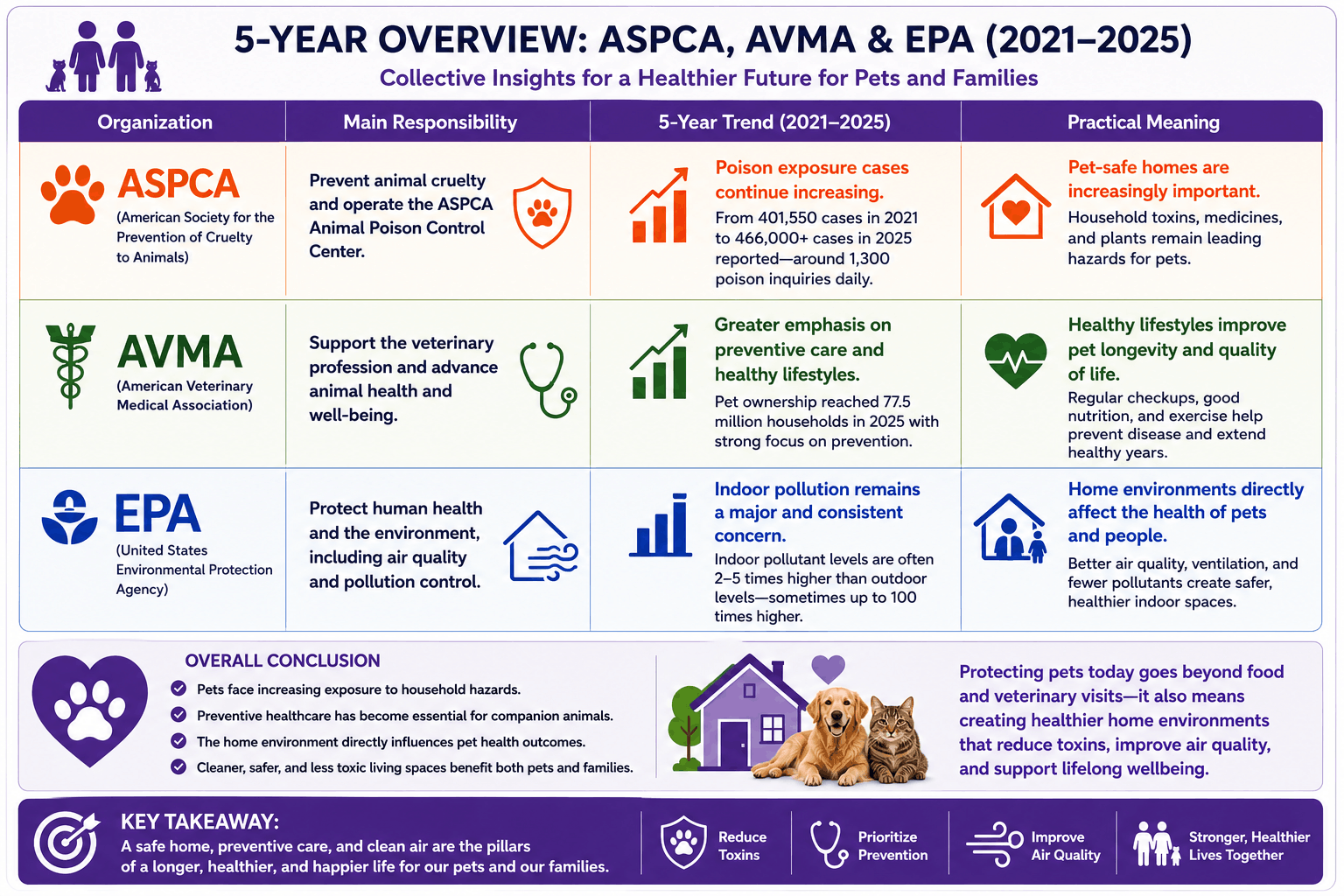
- ASPCA (American Society for the Prevention of Cruelty to Animals) — Animal Poison Control Center: aspca.org/pet-care/animal-poison-control
- American Veterinary Medical Association (AVMA) — Indoor environment and pet health resources: avma.org
- United States Environmental Protection Agency (EPA) — Indoor Air Quality guidance and Safer Choice programme: epa.gov/indoor-air-quality-iaq
- Pet Sustainability Coalition — Industry sustainability data and consumer research: petsustainability.org
- World Health Organization (WHO) — Indoor air quality and household chemical exposure guidelines: who.int
.
Frequently Asked Questions (FAQ’S)
1: What is an eco pet home?
Ans: An eco pet home is a living environment designed to support sustainability, pet wellness, and environmental responsibility through the use of eco-friendly materials, non-toxic products, and sustainable lifestyle practices.
2: How can I make my home more eco-friendly for pets?
Ans: You can start by using pet-safe cleaning products, reducing waste, improving indoor air quality, choosing sustainable materials, and purchasing durable pet products.
3: Are eco-friendly pet products worth it?
Ans: Many eco-friendly pet products are designed for durability, safety, and environmental responsibility, making them a worthwhile long-term investment.
4: What materials are safest for pet homes?
Ans: Organic cotton, bamboo, cork, reclaimed wood, recycled materials, and responsibly sourced natural fibers are among the safest and most sustainable options.
5: How can I reduce waste as a pet owner?
Ans: Use reusable containers, durable toys, refillable products, washable cleaning supplies, and choose products with minimal packaging.
6: Are natural cleaning products safe for pets?
Ans: Many natural cleaning products are safer than traditional chemical-based cleaners, but pet owners should always verify ingredients and follow manufacturer recommendations.
7: What is sustainable pet living?
Ans: Sustainable pet living involves making environmentally responsible choices that support pet health, reduce waste, and minimize environmental impact.
8: How do I create an eco pet home on a budget?
Ans: Start with low-cost improvements such as using fragrance-free cleaning products, opening windows regularly for better ventilation, choosing reusable pet supplies, and replacing household items gradually rather than all at once.