
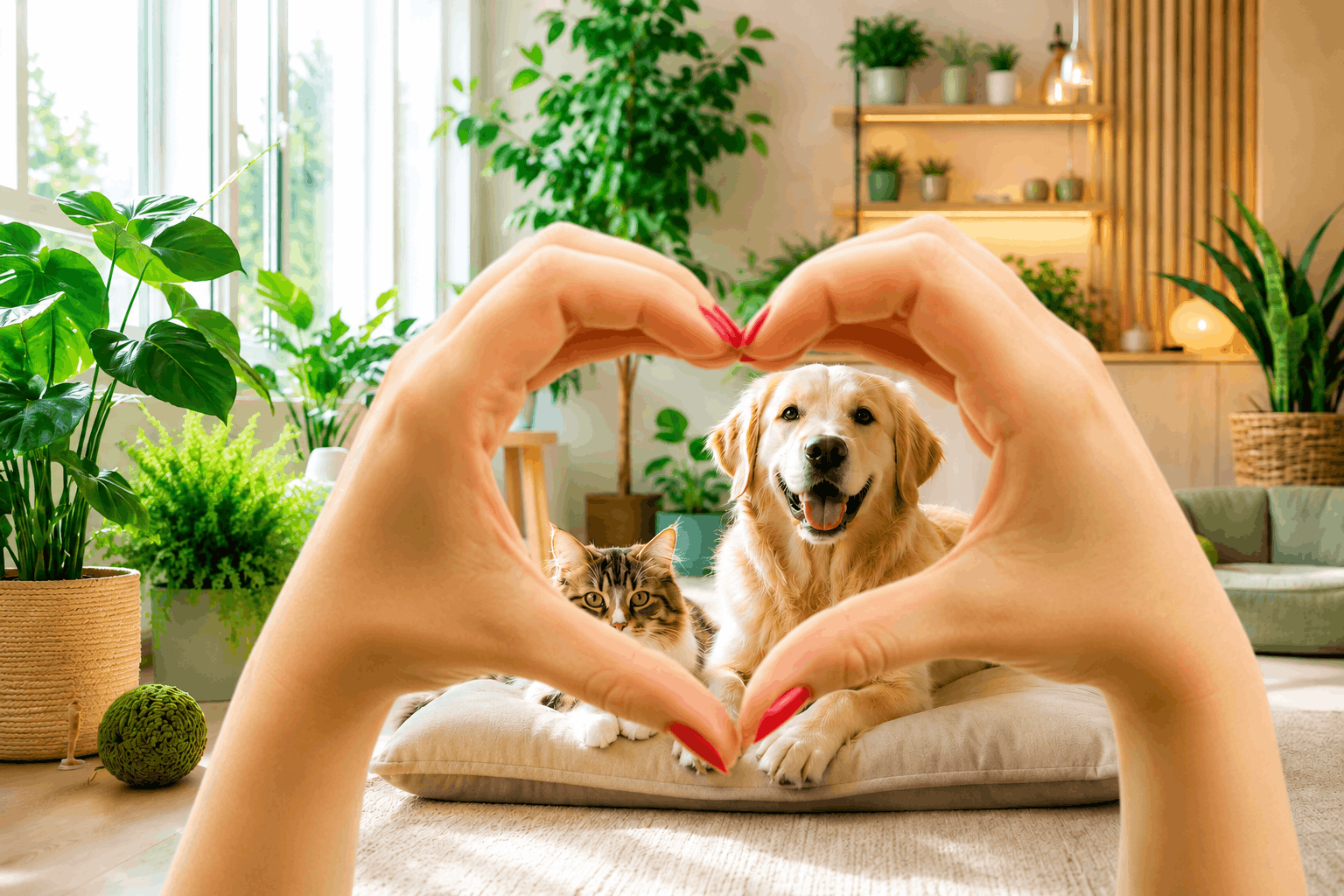
The Complete Guide to a Safer, Cleaner & Healthier Home
Pet Wellness at Home
Create a cleaner, calmer, and more supportive home for your dogs and cats with simple wellness habits, safe spaces, better indoor air, enrichment, and eco-friendly choices.
Note: Based on veterinary organizations and reputable pet care resources. Always consult a qualified veterinarian for health concerns, illness, injury, or major behavior changes.
Pets depend on us for much more than food and shelter. The environment we create for them influences how they feel, behave, and thrive every day. From the air they breathe to the spaces where they sleep, every part of the home plays a role in their wellbeing.
Many pet owners focus on nutrition, grooming, and veterinary care when thinking about pet health. While these are essential, wellness goes beyond routine care. A healthy home environment can support physical health, reduce stress, encourage natural behaviors, improve sleep, and contribute to a happier life for both dogs and cats.
For indoor pets especially, the home becomes their entire world. They spend most of their time inside the same environment, interacting with the same spaces, smells, sounds, and routines. That’s why creating a wellness-focused home is one of the most valuable things a pet owner can do.
The good news is that supporting pet wellness doesn’t require expensive renovations or dramatic lifestyle changes. Small improvements such as cleaner air, safer plants, daily enrichment, calm resting spaces, and consistent routines can have a meaningful impact over time.
In this guide, you’ll learn practical ways to create a healthier home for pets while supporting their physical, mental, and emotional wellbeing.
What Makes a Healthy Home for Pets?
A healthy home for pets provides more than safety and comfort. It supports the daily habits and natural behaviors that help pets thrive.
A Healthy Home for Pets Includes:
✅ Clean indoor air
✅ Safe surroundings
✅ Daily movement
✅ Fresh water access
✅ Comfortable sleep
✅ Mental enrichment
✅ Pet-safe plants
✅ Calm resting spaces
✅ Consistent routines
✅ Positive interaction
Table of Contents
- 01.What Is Pet Wellness at Home?
- 02.Why Your Home Environment Matters?
- 03. Healthy Indoor Air Quality for Pets
- 04. Supporting Physical Health at Home
- 05. Pet-Safe Plants and Toxic Plants
- 06. Creating Calm Spaces for Pets
- 07. Indoor Enrichment and Mental Wellness
- 08. Building a Daily Pet Wellness Routine
- 09. Eco-Friendly Pet Wellness Habits
- 10. Pet Wellness Home Checklist
- 11. Common Pet Wellness Mistakes to Avoid
- 12 .Frequently Asked Questions
- 13. Why Trust TerraPawHome?
- 14. Final Thoughts
What Is Pet Wellness at Home?
Pet wellness at home is the practice of creating an environment that supports your pet’s overall quality of life. Rather than focusing on a single aspect of care, wellness looks at the bigger picture.
The Key Elements of Pet Wellness
Think of pet wellness as the combination of small daily experiences that shape how your pet feels.
A dog that has clean air, regular exercise, a comfortable bed, enrichment activities, and a predictable routine is more likely to thrive than a dog that receives only basic care.
The same applies to cats. Indoor cats benefit greatly from climbing opportunities, mental stimulation, quiet resting spaces, and environments that allow them to express natural behaviors.
Pet wellness is not about perfection. It’s about creating a home that consistently supports health, happiness, and comfort.
- Physical Health
- Mental Stimulation
- Emotional Wellbeing
- Environmental Safety
- Daily Comfort
- Preventive Care
Pet Wellness at a Glance
✔ Clean Air
✔ Daily Activity
✔ Mental Enrichment
✔ Comfortable Rest
✔ Safe Environment
✔ Consistent Routine
🌿 Pet wellness is not about perfection. It’s about creating a home that consistently supports health, happiness, comfort, and emotional wellbeing through simple daily habits. Many of these wellness factors—including indoor air quality, enrichment, safe plants, and eco-friendly habits—are explored in greater detail throughout this guide.
Why Your Home Environment Matters for Pet Health
Pets experience the world through the environment around them. The air they breathe, the spaces where they rest, the routines they follow, and the opportunities they have to play all influence their health and wellbeing. A wellness-focused home can help pets feel safer, more comfortable, and better equipped to thrive throughout life.
Better Physical Health
Clean air, daily movement, proper rest, and safe surroundings help support healthy bodies and long-term wellbeing.
Improved Mental Wellness
Mental stimulation, enrichment activities, and predictable routines help reduce boredom and encourage positive behavior.
Greater Daily Comfort
Comfortable resting spaces, fresh water, and pet-friendly environments make everyday life easier and more enjoyable.
Better Long-Term Quality of Life
Small wellness habits practiced consistently can support healthier aging and improve overall quality of life.
A Healthy Environment Supports the Whole Pet
Many people think of pet health only in terms of food, exercise, and veterinary care. While these are essential, the home environment also plays a major role in overall wellness.
A clean, comfortable, and engaging home can support:
✔ Better sleep quality
✔ Reduced stress and anxiety
✔ Improved comfort
✔ Opportunities for natural behaviors
✔ Greater emotional security
✔ Stronger human-animal bonds
For indoor pets especially, the home becomes their primary environment. Small improvements such as cleaner air, calm resting spaces, enrichment activities, and safer materials can have a lasting impact on everyday wellbeing.
🌿 Every room, routine, and daily habit contributes to your pet’s overall wellness. Creating a healthier home environment is one of the most effective ways to support long-term health and happiness.
Healthy Indoor Air Quality for Pets
Indoor air quality is one of the most overlooked aspects of pet wellness. Because dogs and cats spend so much time indoors, they are constantly exposed to the air circulating throughout the home. Dust, dander, hair, odors, moisture, and airborne particles can all affect comfort and wellbeing.
Pets are often closer to floors, furniture, carpets, and bedding where these particles naturally accumulate.
A healthy indoor environment supports easier breathing, greater comfort, and a cleaner living space for both pets and people.
Common Indoor Air Quality Challenges
Pet Dander
Tiny skin particles can accumulate indoors and affect comfort and air quality.
Dust Build-Up
Dust collects on floors, furniture, and pet bedding where pets spend time.
Mold & Moisture
Excess moisture can encourage mold growth and reduce indoor comfort.
Poor Ventilation
Limited airflow can allow pollutants and odors to linger indoors.
Chemical Exposure
Strong cleaners, fragrances, and sprays may contribute to indoor air concerns.
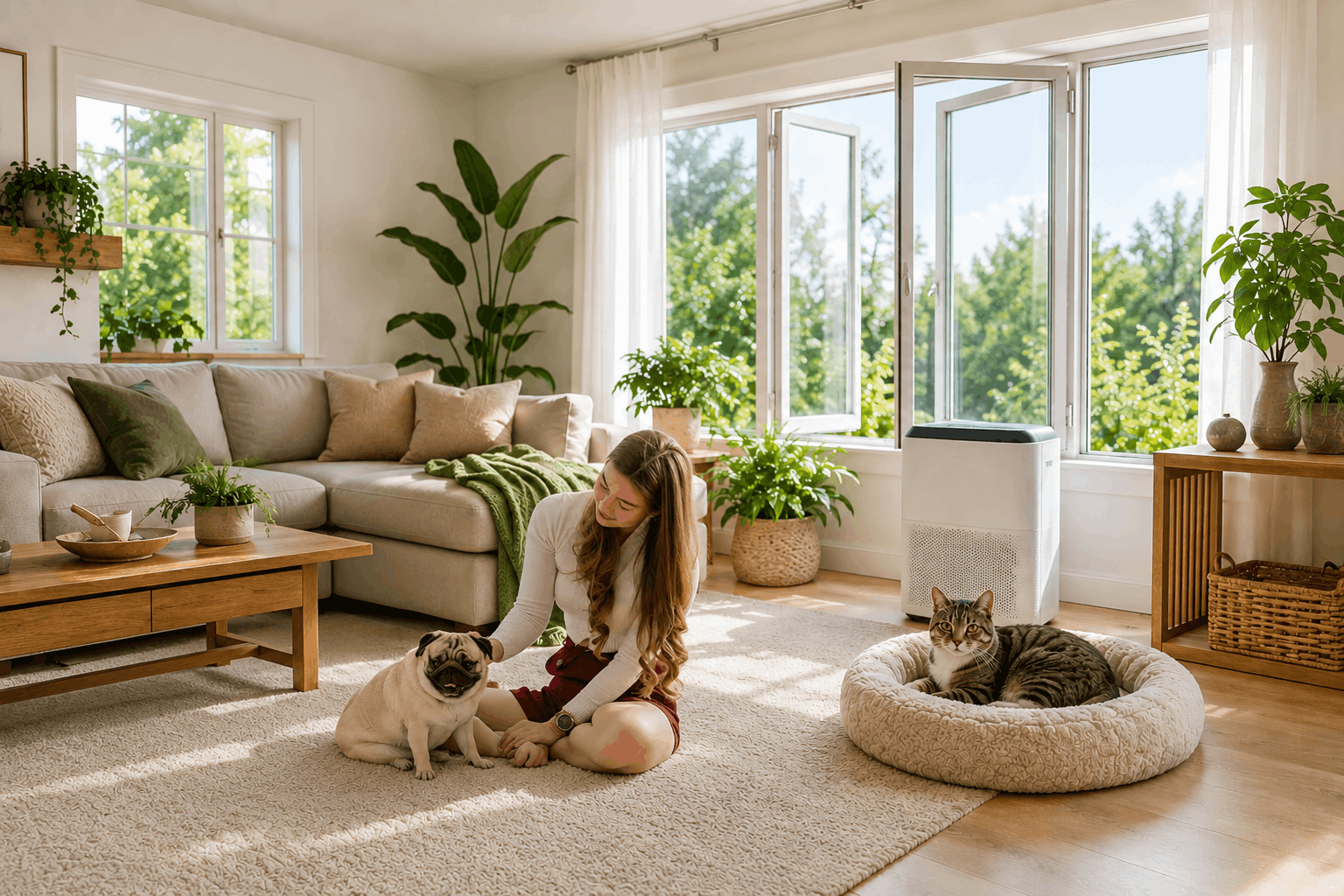
Pet Dander and Indoor Air Quality
Pet dander consists of tiny skin flakes that are naturally shed by dogs and cats.
These microscopic particles become airborne easily and settle on:
• Sofas
• Carpets
• Curtains
• Pet bedding
• Clothing
• Household surfaces
Over time, dander can contribute to indoor air quality challenges, particularly in homes with multiple pets.
While dander is a normal part of pet ownership, regular cleaning can help reduce accumulation.
Dust Control for Pet Owners
Dust is another common issue in pet-friendly homes.
Dust often collects around:
• Pet beds
• Upholstered furniture
• Corners
• Shelving
• Curtains
• Area rugs
Simple dust-control habits include:
• Vacuuming regularly
• Washing pet bedding weekly
• Dusting surfaces frequently
• Cleaning under furniture
• Reducing clutter
Small cleaning routines can significantly improve indoor comfort.
Air Purifiers for Pet Homes
Many pet owners use air purifiers to help reduce airborne particles.
HEPA filtration systems can help capture:
• Dust
• Pet hair
• Dander
• Other airborne particles
While an air purifier is not a replacement for cleaning, it can be a helpful addition to a wellness-focused home.
Create Cleaner Air for Your Pets
You don’t need expensive equipment to create cleaner air.
Start with:
✔ Regular vacuuming
✔ Washing pet bedding
✔ Dust control
✔ Improved ventilation
✔ Pet-safe cleaning routines
✔ Reducing unnecessary fragrances
These simple habits support healthier indoor air and create a more comfortable home environment.
🌬️ Cleaner air supports healthier pets. Simple habits such as regular cleaning, better ventilation, washing pet bedding, and reducing airborne irritants can help create a more comfortable and wellness-focused home environment.
Discover more ideas in our guide Indoor Air Quality.
Supporting Physical Health at Home
Physical wellness is influenced by much more than food and exercise.
The home itself affects how much your pet moves, rests, drinks water, and interacts with their surroundings.
Creating a wellness-focused environment helps encourage healthy habits naturally.
- Daily Exercise
Supports Healthy Muscles
Regular activity helps pets stay mobile and active.
- Hydration
Promotes Overall Wellness
Fresh water supports digestion and comfort.
- Quality Sleep
Encourages Recovery
Rest helps maintain physical and mental wellbeing.
- Healthy Weight
Supports Long-Term Health
Balanced activity and nutrition help maintain a healthy body condition.
Encourage Daily Movement
Regular movement supports:
• Healthy weight management
• Joint health
• Muscle strength
• Cardiovascular fitness
• Emotional wellbeing
For dogs, movement may include:
• Daily walks
• Fetch games
• Training sessions
• Interactive play
For cats, movement can be encouraged through:
• Cat trees
• Climbing shelves
• Wand toys
• Interactive games
Consistency matters more than intensity.
Create Better Sleeping Spaces
Dogs and cats spend a large portion of their lives sleeping.
A healthy sleeping area should be:
• Comfortable
• Quiet
• Clean
• Easy to access
Older pets may benefit from supportive bedding that reduces pressure on joints.
Quality sleep supports recovery, comfort, and overall wellbeing.
Support Healthy Hydration
Fresh water should always be available.
Simple hydration tips include:
• Clean bowls daily
• Refresh water regularly
• Use multiple water stations when needed
• Keep water easily accessible
Hydration supports digestion, circulation, temperature regulation, and overall health.
Improve Mobility and Comfort
Flooring can influence how easily pets move throughout the home.
Slippery surfaces may create challenges for:
• Senior pets
• Large dogs
• Pets recovering from injury
Area rugs and non-slip mats can provide better traction and confidence.
Healthy Weight Management
A home that encourages movement and activity naturally supports healthier weight management.
Combined with proper nutrition and veterinary guidance, active lifestyles help reduce strain on joints, muscles, and the cardiovascular system.
Small daily activities often create the biggest long-term benefits.
🌱 Healthy pets don’t rely on one habit alone. Daily exercise, proper hydration, quality sleep, and balanced routines work together to support lifelong physical wellbeing.
Pet-Safe Plants and Toxic Plants
Plants can make a home feel fresh, peaceful, and inviting. They also help create the natural atmosphere many pet owners want in a wellness-focused home.
However, not every houseplant is safe for pets.
Because dogs and cats often explore with their noses and mouths, plant safety should always be considered when bringing greenery indoors.
Pet-Safe Indoor Plants
🌿 Spider Plant
🌿 Areca Palm
🌿 Boston Fern
🌿 Calathea
🌿 Parlor Palm
These popular houseplants are generally considered safer choices for pet-friendly homes.
Toxic Plants to Avoid
⚠️ Lilies
⚠️ Sago Palm
⚠️ Aloe Vera
⚠️ Pothos
⚠️ Dieffenbachia
Some common houseplants may cause irritation or other health concerns if chewed or ingested by pets.
Why Plant Selection Matters?
Indoor plants contribute to a more relaxing and welcoming home environment. They can improve visual comfort, support wellbeing, and help create a calming atmosphere.
Pets, especially cats and young dogs, often explore their surroundings by chewing, sniffing, or playing with plants. Because of this, plant selection becomes an important part of creating a pet-friendly wellness home.
Choosing pet-safe plants allows pet owners to enjoy indoor greenery while maintaining a safer environment for everyday living.
Tips for Keeping Plants and Pets Together
- Research plants before bringing them home
- Monitor curious pets around new plants
- Place plants in stable containers
- Remove damaged leaves regularly
- Choose pet-safe alternatives whenever possible
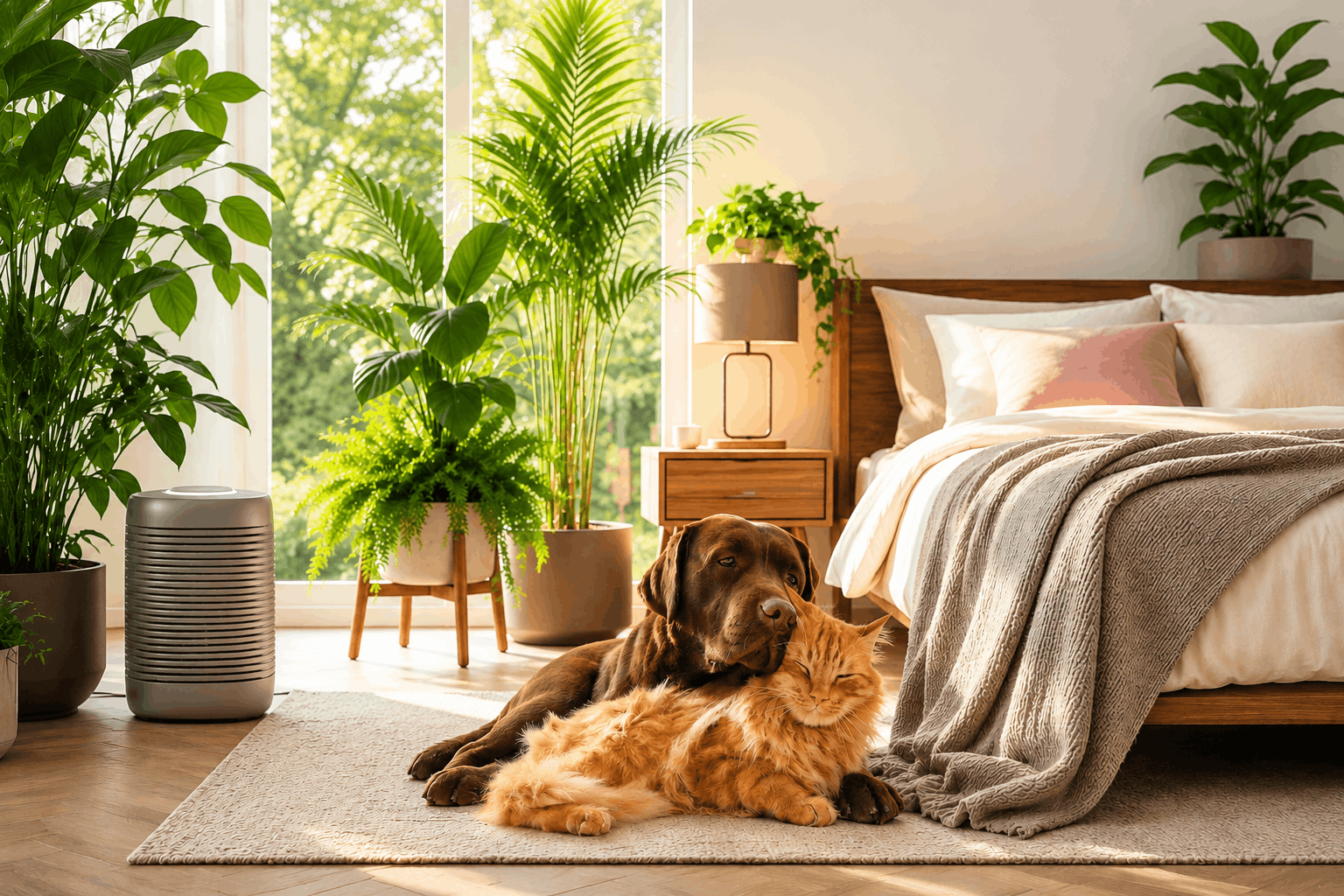
🌿 A pet-friendly home can still be full of greenery. Choosing safe plants and being aware of potentially harmful varieties helps create a healthier, more comfortable environment for both pets and people.
Creating Calm, Stress-Free Spaces for Pets
Every pet needs a place where they can rest, recharge, and feel secure.
Just like people, dogs and cats can experience stress. Loud noises, household activity, visitors, changes in routine, and unfamiliar situations may all affect emotional wellbeing.
A dedicated calm space helps pets feel safe and supported.
Reduce Anxiety
Quiet resting areas help pets feel more secure during stressful situations.
Improve Sleep Quality
Comfortable spaces support deeper rest and better recovery.
Increase Emotional Security
Predictable environments help pets feel safe and confident.
Encourage Relaxation
Calm spaces allow pets to unwind and recharge naturally.
Why Calm Spaces Matter
A well-designed pet retreat provides more than comfort. It gives pets a reliable place where they can relax, observe their surroundings, and escape everyday stress when needed.
- Reduce anxiety
- Encourage relaxation
- Improve sleep quality
- Increase emotional security
- Support recovery from stressful events
- Create a sense of routine
What Makes a Good Pet Retreat?
A good calm space should include:
Comfortable Bedding
Supportive bedding encourages quality rest and recovery.
Quiet Location
Choose an area away from constant foot traffic and noise.
Familiar Scents
Pets often feel more secure when surrounded by familiar smells.
Consistent Placement
Keeping resting areas in the same location helps create predictability.
Creating Calm Spaces for Dogs
Dogs Prefer:
- Soft, supportive bedding
- Low-traffic location
- Familiar scents and toys
- Consistent placement
- Easy access to water
- Safe, comfortable surroundings
Creating Calm Spaces for Cats
Cats Prefer:
- Elevated resting spots
- Window perches
- Covered beds
- Shelves and cat trees
- Quiet observation points
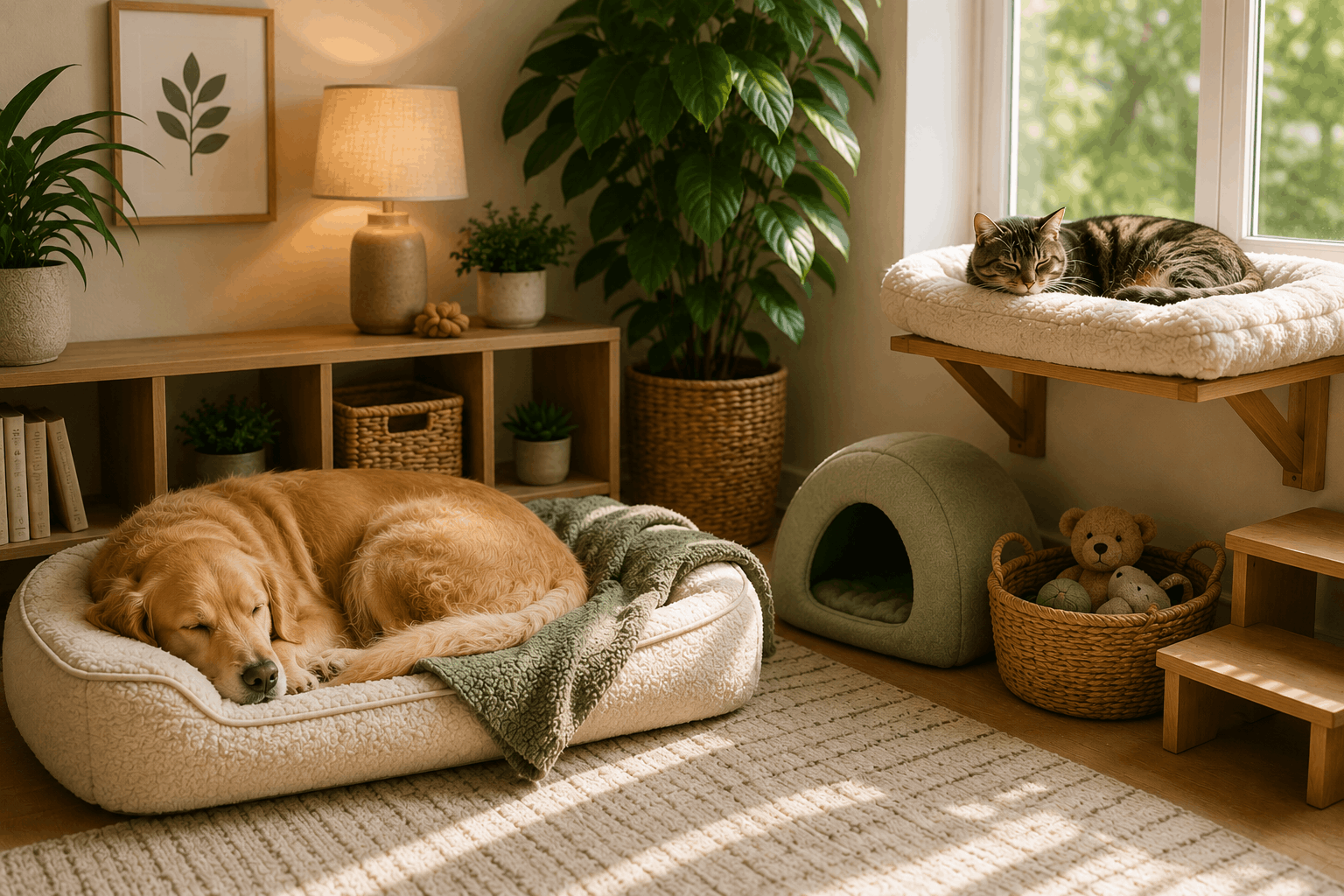
🌱 Calm spaces are not a luxury for pets—they are an important part of emotional wellbeing. Comfortable resting areas, predictable routines, and safe retreat spaces help dogs and cats feel secure, relaxed, and better prepared to handle everyday life.
Read our detailed guide to creating Calm Pet Spaces.
Indoor Enrichment and Mental Wellness
Physical health is only one part of wellness.
Dogs and cats also have emotional needs that influence behavior, confidence, and quality of life.
A pet can receive excellent food and veterinary care while still experiencing boredom, stress, or frustration if emotional needs are ignored.
What Is Pet Mental Wellness?
Mental wellness refers to your pet’s emotional and psychological wellbeing.
A mentally healthy pet generally feels:
• Safe
• Confident
• Engaged
• Comfortable
• Secure
The goal is not constant excitement. The goal is balance.
Pets need opportunities to explore, learn, rest, and express natural behaviors.
Common Causes of Stress
Lack of Mental Stimulation
Bored pets often create their own entertainment, which may lead to unwanted behavior.
Inconsistent Routines
Unpredictable schedules can increase anxiety.
Lack of Personal Space
Pets need opportunities to retreat and relax without interruption.
Environmental Changes
Moving house, renovations, visitors, and new family members can temporarily increase stress.
Supporting Emotional Wellbeing
Simple ways to support mental wellness include:
✔ Consistent routines
✔ Positive reinforcement training
✔ Daily enrichment
✔ Calm resting spaces
✔ Quality time together
✔ Opportunities for exploration
Small daily interactions often have a bigger impact than expensive products.
Indoor Enrichment for Dogs and Cats
Indoor enrichment is one of the most effective ways to support pet wellness.
Enrichment helps pets use their natural instincts while reducing boredom and frustration.
Think of enrichment as exercise for the brain.
Indoor Enrichment Ideas for Dogs
- Puzzle Feeders
Encourage problem-solving while slowing down eating.
- Snuffle Mats
Allow dogs to use their powerful sense of smell.
- Scent Games
Hide treats or toys and encourage searching behavior.
- Short Training Sessions
Learning new skills provides excellent mental exercise.
- Interactive Play
Games such as fetch, tug, and hide-and-seek keep dogs engaged.
- Exploration Opportunities
Safe exploration helps pets stay curious, engaged, and mentally stimulated.
Indoor Enrichment Ideas for Cats
- Cat Trees and Shelves
Provide climbing opportunities and elevated spaces for observation and exercise.
- Window Perches
Allow cats to observe outdoor activity safely.
- Wand Toys
Encourage healthy hunting-style play.
- Scratching Posts
Support natural scratching behavior.
- Tunnels and Boxes
Simple exploration opportunities often provide excellent enrichment.
🌿 Enrichment doesn’t have to be expensive or complicated. Simple activities, familiar toys, and a few minutes of daily interaction can make a meaningful difference to your pet’s mental wellbeing.
Explore practical tips in our guide Stress-Free Homes For Pets.
Building a Daily Pet Wellness Routine
One of the most effective ways to support pet wellbeing is through consistency.
Pets feel more secure when daily life follows predictable patterns.
A simple routine helps support physical health, emotional wellbeing, and better behavior.
Morning
Start the day with:
• Fresh water
• Feeding
• Short exercise or play session
• Quick wellness check
Observe your pet’s appetite, energy, and overall behavior.
Midday
Focus on:
• Rest and recovery
• Mental enrichment
• Fresh air and natural light
• Quiet relaxation time
Puzzle feeders and enrichment toys can help prevent boredom.
Evening
The evening is ideal for:
• Walks or active play
• Family interaction
• Training sessions
• Grooming when needed
Regular interaction strengthens the human-animal bond.
Night
Support restful sleep by providing:
• Comfortable bedding
• Quiet surroundings
• Consistent bedtime habits
• Easy access to water
Small routines performed consistently often create the greatest long-term benefits.
🐾 Small daily habits often create the biggest improvements in pet wellness. Consistent routines help pets feel safe, supported, and better prepared for a healthy life at home.
Eco-Friendly Pet Wellness Habits
Many of the choices that support pet wellness also contribute to a healthier and more sustainable home.
Eco-friendly pet wellness is about making thoughtful choices that benefit pets, people, and the environment.
- Avoid
❌ Strong fragrances
❌ Poor ventilation
❌ Harsh chemical exposure
❌ Disposable products
❌ Cheap bedding
❌ Short-lived toys
- Choose Instead
🌿 Pet-safe cleaners
🌿 Fresh airflow
🌿 Safer cleaning practices
🌿 Reusable supplies
🌿 Durable washable bedding
🌿 Long-lasting enrichment products
🌿 Choose Safer Cleaning Habits
Whenever possible:
• Use pet-friendly cleaning products
• Avoid excessive fragrances
• Reduce harsh chemical exposure
• Follow safe cleaning practices
Cleaner homes often create more comfortable environments for pets.
________________________________________
🌬 Improve Indoor Air Naturally
Simple habits can help support indoor air quality:
• Open windows regularly
• Encourage ventilation
• Reduce dust accumulation
• Maintain clean living spaces
Fresh airflow benefits everyone in the home.
________________________________________
🛋 Choose Durable Products
Quality products often last longer and reduce waste.
Examples include:
• Washable pet bedding
• Durable toys
• Long-lasting furniture protection
• Reusable cleaning supplies
Small sustainable choices add up over time.
________________________________________
🏡 Create a More Natural Environment
Many pets thrive in homes that include:
🌿 Natural light
🌿 Pet-safe plants
🌿 Fresh air
🌿 Comfortable resting spaces
🌿 Enrichment opportunities
Eco-friendly living and pet wellness naturally support one another.
🏡 Cleaner air, durable products, safer cleaning habits, and thoughtful home environments can support the wellbeing of pets and their families.
Pet Wellness Home Checklist
- Indoor Air Quality
☐ Windows opened regularly
☐ Dust controlled throughout the home
☐ Pet bedding washed weekly
☐ Floors vacuumed regularly
☐ Strong fragrances minimized
- Home Safety
☐ Toxic plants removed
☐ Cleaning products stored safely
☐ Choking hazards eliminated
☐ Hazardous materials secured
- Physical Wellness
☐ Daily movement opportunities available
☐ Fresh water accessible
☐ Comfortable sleeping areas provided
☐ Safe flooring supports mobility
- Mental Wellness
☐ Daily enrichment provided
☐ Puzzle feeders or scent games used
☐ Interactive play included
☐ Calm spaces available
☐ Routine kept consistent
- Eco-Friendly Wellness
☐ Pet-safe cleaning practices followed
☐ Durable products prioritized
☐ Waste reduced where possible
☐ Natural light and ventilation encouraged
Common Pet Wellness Mistakes to Avoid
⚠️ Ignoring Indoor Air Quality
Dust, dander, and poor ventilation can gradually affect comfort and wellbeing.
⚠️ Forgetting Mental Stimulation
Pets need opportunities to think, explore, and engage their natural instincts.
⚠️ Inconsistent Routines
Unpredictable feeding, exercise, and sleep schedules may increase stress.
⚠️ Choosing Unsafe Houseplants
Always verify that plants are pet-safe before bringing them into your home.
⚠️ Overlooking Rest and Recovery
Quality sleep and comfortable resting areas support overall wellness.
⚠️ Trying to Change Everything at Once
Small, sustainable improvements are often more effective than major changes.
💡 Pet wellness isn’t about perfection. Consistent small improvements often have a greater impact than dramatic changes made all at once.
Frequently Asked Questions
What Is Pet Wellness at Home?
Pet wellness at home means creating an environment that supports physical health, mental stimulation, emotional wellbeing, and daily comfort.
How can I keep my pets healthy indoors?
Provide exercise, enrichment, clean air, fresh water, comfortable rest areas, and predictable routines.
Why is indoor air quality important for pets?
Pets spend much of their lives indoors. Cleaner air helps support comfort and respiratory health.
What plants are safe for dogs and cats?
Spider Plants, Boston Ferns, Areca Palms, Calatheas, Prayer Plants, and Parlor Palms are commonly recommended pet-safe choices.
How can I reduce stress in my pet?
Create calm spaces, maintain routines, provide enrichment, and support positive experiences.
Why is enrichment important?
Enrichment helps prevent boredom, supports mental wellness, and encourages natural behaviors.
Can a healthier home improve behavior?
In many cases, yes. Better routines, enrichment, rest, and environmental support often encourage healthier behavior patterns.
What are the signs of poor pet wellness at home?
Common signs may include boredom, excessive sleeping, destructive behavior, anxiety, reduced activity levels, changes in appetite, or a lack of interest in normal activities.
Why Trust TerraPawHome?
At TerraPawHome, we believe pet wellness begins at home.
Our content focuses on practical, evidence-informed strategies that help pet owners create healthier environments for dogs and cats.
We emphasize:
• Indoor wellness
• Healthy home environments
• Mental enrichment
• Pet-safe living
• Eco-friendly practices
• Sustainable pet care
Our recommendations are informed by educational resources and guidance from respected veterinary and animal welfare organizations.
This guide is intended for educational purposes and should not replace professional veterinary advice.
Always consult a qualified veterinarian regarding health concerns, illness, injury, or significant behavior changes.
💚 Our mission is simple: help pets, people, and the planet thrive together at home through practical, responsible, and wellness-focused living.
Final Thoughts
Creating a healthier home for your pets doesn’t require perfection. Small improvements in air quality, enrichment, comfort, safety, and daily routines can make a meaningful difference over time. By focusing on physical health, emotional wellbeing, and sustainable living practices, you can create an environment where both pets and people thrive together.
🐾 Start with one small change today. Whether it’s improving air quality, creating a calm resting space, or adding daily enrichment, every step contributes to a healthier and happier home for your pets.
Continue Your Eco Pet Home Journey
Explore more expert guides designed to help you create a cleaner, greener, and more pet-friendly home.
🏡 Core TerraPawHome Guides
Explore our foundational guides for building a cleaner and more pet-friendly home.
Pet Wellness Deep-Dive Guides
Dive deeper into eco-friendly Pet Wellness strategies for everyday pet households.
References & Sources
- American Veterinary Medical Association (AVMA)
- ASPCA
- ASPCA Animal Poison Control Center
- American Kennel Club (AKC)
- Humane Society of the United States
- International Cat Care
- U.S. Environmental Protection Agency (EPA)
- Fear Free Pets
- American Animal Hospital Association (AAHA)
- International Association of Animal Behavior Consultants (IAABC)
Remember: Small, consistent daily habits often have a greater impact on long-term pet wellness than occasional large changes. Focus on creating routines your pet can rely on.
Very TerraPawHome.