
Woman relaxing with her dog in a bright eco-friendly living room while a cat sits on the sofa surrounded by indoor plants and natural sunlight.

The Complete Guide to a Safer, Cleaner & Healthier Home

Eco Cleaning for Pet Owners

Create a cleaner, healthier, and pet-safe home with practical eco cleaning strategies that improve indoor air quality, reduce pet messes, and support sustainable living.

If you share your home with a dog or cat, you already know that cleaning looks a little different than it does in pet-free households.
It might be pet hair collecting on the sofa just after you’ve vacuumed, muddy paw prints across the kitchen floor after a walk, or bedding that seems to need washing far more often than expected. These everyday realities are simply part of living with pets. Yet many pet owners unknowingly face another challenge that is less visible but equally important: the cleaning products used inside the home.
Most traditional cleaning products are designed to remove dirt, grease, stains, and odors effectively. However, pets interact with household surfaces differently than humans do. Dogs and cats spend much of their time close to floors, furniture, rugs, and bedding. They walk barefoot across freshly cleaned surfaces, groom themselves throughout the day, and often investigate their environment using their noses and mouths. Because of this constant contact, they may be exposed to cleaning residues and airborne chemicals more frequently than their owners realize.
Eco cleaning offers a practical alternative. Rather than relying heavily on harsh chemicals and heavily scented products, eco cleaning focuses on safer cleaning methods, responsible product choices, better indoor air quality, and consistent maintenance habits. The goal is not to create a perfectly spotless home. The goal is to create a healthier living environment that supports both pet wellbeing and environmental responsibility.
According to the ASPCA Animal Poison Control Center, household cleaning products consistently appear among the top reported toxin exposures in pets every year. In 2024 alone, the APCC responded to more than 451,000 calls related to toxic exposures in animals, with household products including cleaners making up a notable share of those reports.
Whether you live with a playful puppy, a senior dog, an indoor cat, or a multi-pet household, eco cleaning can help create a fresher, safer, and more comfortable environment. This guide explores the principles of eco cleaning, common household challenges, practical solutions, and simple routines that can help pet owners maintain a healthier home without overcomplicating the process.

What's Inside This Guide

What Is Eco Cleaning for Pet Owners?
Eco cleaning for pet owners is the practice of maintaining a clean and hygienic home using methods, products, and habits that are safer for pets, people, and the environment.
Many people assume eco cleaning simply means using natural ingredients instead of commercial cleaners. In reality, it is much broader than that. Eco cleaning focuses on reducing unnecessary chemical exposure, improving indoor environmental quality, minimizing waste, and creating cleaning routines that support long-term health.
For pet owners, this approach is especially important because animals experience the home differently than humans. A dog may spend hours resting on the living room floor. A cat may sleep on furniture, window ledges, and bedding throughout the day. Both regularly groom themselves, which means anything left behind on surfaces can eventually become part of their daily exposure.
Traditional cleaning methods often prioritize immediate results through strong disinfectants, artificial fragrances, and aggressive chemical formulations. While these products may be effective for certain tasks, they are not always the best option for households where pets spend significant time close to treated surfaces.
Eco cleaning takes a more balanced approach.
Instead of focusing solely on removing dirt, it considers the overall health of the indoor environment.

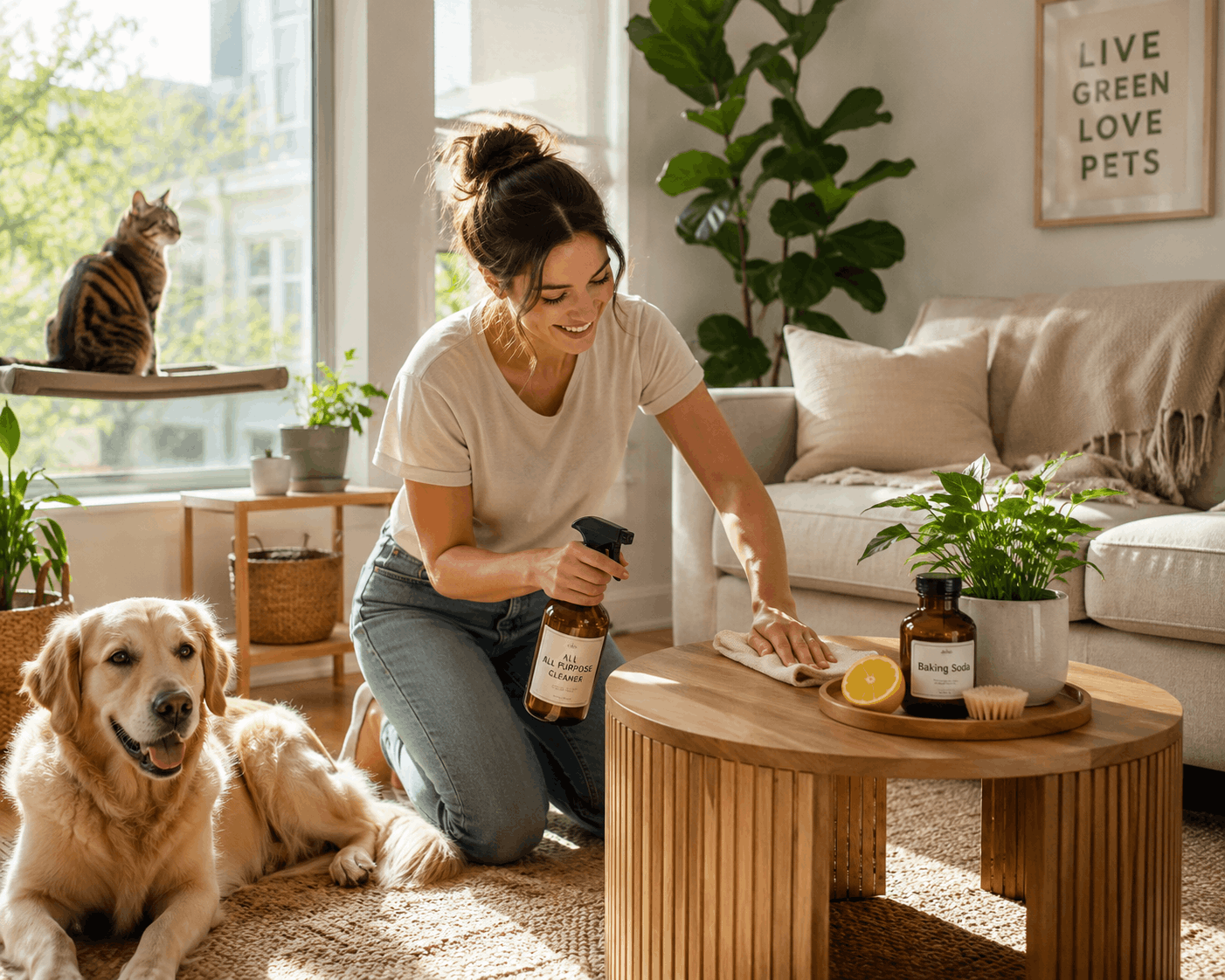
Pet owner cleaning a bright living room with natural cleaning supplies while a happy dog relaxes nearby and a cat sits on a window perch in an eco-friendly home.

🌿 Eco cleaning isn’t just about cleaner surfaces—it’s about creating a healthier environment for pets, people, and the planet.

A Pet-Friendly Eco Cleaning Strategy Often Includes:

Why Eco Cleaning Matters More Than Most People Think?

Most pet owners pay close attention to what their animals eat, where they sleep, and which products they use directly on their skin or coat. Far fewer consider how cleaning products may affect pets after the cleaning process is complete. The reality is that pets are exposed to household environments in ways humans are not. A freshly cleaned floor may look perfectly safe to us. However, a dog walks across that surface several times a day, then later licks its paws during grooming. A cat may lie on a recently cleaned rug, breathe close to the fibers, and spend hours resting in that exact location.

Pets Experience Homes Differently Than Humans

One of the most overlooked aspects of pet care is understanding how animals interact with indoor spaces.
Closer Contact With Surfaces
Pets spend much of their lives on floors, carpets, furniture, and bedding. This places them in direct contact with any residues that remain after cleaning.
Frequent Grooming
Dogs and cats naturally groom themselves. Any substance collected on paws, fur, or skin may eventually be ingested through normal grooming behavior.
Sensitive Respiratory Systems
Airborne particles, strong fragrances, cleaning fumes, and household dust can affect indoor air quality. Because pets spend most of their time indoors, they may experience prolonged exposure.
Smaller Body Size
Compared to humans, many pets have smaller body weights, which can increase their sensitivity to environmental contaminants.

Better Indoor Air Quality

Indoor air quality plays a significant role in overall home health.
According to the EPA, indoor air can sometimes contain higher concentrations of pollutants than outdoor air. Dust, pet dander, cleaning chemicals, aerosol sprays, and synthetic fragrances can all contribute to indoor pollution.
Eco cleaning encourages:

Reduced Exposure to Unnecessary Chemicals

Many traditional cleaning products contain ingredients designed to disinfect, deodorize, or remove stains. While these products serve a purpose, excessive use can leave residues behind on surfaces that pets frequently contact.
Eco cleaning focuses on using products responsibly, following instructions carefully, and avoiding unnecessary chemical exposure whenever possible.

Supports Pet Wellness

A clean environment contributes to overall pet wellness.
Regular cleaning helps:
• Reduce pet hair accumulation
• Manage dander levels
• Minimize odor buildup
• Support cleaner bedding
• Create more comfortable living spaces
While cleaning alone cannot guarantee health outcomes, maintaining a cleaner indoor environment is an important part of responsible pet ownership.

Encourages Sustainable Living

Eco cleaning benefits extend beyond the home.
Choosing reusable cleaning tools, reducing disposable waste, using concentrated products, and purchasing only what is needed can help lower environmental impact over time.
Small changes made consistently often produce meaningful long-term results.

Better Indoor Air Quality

Cleaner air supports a healthier home environment.

Reduced Chemical Exposure

Minimize unnecessary contact with harsh cleaning residues.

Pet-Friendly Living

Supports safer daily environments for dogs and cats.

Healthier Home Spaces

Cleaner surfaces and routines improve overall comfort.

Sustainable Habits

Reduce waste and support environmentally responsible living.

Supports Pet Wellness

Clean living spaces contribute to better everyday wellbeing.

Prevention Is Better Than Constant Cleaning

🌿 Wiping muddy paws at the door

🌿 Grooming pets regularly

🌿 Using washable furniture covers

🌿 Washing bedding consistently

🌿 Keeping entry mats clean

The cleanest pet-friendly homes are not the homes with the strongest cleaning products. They are usually the homes with the most effective daily habits.

The Real Cleaning Challenges in Pet Homes

Every pet household is different, but most pet owners face the same cleaning challenges sooner or later. Understanding these challenges is the first step toward creating an effective eco cleaning routine that works in the real world.The goal is not to eliminate every trace of pet life from your home. Instead, it is about managing common issues in a way that keeps your environment clean, healthy, and comfortable for both pets and people.

Pet Hair

Fur collects on furniture, carpets, bedding, and clothing.

Pet Dander

Microscopic allergens circulate through the home.

Household Odors

Bedding, litter areas, and accidents create lingering smells.

Mud & Dirt

Outdoor adventures often end up indoors.

Surface Wear

Floors, rugs, and furniture experience extra wear.

Pet Hair Accumulates Faster Than Most People Realize

Pet hair is one of the most visible cleaning challenges in any pet-friendly home.It settles on furniture, carpets, clothing, bedding, curtains, and even air vents. During seasonal shedding periods, some households can feel as though pet hair appears faster than it can be removed.Beyond appearance, accumulated pet hair can trap dust, dirt, and other airborne particles, making routine cleaning more difficult over time.The most effective solution is consistency. Frequent grooming and regular vacuuming usually produce better results than occasional deep cleaning sessions.
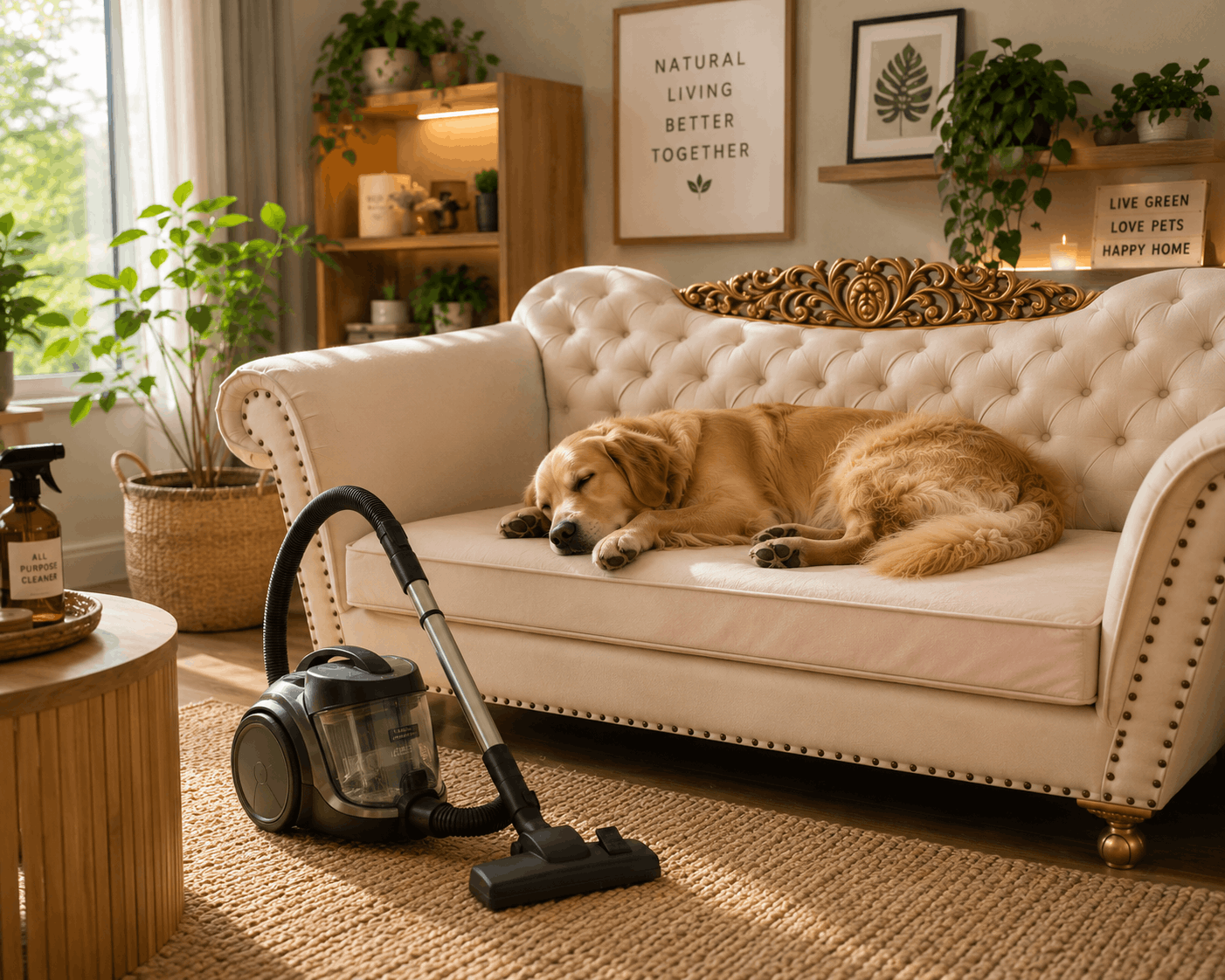
Sleeping dog resting on a sofa with a vacuum cleaner nearby in a bright eco-friendly living room designed for pet hair control and furniture protection.

🌿 Checklist

✓ Regular grooming

✓ Frequent vacuuming

✓ Washable covers

✓ Consistent maintenance


Pet Dander and Indoor Allergens

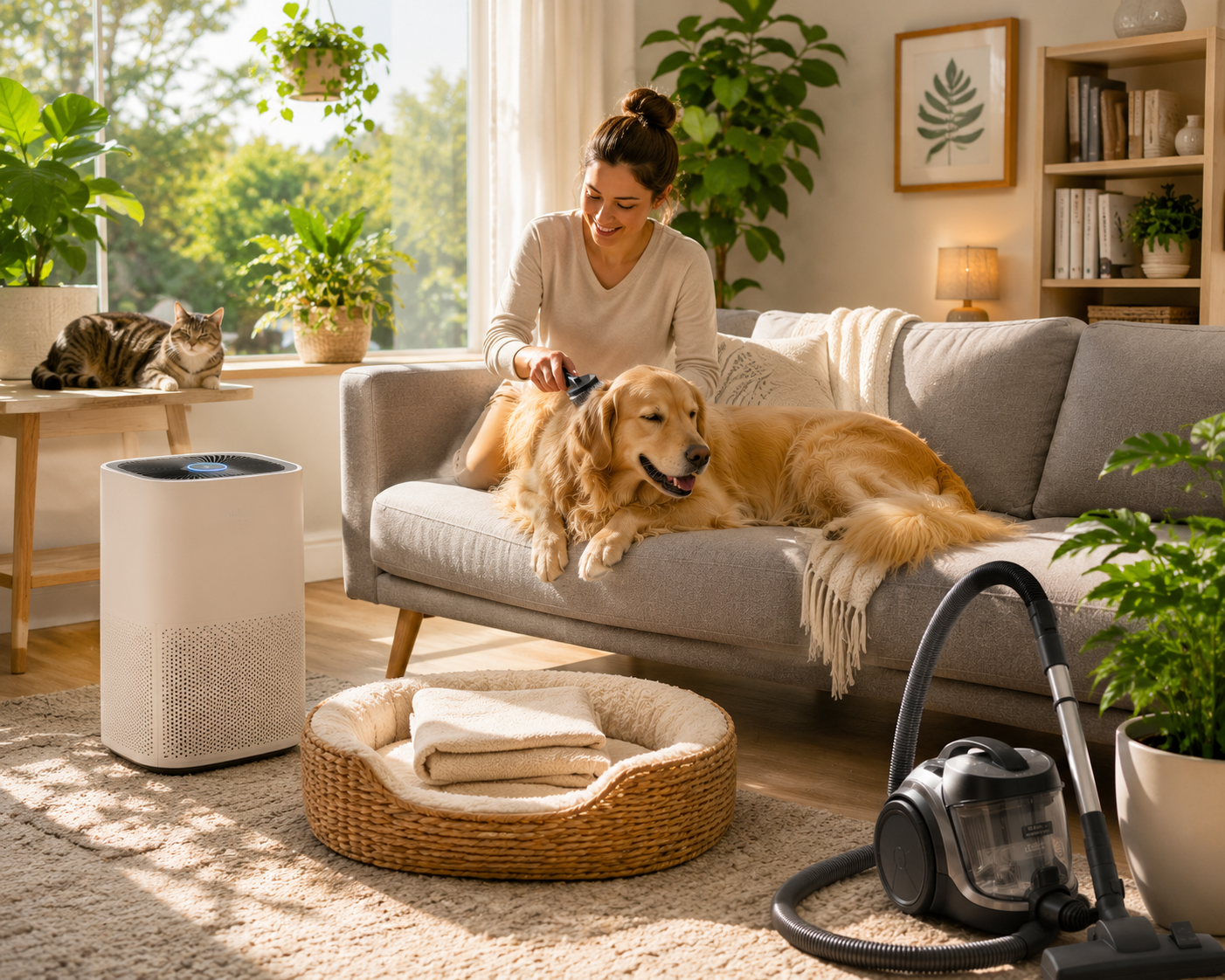
Pet owner grooming a golden retriever in a bright eco-friendly living room with a HEPA air purifier, vacuum cleaner, cat by the window, and clean pet bedding to reduce pet dander and indoor allergens.

Unlike pet hair, dander is often invisible.
Pet dander consists of microscopic skin particles naturally shed by dogs, cats, and other animals. These particles can remain suspended in the air before settling onto furniture, bedding, and flooring.
Because dander is lightweight, it can easily circulate throughout a home and become part of everyday household dust.
Managing dander requires a combination of:
• Regular grooming
• Vacuuming with effective filtration
• Washing pet bedding
• Maintaining airflow and ventilation
• Consistent dust removal
This is one reason why indoor air quality plays such an important role in eco cleaning.

🌿 Checklist

✓ Regular grooming

✓ HEPA filtration

✓ Wash bedding

✓ Dust removal

✓ Good airflow


Household Odors

Every pet owner becomes familiar with certain smells.Wet fur after a walk, litter boxes, pet bedding, food areas, and occasional accidents can all contribute to unwanted odors.One common mistake is attempting to cover odors with heavily scented products. While fragrances may temporarily mask smells, they rarely address the source of the problem.
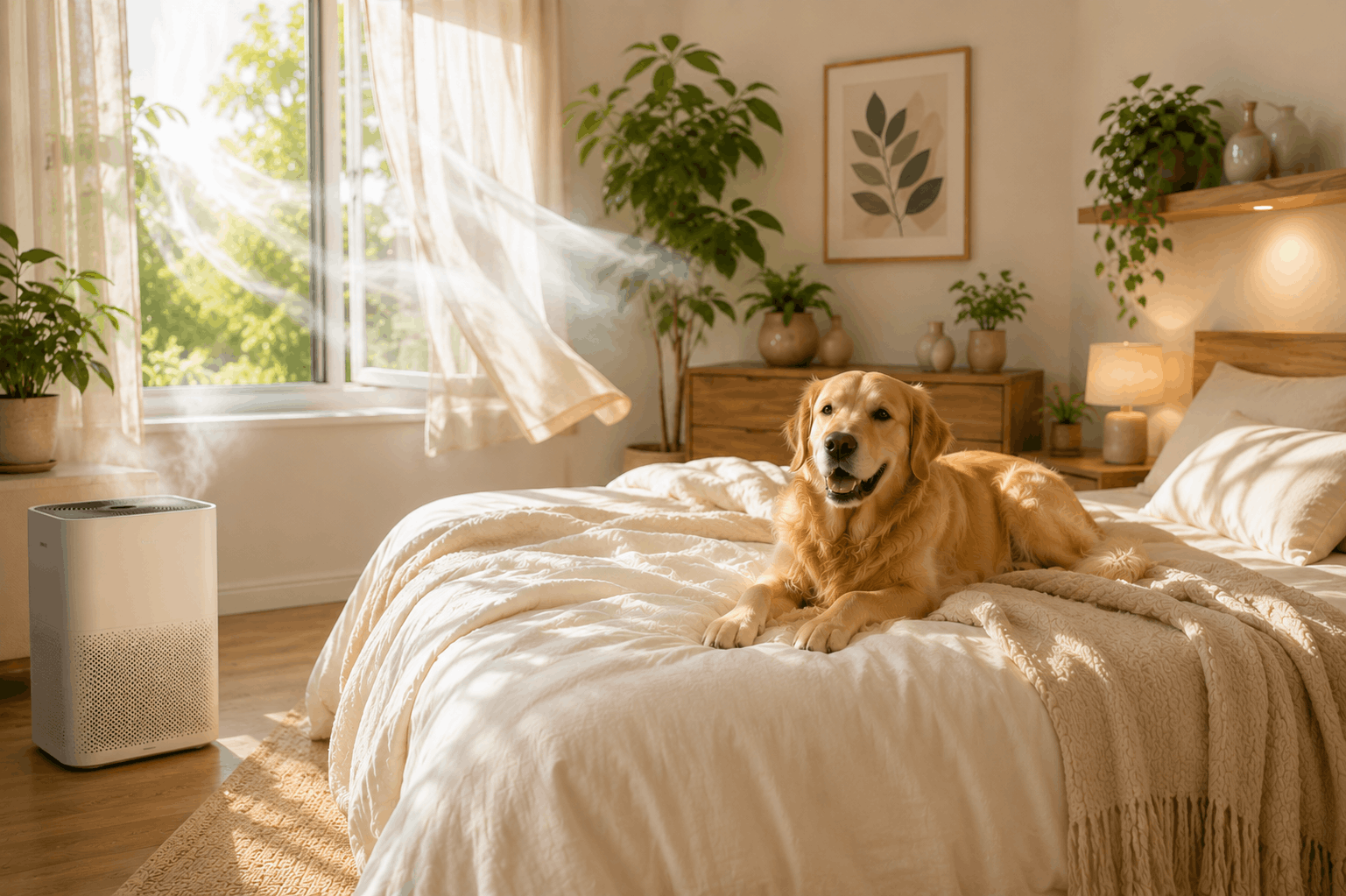
Golden retriever resting on a freshly made bed in a bright eco-friendly bedroom with open windows, natural sunlight, indoor plants, and a HEPA air purifier for household odor control.

🌿 Odor Control Tips

✓ Clean bedding

✓ Maintain litter boxes

✓ Improve ventilation

✓ Address accidents quickly


Mud, Dirt, and Outdoor Debris

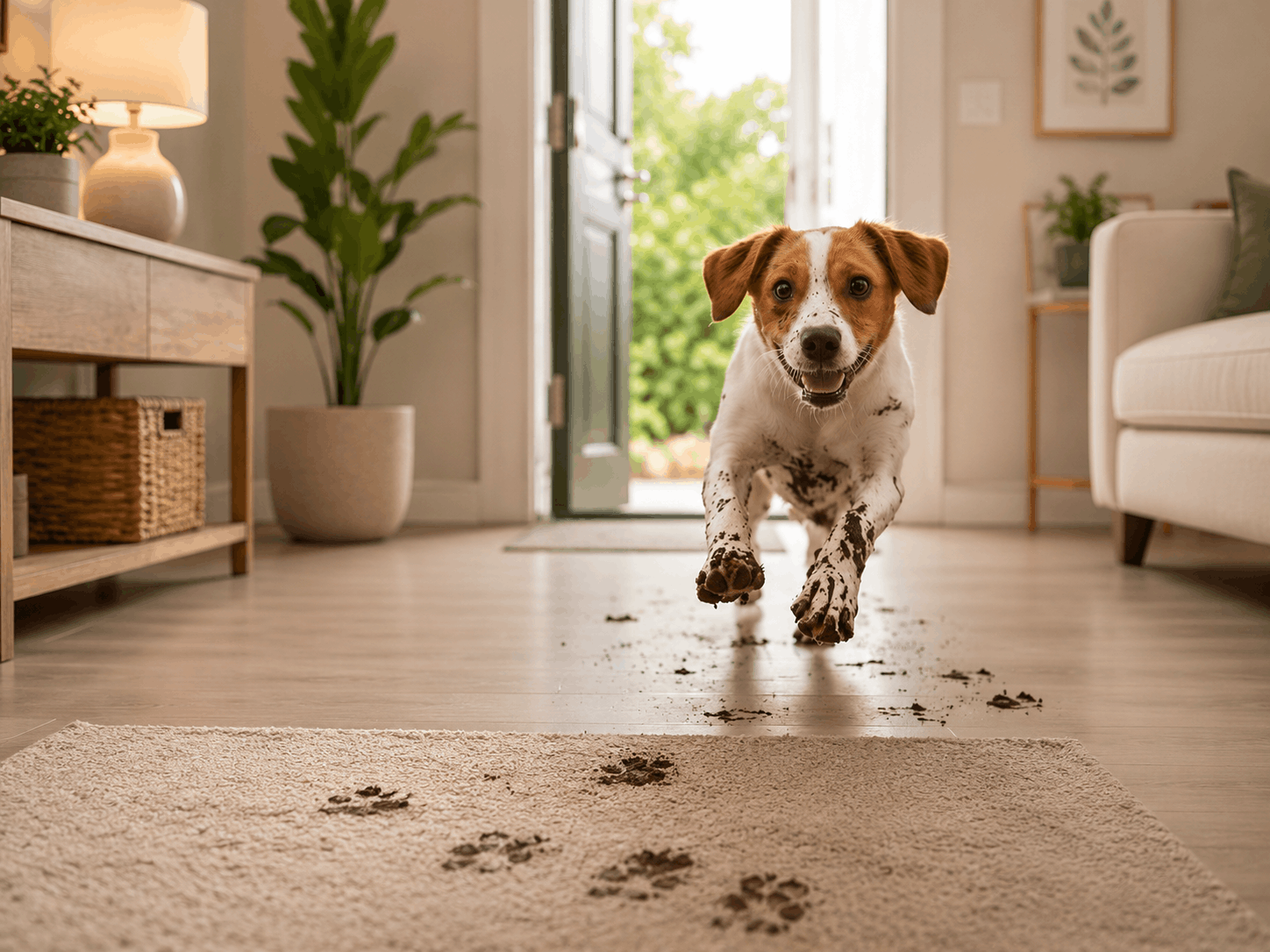
Dog with muddy paws entering a clean living room and leaving muddy paw prints on the floor in a pet-friendly home.

Pets naturally bring part of the outdoors back inside.
Grass, soil, pollen, moisture, leaves, and dust can all enter the home on paws and fur. Entryways often become high-traffic zones where dirt accumulates quickly.
Fortunately, simple preventive habits can significantly reduce the amount of debris entering the home.

🌿 Prevention Checklist

✓ Entry mats

✓ Paw cleaning station

✓ Outdoor brushing

✓ Quick towel wipes


Increased Wear on Floors and Furniture

Pets place additional demands on household surfaces.Running, jumping, scratching, and everyday activity can increase wear on flooring, upholstery, and rugs. While this is a normal part of sharing a home with animals, regular maintenance helps preserve these surfaces for longer.Eco cleaning is not only about cleanliness. It also helps protect household investments through routine care and preventive maintenance.
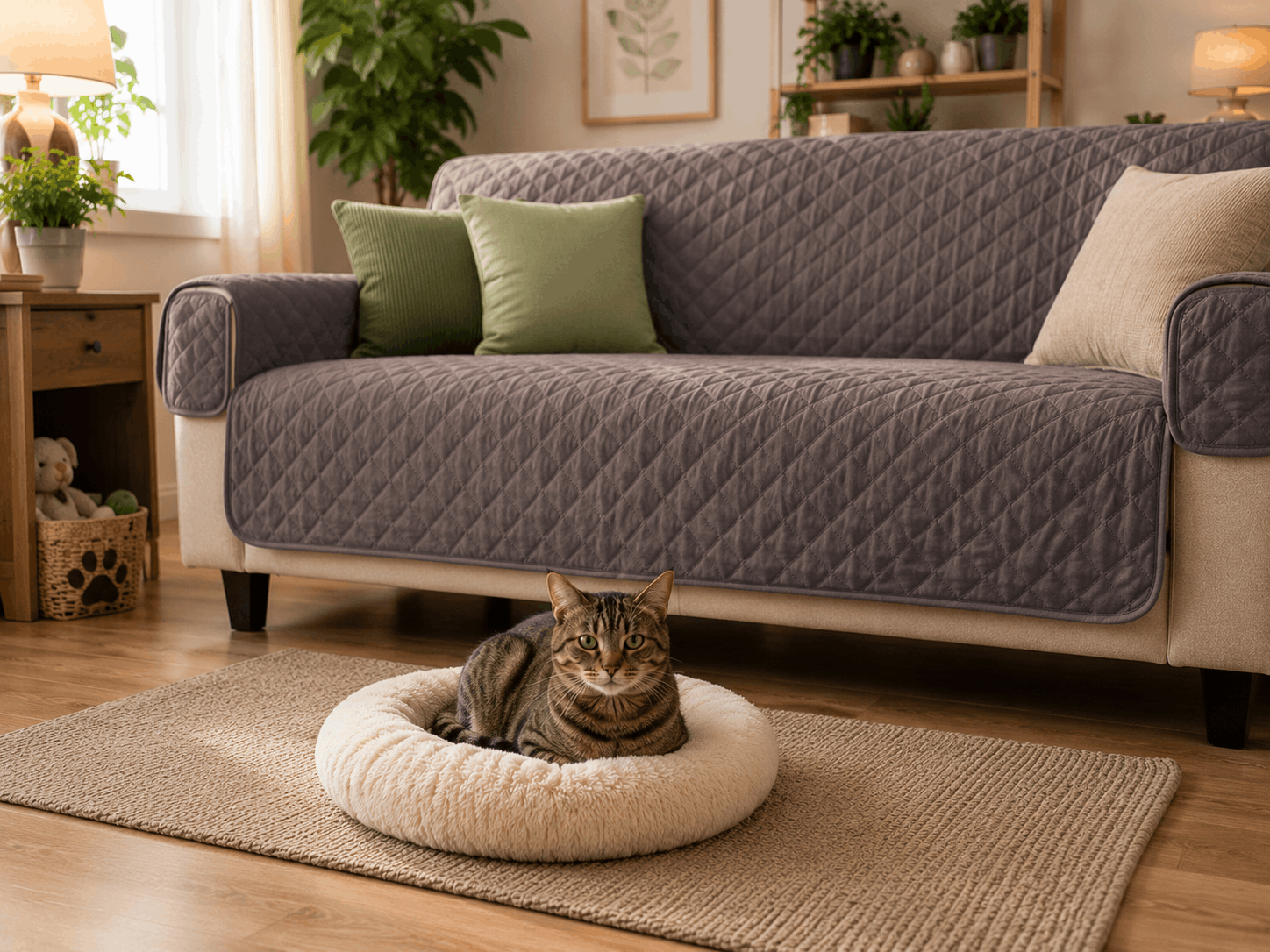
Cat resting on a pet bed beside a sofa protected with a quilted furniture cover in a clean pet-friendly living room.

🌿Protect Your Surfaces

✓ Washable covers

✓ Regular maintenance

✓ Protective rugs

✓ Furniture care routines


🌿 The goal of eco cleaning isn’t to remove every sign of pet life from your home. It’s to manage common challenges in ways that keep your home cleaner, healthier, and more comfortable for everyone.

7. Core Principles of Eco Cleaning

Successful eco cleaning is not built around a single product or cleaning method. Instead, it is based on a set of principles that guide everyday decisions.
These principles create the foundation for a cleaner, healthier, and more sustainable pet-friendly home.

Choose Pet-Safe Cleaning Products

The first principle is awareness.
Not all cleaning products are created equal. Before bringing a product into your home, take a few moments to understand what it contains and how it will be used.
Look for:
• Clear ingredient information
• Transparent labeling
• Responsible usage instructions
• Products designed for households with pets
Whenever possible, avoid relying on products with unnecessarily strong fragrances or excessive chemical formulations.
A simple product used correctly is often more effective than several specialized cleaners used inconsistently.

Reduce Unnecessary Chemical Exposure

More cleaning chemicals do not always mean better cleaning.
One of the biggest misconceptions in household cleaning is the belief that stronger automatically means safer or more effective.
In reality, many routine cleaning tasks can be managed through:
• Regular maintenance
• Warm water
• Mechanical cleaning
• Consistent habits
• Proper ventilation
Reducing unnecessary chemical use helps create a more balanced indoor environment.

Improve Indoor Air Quality

A truly clean home is not only about visible surfaces.
The quality of the air inside a home influences comfort, cleanliness, and overall wellbeing.
Indoor air can contain:
• Dust
• Pet dander
• Cleaning residues
• Airborne particles
• Household pollutants
Simple habits can make a meaningful difference:
✓ Opening windows regularly
✓ Using quality air filtration
✓ Vacuuming consistently
✓ Avoiding excessive fragrances
✓ Maintaining HVAC filters
Fresh air remains one of the most powerful cleaning tools available.

Focus on Prevention Instead of Constant Correction

One of the smartest eco cleaning habits is prevention.
Preventive cleaning reduces the amount of work required later and often produces better long-term results.
Examples include:
Groom Pets Regularly
Brushing removes loose fur before it spreads throughout the home.
Use Entry Mats
Mats help capture dirt and moisture before it reaches living spaces.
Protect Furniture
Washable covers help reduce cleaning demands while extending furniture life.
Wash Bedding Frequently
Routine washing prevents odors, dander, and dirt from accumulating.
The cleaner homes are usually not the homes that clean the hardest. They are the homes that prevent messes from becoming bigger problems.

Clean Consistently

Consistency is one of the most overlooked aspects of eco cleaning.
A few minutes of cleaning each day often delivers better results than spending hours cleaning once every few weeks.
Daily maintenance prevents buildup and makes larger cleaning tasks easier to manage.
Consistency also helps maintain:
• Cleaner air
• Cleaner surfaces
• Lower allergen levels
• Better odor control

Support Sustainable Household Habits

Eco cleaning and sustainability naturally work together.
Simple choices can reduce waste while maintaining an effective cleaning routine.
Examples include:
• Reusable microfiber cloths
• Washable mop pads
• Concentrated cleaning products
• Refillable spray bottles
• Responsible purchasing habits
The goal is not perfection. The goal is making practical choices that support both household cleanliness and environmental responsibility.

Eco Cleaning Supports Pet Wellness

One area often overlooked is the connection between cleaning and pet wellness.
A cleaner environment can contribute to:
• More comfortable sleeping areas
• Reduced dust accumulation
• Better air quality
• Cleaner bedding
• Improved overall living conditions
Good cleaning habits are not just about maintaining a home. They are part of creating an environment where pets can thrive.

🌿 The most effective eco cleaning routines are built on safety, prevention, consistency, sustainability, and pet wellbeing rather than relying on excessive products or complicated methods.

Cleaning Different Areas of a Pet-Friendly Home

Floors

Hair, dust, paw prints, and debris accumulate here first.

Furniture

Fur, dander, and daily wear require routine maintenance.

Pet Bedding

Wash regularly to reduce odors and allergens.

Modern pet-friendly living room featuring a calm dog resting on a pet bed, a cat indoors, clean floors, comfortable sofa, feeding station, and indoor plants.

The most successful eco cleaning routines focus on these six areas consistently rather than waiting for problems to become larger cleaning projects.

🌿 Eco Cleaning Priority Areas

1️⃣ Floors

2️⃣ Furniture

3️⃣ Pet Bedding

4️⃣ Feeding Areas

5️⃣ Entryways

6️⃣Litter Areas

Feeding Areas

Clean bowls and feeding stations frequently.

Entryways

Stop dirt before it spreads through the home.

Litter Areas

Consistent cleaning prevents odor buildup.

Essential Eco Cleaning Tools for Pet Owners

Effective eco cleaning is less about owning dozens of cleaning products and more about having a few reliable tools that support regular maintenance.

HEPA Vacuum Cleaner

Captures pet hair, dust, and dander more effectively.

✓ Air Quality

Microfiber Cloths

Reusable and washable for everyday eco-friendly cleaning.

✓ Reusable

Washable Mop Systems

Reduce disposable waste while supporting regular floor care.

✓ Sustainable

Air Purifier

Helps reduce airborne particles and improve indoor comfort.

✓ Cleaner Air

Pet Hair Tools

Makes daily fur removal quick and convenient.

✓ Fur Control

Cleaning Storage Station

Keeps supplies organized and encourages routine cleaning.

✓ Consistency

🌿 Eco Cleaning Success TipSuccessful eco cleaning is built on consistent habits rather than expensive equipment. A few well-used tools often outperform a cabinet full of rarely used products.

Building a Pet-Friendly Cleaning Routine

One of the biggest misconceptions about cleaning is that maintaining a clean home requires long hours of work. In reality, the most effective eco cleaning routines are built on consistency rather than intensity.A simple routine helps prevent pet hair, odors, dust, and dirt from accumulating while making cleaning feel more manageable.

Daily Habits

Small daily actions can make a significant difference:

Remove visible pet hair from high-use areas
Clean food and water stations
Wipe muddy paw prints
Address spills and accidents immediately
Open windows for fresh airflow when possible

Weekly Habits

Set aside time each week for:
Vacuuming floors and furniture
Washing pet bedding and blankets
Cleaning pet toys and accessories
Dusting surfaces and vents
Mopping high-traffic areas

Monthly and Seasonal Maintenance

Larger cleaning tasks can be completed less frequently:
Deep clean pet spaces
Inspect filters and ventilation systems
Refresh storage areas
Review cleaning supplies
Adjust routines during heavy shedding seasons

🌞 Daily → 📅 Weekly → 📆 Monthly

Consistent small habits create cleaner, healthier, and easier-to-maintain pet-friendly homes.

Common Eco Cleaning Mistakes

Even well-intentioned pet owners sometimes create more work for themselves by following ineffective cleaning habits.

Assuming Natural Always Means Safe

Some natural ingredients may still be unsuitable for pets.

🌿 Better Approach

Research products before using them around animals.

Overusing Cleaning Products

Using multiple products for every task can increase costs and create unnecessary chemical exposure.

🌿 Better Approach

Use a few reliable products

Ignoring Ventilation

Fresh air plays an important role in maintaining indoor environmental quality.

🌿 Better Approach

Improve airflow

Forgetting Pet Bedding

Pet beds and blankets are often one of the largest sources of fur, dander, and odors in a home.

🌿 Better Approach

Wash bedding regularly

Waiting Too Long Between Cleanings

Small cleaning tasks completed consistently are usually easier and more effective than occasional intensive cleaning sessions.

🌿 Better Approach

Focus on small daily habits

🌿 Eco Cleaning Reminder

Eco cleaning isn’t about using more products.

It’s about creating simple, sustainable habits that keep your home cleaner, healthier, and more comfortable for pets and people.

Continue Your Eco Pet Home Journey

Explore more expert guides designed to help you create a cleaner, greener, and more pet-friendly home.

🏡 Core TerraPawHome Guides

Explore our foundational guides for building a cleaner and more pet-friendly home.

Frequently Asked Questions

What is eco cleaning for pet owners?

Eco cleaning for pet owners means maintaining a clean home using methods, products, and habits that reduce unnecessary chemical exposure while supporting a healthier environment for pets and people. It focuses on safe cleaning practices, indoor air quality, and sustainable household habits.

Pets spend much of their time on floors, furniture, bedding, and other household surfaces. They also groom themselves regularly, which can increase their exposure to cleaning residues. Eco cleaning helps create a safer and healthier indoor environment.

No. Natural does not automatically mean pet-safe. Some ingredients, including certain essential oils, may be harmful to dogs or cats. Always check product ingredients and follow manufacturer recommendations before use.

Most households benefit from light daily cleaning combined with more thorough weekly maintenance. The ideal schedule depends on factors such as the number of pets, shedding levels, and household activity.

Yes. Consistent cleaning, regular bedding maintenance, proper ventilation, and addressing odors at their source can significantly improve household freshness without relying heavily on artificial fragrances.

A quality vacuum with HEPA filtration is one of the most valuable tools in a pet-friendly home because it helps capture pet hair, dander, dust, and other airborne particles more effectively.

Eco cleaning supports better indoor air quality by reducing dust, pet dander, cleaning residues, and airborne pollutants while encouraging proper ventilation and filtration.

Our Commitment to Trustworthy Information

At TerraPawHome, our goal is to help pet owners create cleaner, healthier, and more sustainable homes through practical, evidence-based guidance.

The information in this guide is based on widely accepted cleaning practices, pet safety considerations, environmental responsibility principles, and real-world household experience. We focus on solutions that are realistic, affordable, and easy to apply in everyday life.

Because every pet, home, and family is different, readers should always evaluate cleaning products, ingredients, and routines based on their individual circumstances. When in doubt, consult product manufacturers, veterinary professionals, or qualified experts regarding pet safety concerns.

🌿 Our Mission: Help pets, people, and the planet thrive together at home.

Conclusion

🌿 Living with pets means accepting a little extra fur on the sofa, occasional muddy paw prints, and the everyday messes that come with sharing your home with animals you love. The goal of eco cleaning is not to remove every sign of pet life from your home. It is to create a healthier environment where pets and people can thrive together.
By choosing safer cleaning products, improving indoor air quality, reducing unnecessary chemical exposure, and building consistent cleaning habits, pet owners can maintain cleaner living spaces without relying on harsh solutions. Small changes often have the biggest impact. A weekly bedding wash, a better vacuuming routine, improved ventilation, or simply wiping paws before entering the house can make a noticeable difference over time.
Remember, the healthiest pet-friendly homes are rarely the homes with the strongest cleaning products. They are the homes built on smart habits, preventive care, and thoughtful choices.

References & Sources

American Veterinary Medical Association (AVMA)

ASPCA Animal Poison Control Center

Environmental Protection Agency (EPA)

Humane Society of the United States

Veterinary Partner

Indoor Air Quality Resources