Sustainable and Pet-Friendly Improvements
Green Home Upgrades
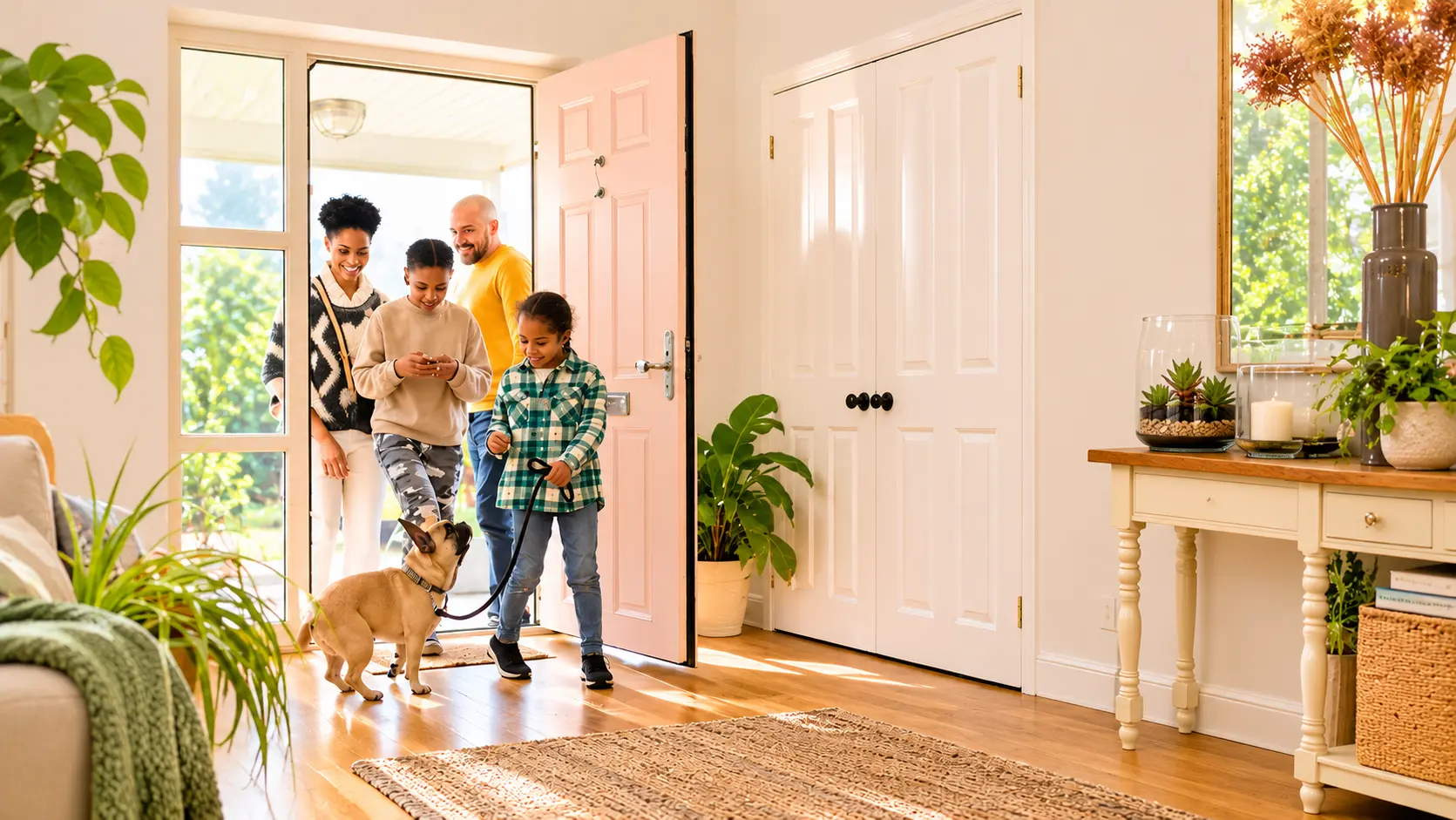
Creating a greener home doesn’t always require expensive renovations or a complete redesign. Small, thoughtful improvements can reduce energy waste, improve everyday comfort, and make your living space easier to maintain with dogs and cats. For pet owners, however, sustainability is only part of the decision. Flooring, paints, insulation, and other home materials must also be evaluated for safety, durability, and suitability for animals. The best green home upgrades balance environmental responsibility with the practical needs of everyone sharing your home.
What matters most before upgrading your home
- ✓ Prioritize improvements that address existing problems rather than replacing functional materials unnecessarily.
- ✓ Choose durable, low-emission materials suited to your pets' behavior and mobility.
- ✓ Improve insulation, ventilation, and energy efficiency without compromising indoor air quality.
- ✓ Keep pets away from renovation dust, chemicals, tools, and unfinished surfaces.
- ✓ Start with affordable improvements before committing to major renovations.
Why Should Pet Owners Consider Green Home Upgrades?
A sustainable home uses energy, water, and materials responsibly while supporting a comfortable indoor environment. For households with pets, these goals overlap with everyday concerns such as cleaning, temperature control, flooring durability, and exposure to household substances.
For example, repairing drafty windows may reduce heating and cooling waste while making a room more comfortable. Choosing durable flooring can reduce the need for frequent replacement, particularly in homes with active dogs.
However, environmentally friendly does not automatically mean pet-safe. Some products marketed as natural or sustainable may contain irritating ingredients, create slippery surfaces, or present hazards during installation.
The most useful improvements address a real household need while considering three factors:
Environmental impact
Does the improvement conserve resources or reduce unnecessary waste?
Pet suitability
Is it appropriate for your animals' health, behavior, and physical needs?
Long-term practicality
Will it remain durable, maintainable, and affordable?
These considerations help homeowners avoid unnecessary purchases and choose improvements that provide lasting value.
For a broader approach, explore our eco-friendly pet home resources.
Which Green Home Upgrades Make the Biggest Difference?
The most valuable improvements depend on your home’s condition, climate, and existing materials. A house with poor insulation may benefit more from energy upgrades, while a household with worn, slippery flooring may need a different priority.
Consider the following options according to the problems you want to solve.
Choose Sustainable, Pet-Friendly Flooring
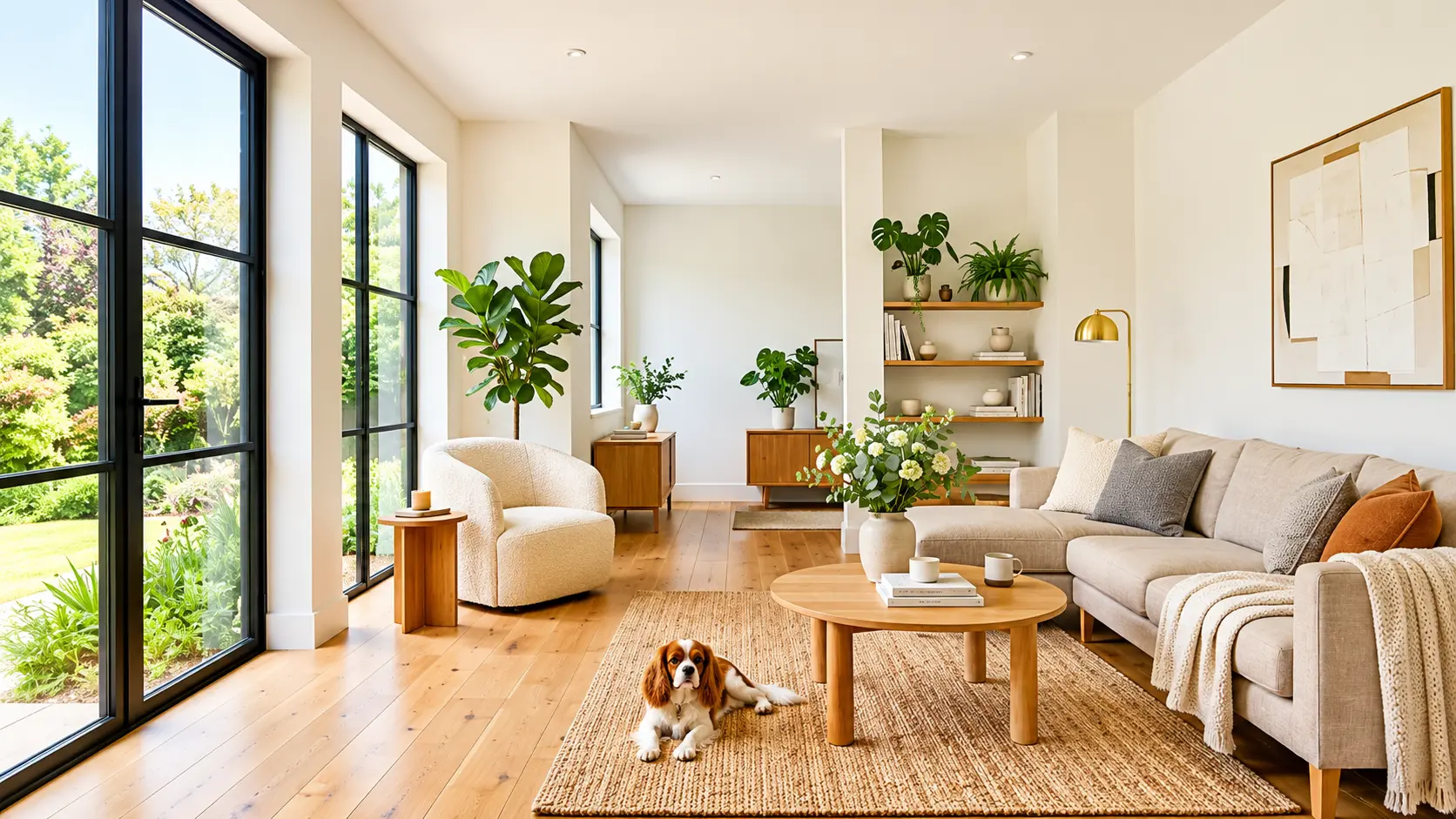
Flooring is particularly important in pet households because animals spend considerable time walking, resting, and playing directly on these surfaces.
When evaluating flooring, consider durability, traction, cleaning requirements, chemical emissions, and the environmental impact of production and replacement.
Several materials may be worth investigating:
Cork
A renewable material that can provide a relatively comfortable surface, although finishes, moisture resistance, and scratch durability vary.
Linoleum
Made primarily from natural raw materials and available in durable designs. Check product-specific emissions information and installation requirements.
Ceramic or porcelain tile
Long-lasting and easy to clean, but hard or slippery surfaces may be uncomfortable for some pets.
Responsibly sourced wood
Can be durable and repairable, depending on the species, finish, and installation.
No flooring material is universally best for every pet. Choosing the right surface depends on your pet’s age, activity level, mobility, and everyday needs. For additional guidance on creating comfortable and practical living spaces, explore our Pet-Friendly Rooms guides.
Older dogs, animals with mobility difficulties, and energetic pets may need additional traction. Rugs with secure, non-slip backing can sometimes improve an otherwise suitable floor without replacing it. You can also explore our Furniture Protection resources for practical ways to protect household surfaces and maintain a pet-friendly home.
Before purchasing, review the flooring manufacturer’s emissions documentation and maintenance instructions. Adhesives and finishes deserve attention alongside the flooring itself.
Use Low-Emission Paints and Finishes
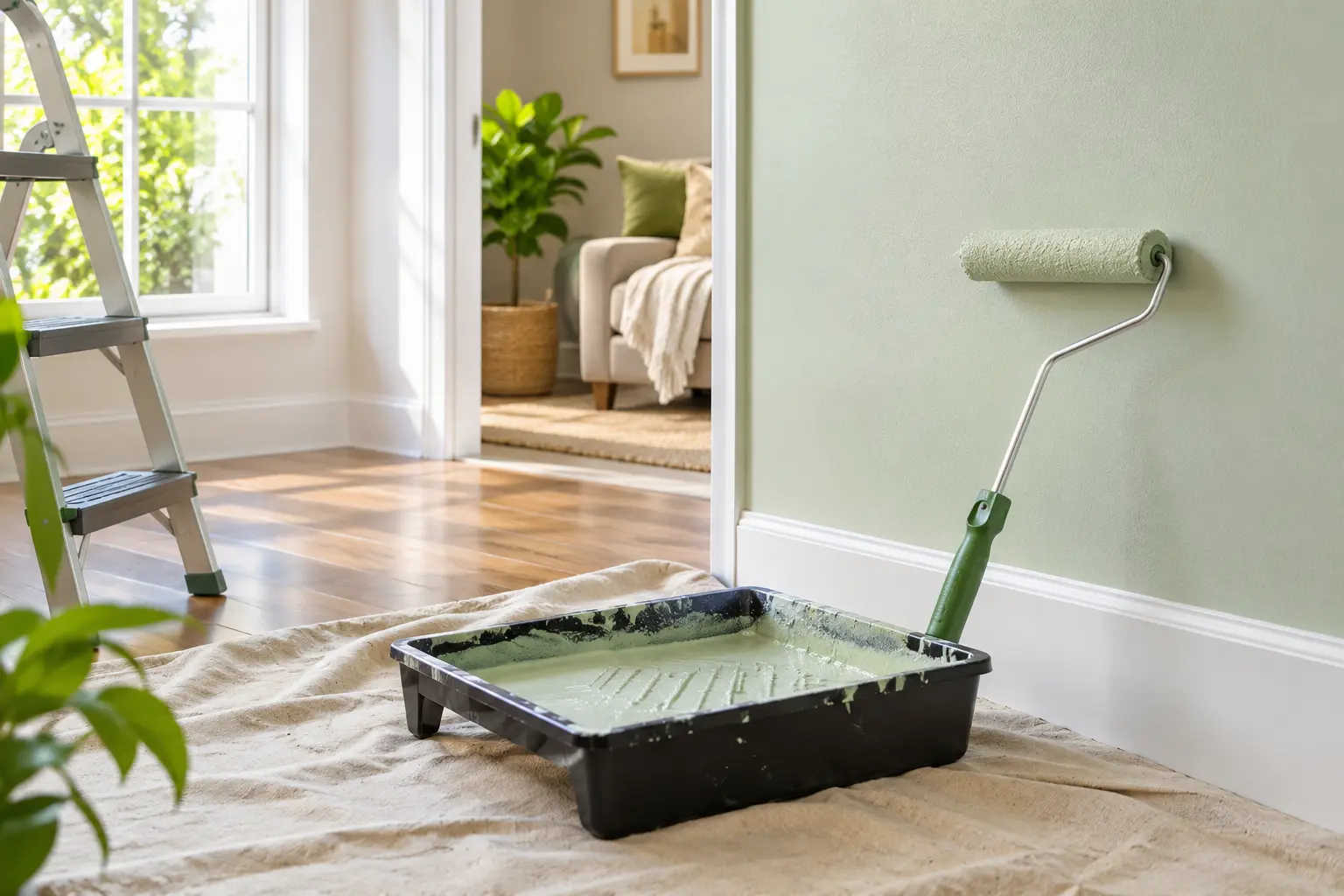
Painting is a relatively accessible way to refresh a home without replacing major furnishings.
Some paints, coatings, adhesives, and finishes release volatile organic compounds (VOCs), which can contribute to indoor air pollution. Choosing products with independently verified low chemical emissions may help reduce certain exposures.
However, low-VOC does not mean completely harmless. Product ingredients, application methods, drying conditions, and ventilation still matter.
When selecting paints or finishes:
- Look for credible third-party emissions certification where available.
- Follow the manufacturer's ventilation and curing instructions.
- Keep pets away from preparation, painting, and drying areas.
- Prevent access to paint containers, brushes, solvents, and contaminated materials.
The U.S. Environmental Protection Agency’s guidance on remodeling and indoor air quality explains why renovation activities and building materials deserve careful attention.
Improve Insulation and Energy Efficiency
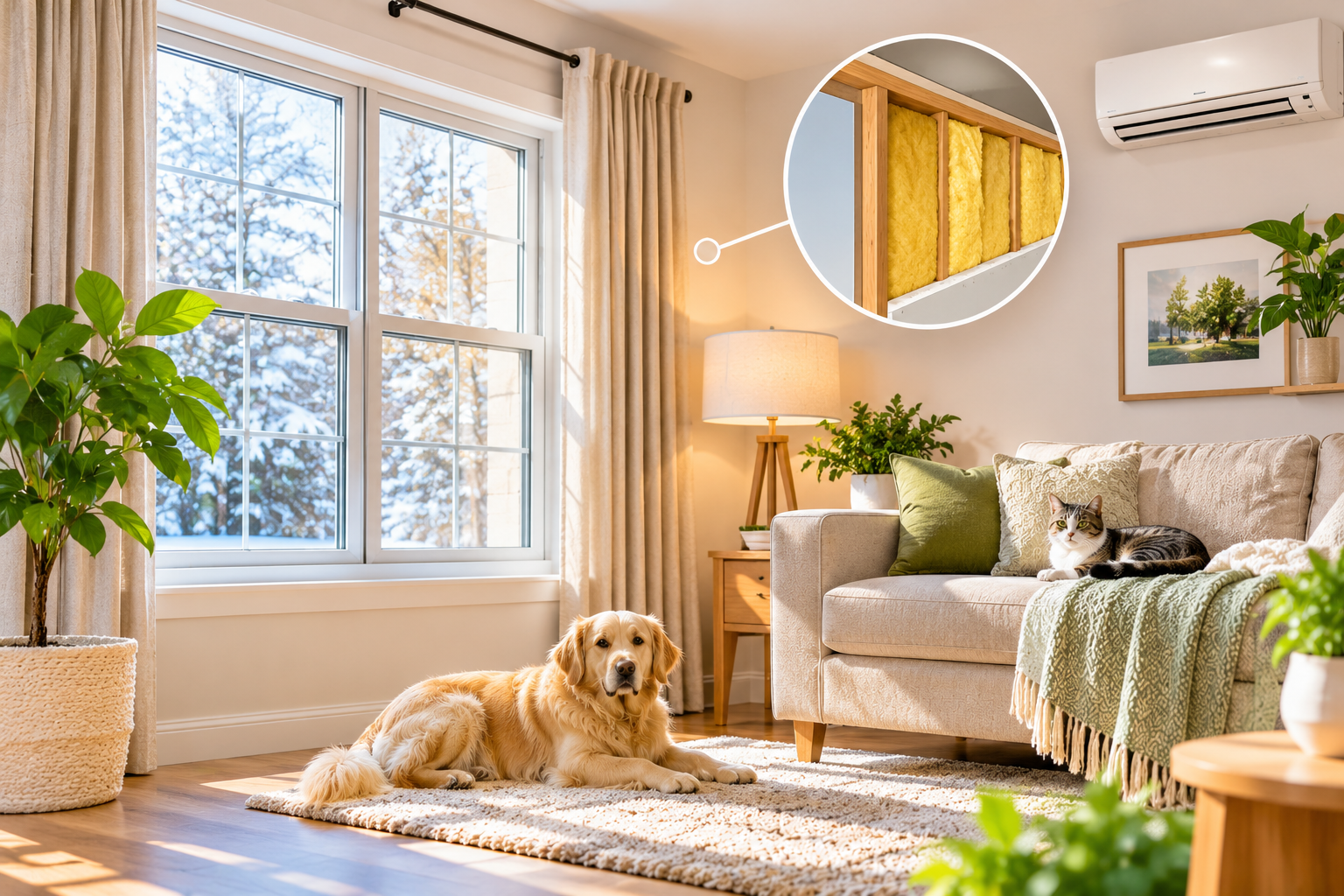
Heating and cooling can account for a substantial portion of household energy consumption. Improving a home’s thermal performance may reduce unnecessary energy use and improve indoor comfort.
Potential improvements include sealing appropriate air leaks, adding suitable insulation, maintaining heating and cooling equipment, and replacing inefficient systems when justified.
Before investing in major upgrades, identify where your home is losing energy. A professional energy assessment can help distinguish worthwhile improvements from unnecessary purchases.
For pet owners, temperature stability is especially important. Animals must still have access to comfortable resting areas, fresh water, and appropriate cooling or warmth. Our Seasonal Pet Wellness guide offers additional advice on keeping pets comfortable as indoor and outdoor temperatures change.
Remember that air sealing and ventilation serve different purposes. A more airtight home may need deliberate ventilation to maintain good indoor air quality. Explore our Indoor Air Quality guide to learn practical ways to manage ventilation and common indoor pollutants in pet-friendly homes.
The ENERGY STAR Home Upgrade program provides useful guidance on coordinated energy-efficiency improvements.
Upgrade Ventilation and Air Filtration
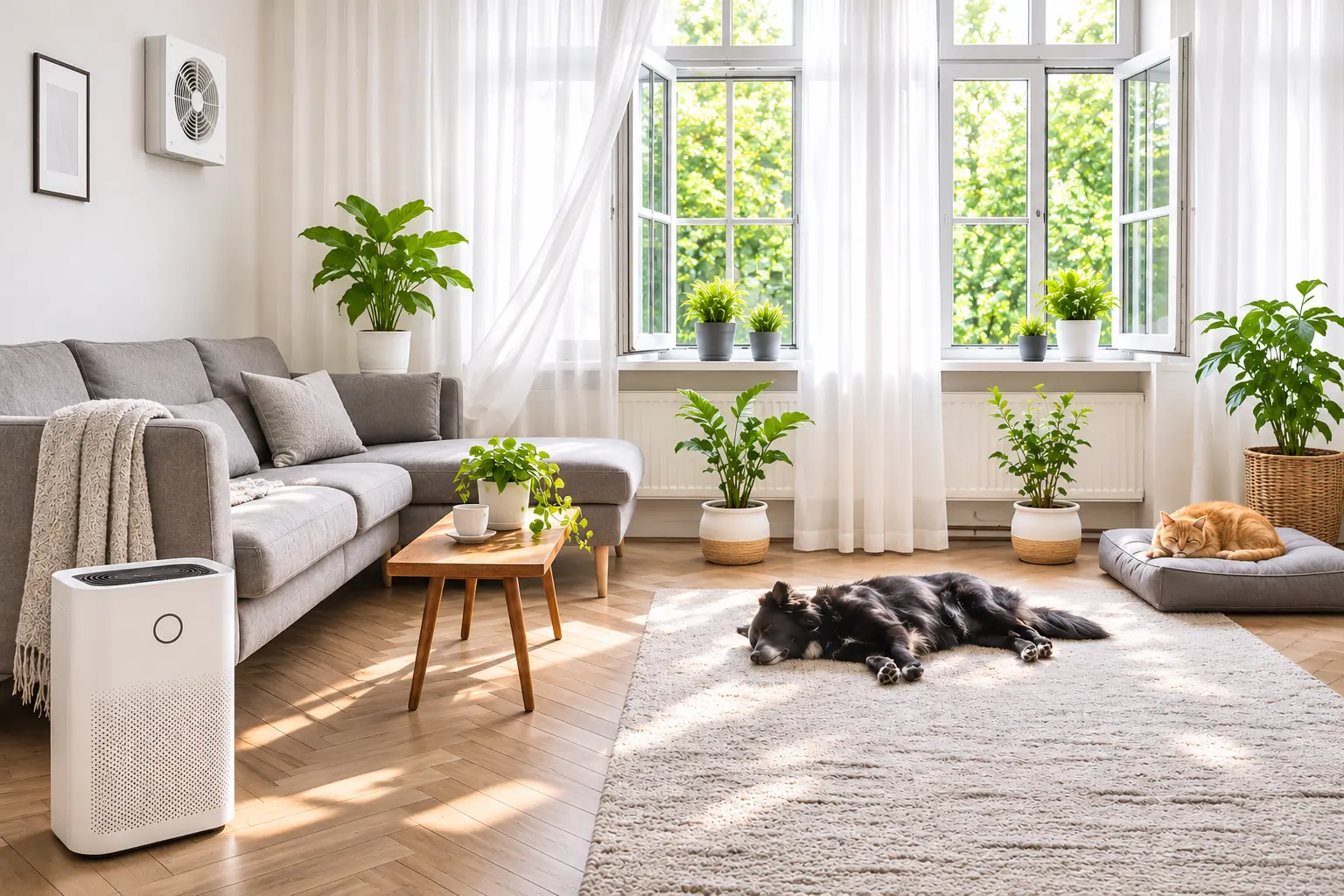
Indoor air quality deserves attention in homes where pets contribute hair, dander, tracked-in dust, and other particles.
Practical improvements may include maintaining HVAC equipment, replacing filters according to manufacturer recommendations, using suitable exhaust ventilation, and addressing moisture problems promptly.
A properly sized portable air purifier with effective particle filtration may help reduce certain airborne particles. However, filtration cannot eliminate every pollutant or replace appropriate ventilation and source control.
Avoid assuming that a higher-priced purifier is automatically better. Room size, filtration performance, noise, replacement filters, and ongoing costs are important considerations.
Our guide to improving indoor air quality for pets explores these concerns in greater detail.
Reduce Water Waste and Household Resource Use
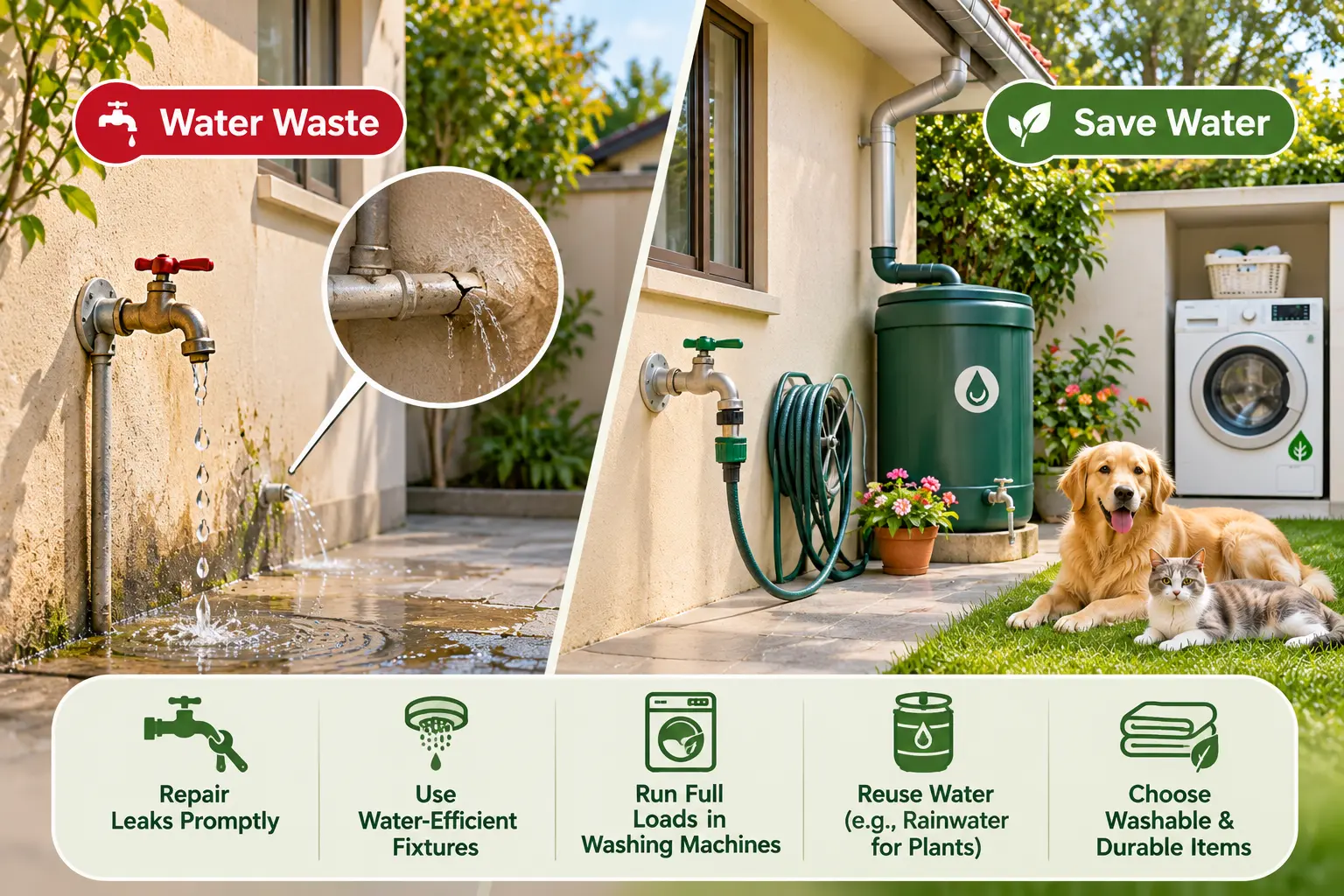
Water conservation can begin with simple maintenance rather than major plumbing work.
Repairing leaks, installing suitable water-efficient fixtures, and running washing machines with appropriately sized loads can reduce unnecessary water use.
Pet households can also reduce resource waste by choosing washable, durable bedding and cleaning supplies that do not require frequent replacement.
Efficiency should never interfere with pet hygiene or hydration. Drinking water must remain readily available, and feeding bowls, bedding, and litter areas still require appropriate cleaning.
Comparing Green Home Upgrades
| Upgrade | Main Benefit | Pet Consideration | Typical Investment |
|---|---|---|---|
| Durable Flooring | Longer service life and potentially less replacement waste | Traction, comfort, and cleaning | Variable |
| Low-Emission Finishes | May reduce certain indoor chemical emissions | Application and curing precautions | Low–medium |
| Insulation and Air Sealing | Reduced heating and cooling waste | Ventilation and installation safety | Medium–high |
| Air Filtration | Reduction of certain airborne particles | Equipment safety and filter maintenance | Low–high |
| Water-Efficient Fixtures | Lower household water consumption | Maintain hygiene and water access | Low–medium |
Note: Costs vary by location, product, existing conditions, and installation requirements.
How Can You Choose Green Materials That Are Safe for Pets?
Product labels can make sustainable purchasing confusing. Terms such as natural, green, and eco-friendly do not necessarily describe a product’s chemical emissions, durability, or suitability for animals.
A better approach is to examine what a product actually does and whether its claims can be verified.
Understand Product Certifications and Environmental Claims
Different certifications evaluate different characteristics.
For example, ENERGY STAR addresses energy efficiency in eligible products, while Forest Stewardship Council (FSC) certification concerns responsible forest management and sourcing.
GREENGUARD and FloorScore certifications address chemical emissions for qualifying products within their respective programs.
These labels can provide useful evidence, but they do not guarantee that a product is safe for every pet or situation.
Check the certification’s scope, the manufacturer’s installation instructions, and any relevant product safety documentation.
Balance Sustainability With Durability and Pet Comfort
A material with an appealing environmental label may be a poor choice if it wears out quickly in your household.
For example, delicate flooring that requires frequent replacement may create more waste than a durable alternative that lasts considerably longer.
Think about how your pets use the space. Large dogs may place greater demands on floor finishes, while cats may scratch accessible furniture and surfaces.
Also consider cleaning requirements. A surface that needs specialized chemical treatments or frequent refinishing may be less practical than one that tolerates routine maintenance.
The goal is not to find a perfect material. It is to choose one with an appropriate balance of environmental performance, durability, safety, and everyday usability.
Important Safety Note
A product described as biodegradable, recycled, plant-based, or low-VOC is not automatically non-toxic to pets. Exposure can occur through licking, chewing, skin contact, or inhalation. Always evaluate the specific material and how your animals may encounter it.
For related maintenance strategies, explore TerraPawHome’s furniture protection resources.
How Can You Protect Pets During Home Renovations?
Even carefully selected sustainable materials can create temporary hazards during renovation.
Dust, exposed wiring, adhesives, tools, noise, and unfamiliar workers can make an otherwise comfortable home unsafe or stressful for animals.
Planning pet safety before work begins is therefore just as important as choosing the right materials.
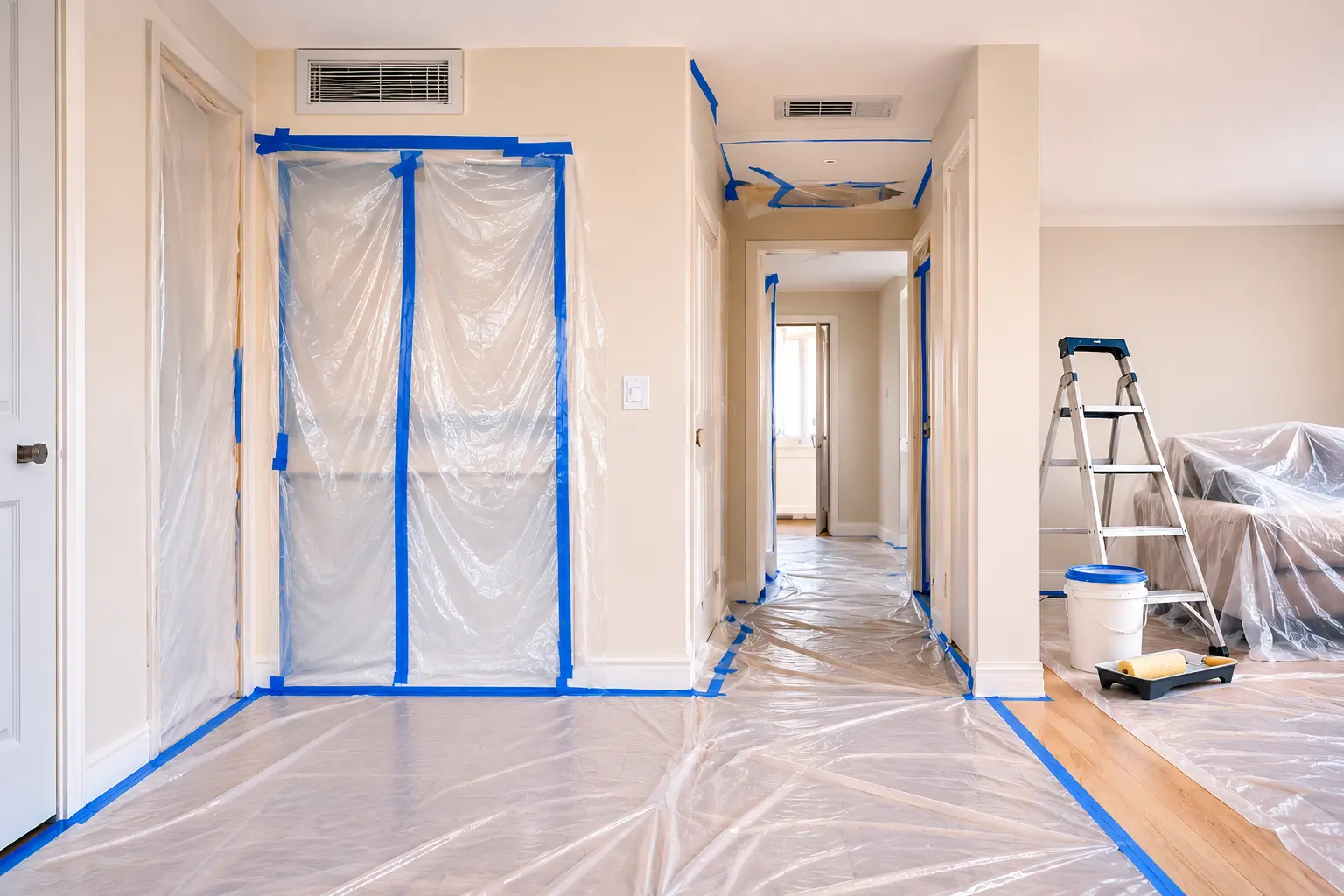
Prevent Exposure to Dust, Chemicals, and Construction Materials
Keep pets completely separated from active work areas. Depending on the renovation, a secure room away from construction or temporary accommodation elsewhere may be more appropriate.
Pet-Safe Renovation Checklist
Use this practical checklist to help protect your pets before, during, and after home renovations.
Confirm that equipment, coatings, and surfaces are ready for normal use.
If you suspect a pet has swallowed a renovation material or experienced a harmful exposure, contact a veterinarian or animal poison-control service promptly.
The ASPCA Animal Poison Control Center provides additional information about animal poisoning concerns.
Manage Noise, Stress, and Access to Work Areas
Construction noise, vibrations, unfamiliar smells, and changes in routine can be stressful for dogs and cats.
Maintain familiar feeding, exercise, and resting routines whenever possible. Provide a quiet location with comfortable bedding and access to water.
For particularly anxious animals, discuss appropriate arrangements with your veterinarian before major construction begins.
Do not rely on a closed door alone if workers frequently enter and leave the property. Make sure everyone involved understands where pets are permitted.
What Are the Best Budget-Friendly Green Upgrades for Renters and Homeowners?
Not every improvement requires professional installation or a large budget.
For many households, the best starting point is maintaining existing equipment, reducing unnecessary consumption, and making small changes that address everyday problems.
Low-Cost and Renter-Friendly Improvements
Consider improvements that are affordable, reversible, and compatible with your living arrangements.
Examples include:
- Switching suitable fixtures to energy-efficient LED lighting.
- Using washable rugs with secure, non-slip backing.
- Repairing leaking taps where permitted.
- Maintaining appliance filters and ventilation openings.
- Using appropriate curtains or blinds to manage sunlight and indoor comfort.
- Repairing durable furniture rather than replacing it unnecessarily.
Renters should obtain permission before making permanent changes to fixtures, flooring, or building systems.
Practical Tip: Before purchasing anything new, check whether cleaning, repairing, or maintaining what you already own could solve the problem.
When Larger Home Improvements Make Sense
Major investments may be justified when existing materials are damaged, inefficient, difficult to maintain, or unsuitable for your pets.
Examples include replacing deteriorated flooring, improving inadequate insulation, or upgrading an aging heating and cooling system.
Evaluate expected benefits, installation costs, maintenance, and the remaining useful life of existing equipment.
A professional assessment can help determine whether repair or replacement offers better long-term value.
How Should You Prioritize Green Home Upgrades?
The best upgrade is not necessarily the newest technology or the most expensive sustainable product.
It is the improvement that solves a meaningful problem without introducing disproportionate costs, environmental impacts, or risks to your pets.
Compare Safety, Environmental Benefit, Cost, and Maintenance
Pet safety
Could the material, installation, or finished surface create a hazard?
Environmental benefit
Is it appropriate for your animals' health, behavior, and physical needs?
Affordability
Can the household manage installation and ongoing costs?
Maintenance
Will the upgrade remain practical and durable over time?
Start with urgent safety problems, such as damaged electrical fixtures, unsafe flooring, or significant moisture issues.
Next, consider improvements that address persistent inefficiency or discomfort. Cosmetic replacements generally deserve lower priority when existing materials remain functional.
For example, a household with slippery flooring and an older dog may benefit more from secure traction solutions than from replacing a working appliance solely to obtain a newer model.
Green Home Upgrade Planning Checklist
Use this practical checklist to evaluate home improvements that support sustainability, long-term value, and pet-friendly living.
Frequently Asked Questions
Are eco-friendly building materials always safe for pets?
No. Environmental benefits and pet safety are separate considerations. Check the material’s composition, potential exposure routes, installation requirements, and suitability for your animals.
Can dogs and cats stay at home during renovations?
Sometimes, but it depends on the work involved. Minor improvements may be manageable with secure separation, while projects involving significant dust, fumes, noise, or hazardous materials may require temporary relocation.
What are the most affordable green home upgrades?
Maintaining existing equipment, repairing leaks, reducing unnecessary energy consumption, and choosing durable, reusable household materials are often sensible starting points.
Should I replace existing flooring with a sustainable alternative?
Not automatically. If the current flooring is safe, functional, and durable, maintaining it may be more resource-efficient than replacing it. Consider replacement when there is a clear safety, performance, or maintenance reason.
Educational note: TerraPawHome provides general educational information about sustainable and pet-friendly living. This guidance does not replace veterinary advice, professional building assessments, or product-specific safety instructions. Consult qualified professionals when planning significant renovations or addressing potential animal health risks.
Continue Your Eco Pet Home Journey
Explore All Pet Home Guides designed to help you create a cleaner, greener, and more pet-friendly home.
Core TerraPawHome Guides
Explore our foundational guides for building a cleaner and more pet-friendly home.