
A Complete Guide to Safe Indoor Greenery
Green Home Upgrades
Bringing indoor plants into your home can make your living space feel calmer, fresher, and more inviting. If you share your home with dogs or cats, however, choosing the right plants becomes more than a decorating decision—it’s an important part of creating a safe environment.
Many popular houseplants are harmless, but some can cause anything from mild stomach upset to serious health emergencies if chewed or eaten. The good news is that you don’t have to choose between a beautiful indoor garden and your pets’ wellbeing. By selecting verified pet-safe plants for dogs and cats only following a few simple precautions, you can enjoy the benefits of indoor greenery with greater peace of mind.
Pet-Safe Plants: Quick Summary
Want a greener home without putting your dog or cat at unnecessary risk? Start with these five essentials.
Verify every plant. Check its scientific name and toxicity status using a trusted resource such as the ASPCA plant database.
Non-toxic doesn't mean edible. Even plants considered safe may cause digestive upset when eaten.
Avoid dangerous plants. Keep highly toxic species, especially true lilies in cat households and sago palms, out of your home.
Choose thoughtful placement. Secure pots and keep plants, soil, and gardening products away from curious pets.
Know when to seek help. Contact a veterinarian or animal poison service promptly if you suspect toxic plant exposure.
Important Safety Reminder: Suspected exposure to true lilies or daylilies in cats requires immediate veterinary attention, even if your cat appears healthy.
Why Choosing Pet-Safe Plants Matters
Indoor plants offer much more than decoration. They add natural beauty, create a relaxing atmosphere, and help transform a house into a welcoming home. For many pet owners, choosing Pet-Safe Plants for Dogs and Cats is an important step toward creating a peaceful environment that benefits both people and animals.
However, not every houseplant is suitable for homes with pets. Dogs often explore the world by sniffing and chewing, while cats are naturally curious and may nibble leaves or play with dangling stems. A single bite from the wrong plant can sometimes lead to health problems that require veterinary care.
How Indoor Plants Benefit Your Home and Pets
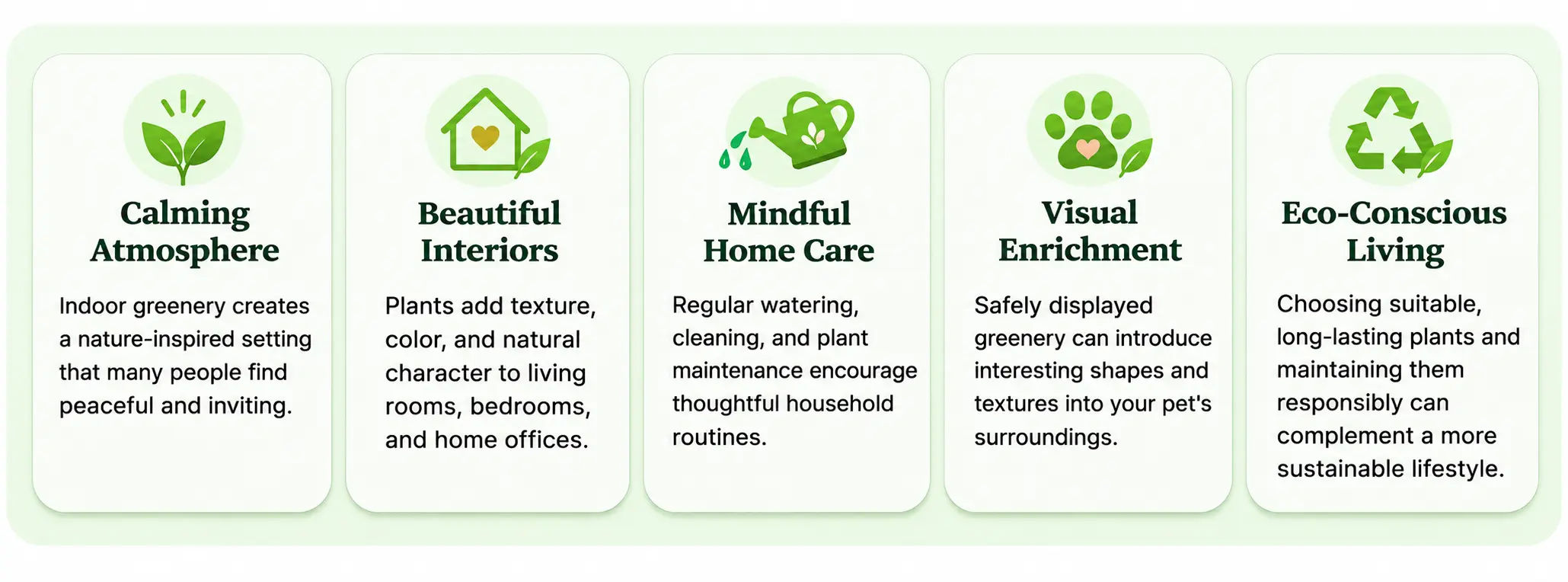
The right indoor plants can support a healthier and more enjoyable living space by:
- Creating a calm, nature-inspired atmosphere
- Enhancing the appearance of living rooms, bedrooms, and workspaces
- Encouraging mindful home care and routine maintenance
- Providing visual enrichment for curious pets when safely displayed
- Supporting an eco-friendly, pet-conscious lifestyle
While some people associate houseplants with improved indoor air quality, it’s important to remember that plants should complement—not replace—good ventilation, regular cleaning, and proper home maintenance.
Learn more about creating a healthier home in our Pet Wellness guide.
The Hidden Risks of Toxic Houseplants
Many common decorative plants sold in garden centers and home stores can be unsafe for pets. The challenge is that toxic plants often look just as attractive as safe ones, making it difficult for pet owners to tell the difference without checking reliable sources.
Possible Signs of Plant Exposure
True lilies (Lilium species) and daylilies (Hemerocallis species) can cause life-threatening kidney injury in cats. Even small exposures, including pollen or vase water, require immediate veterinary attention. Do not wait for symptoms to appear.
Before bringing any new plant home, verify its scientific name using the ASPCA Toxic and Non-Toxic Plants Database . If you suspect poisoning, contact your veterinarian immediately.
What "Pet-Safe" Really Means
One of the biggest misconceptions is that “pet-safe” means pets can freely chew or eat the plant. This isn’t true.
🌿 What Does Non-Toxic Mean?
A plant described as non-toxic simply means it is not known to contain poisonous compounds that typically cause serious poisoning in dogs or cats. It does not mean the plant is intended as food.
Even non-toxic plants can cause mild digestive upset if a pet eats a large quantity of leaves, flowers, or stems. Some pets may also react to fertilizers, pesticides, or potting soil rather than the plant itself.
Keep These Points in Mind
Non-Toxic Doesn't Mean Edible
Even plants considered non-toxic can cause digestive discomfort when eaten. Discourage pets from chewing houseplants.
Every Pet Is Different
Dogs and cats may respond differently to plant material. Individual sensitivities and reactions can vary.
Check Plant-Care Products
Fertilizers, pesticides, and soil treatments may introduce additional hazards. Always check product safety.
Supervise Curious Pets
Monitor dogs and cats that frequently chew plants. Keep greenery safely positioned and redirect unwanted chewing.
Key Takeaway
Plant safety depends on more than the leaves alone. Potting mixes, fertilizers, decorative stones, and chemical treatments can also create hazards if pets have access to them
Best Pet-Safe Plants for Dogs and Cats
If you’re looking to add greenery without increasing risk, start with plants that are widely recognized as non-toxic to both dogs and cats. While it’s still best to discourage chewing, these plants are generally considered safer choices for pet-friendly homes.
Compare 10 Pet-Safe Houseplants
Compare commonly recommended non-toxic plants by lighting, care needs, and placement.
| Plant | Dogs | Cats | Light | Care | Best Location |
|---|---|---|---|---|---|
| Spider Plant | ✓ | ✓ | Bright indirect | Easy | Living room |
| Boston Fern | ✓ | ✓ | Indirect | Moderate | Bathroom |
| Areca Palm | ✓ | ✓ | Bright indirect | Moderate | Living room |
| Parlor Palm | ✓ | ✓ | Low to medium | Easy | Bedroom |
| Calathea | ✓ | ✓ | Medium indirect | Moderate | Office |
| Prayer Plant | ✓ | ✓ | Indirect | Moderate | Tabletop |
| African Violet | ✓ | ✓ | Bright indirect | Moderate | Windowsill |
| Phalaenopsis Orchid | ✓ | ✓ | Bright indirect | Moderate | Office |
| Christmas Cactus | ✓ | ✓ | Bright indirect | Easy | Living room |
| Peperomia | ✓ | ✓ | Medium indirect | Easy | Small spaces |
✓ Indicates commonly listed non-toxic varieties, not that a plant is edible. Verify the scientific name and exact species using the ASPCA plant database before buying. On mobile, swipe horizontally to view all columns.
Low-Maintenance Pet-Safe Plants
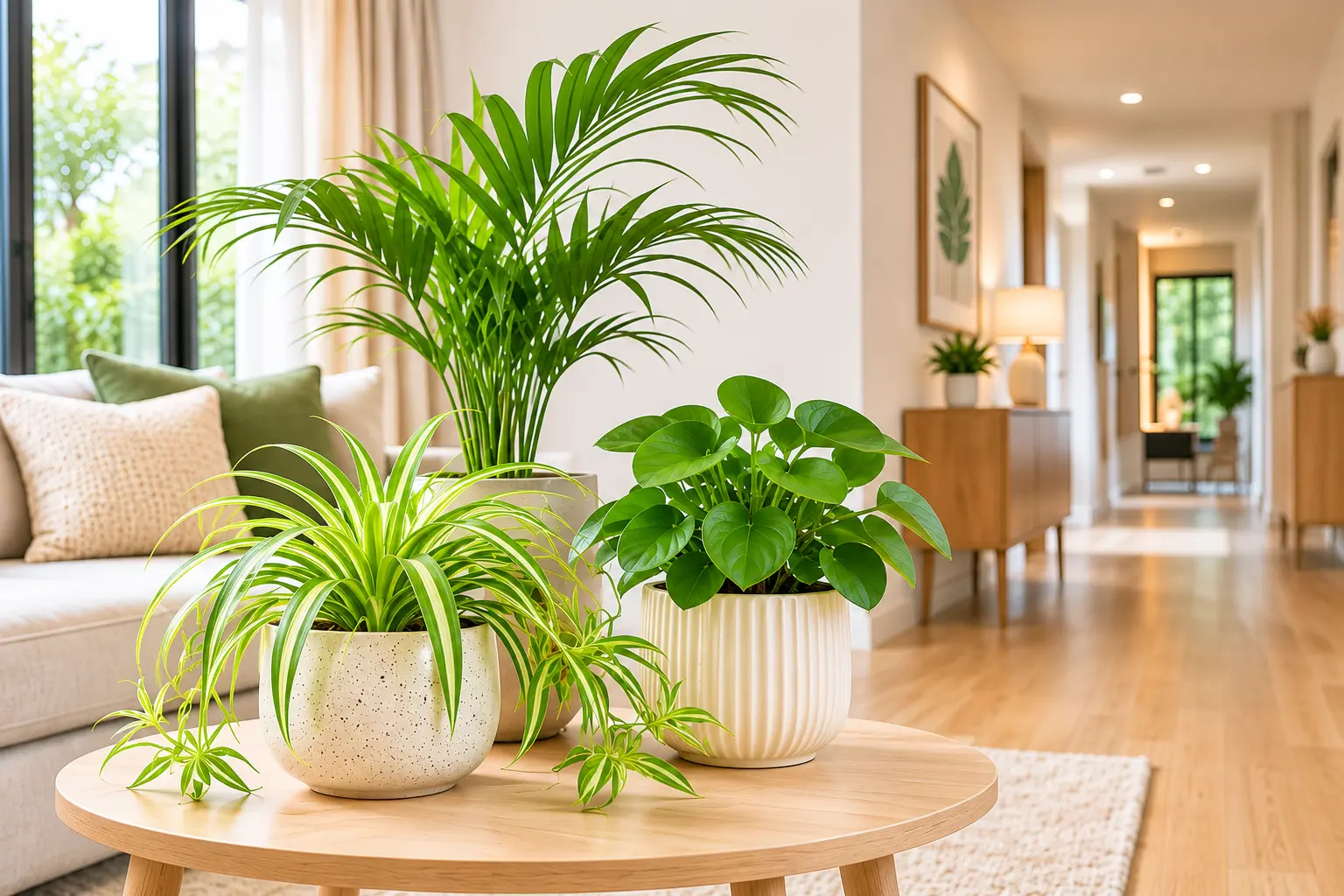
For beginners or busy households, Spider Plant, Parlor Palm, Peperomia, and Areca Palm are useful starting options. Match each plant’s lighting and watering needs to your home, and remember that some palms require more attention than others.
Pet-Safe Hanging Plants
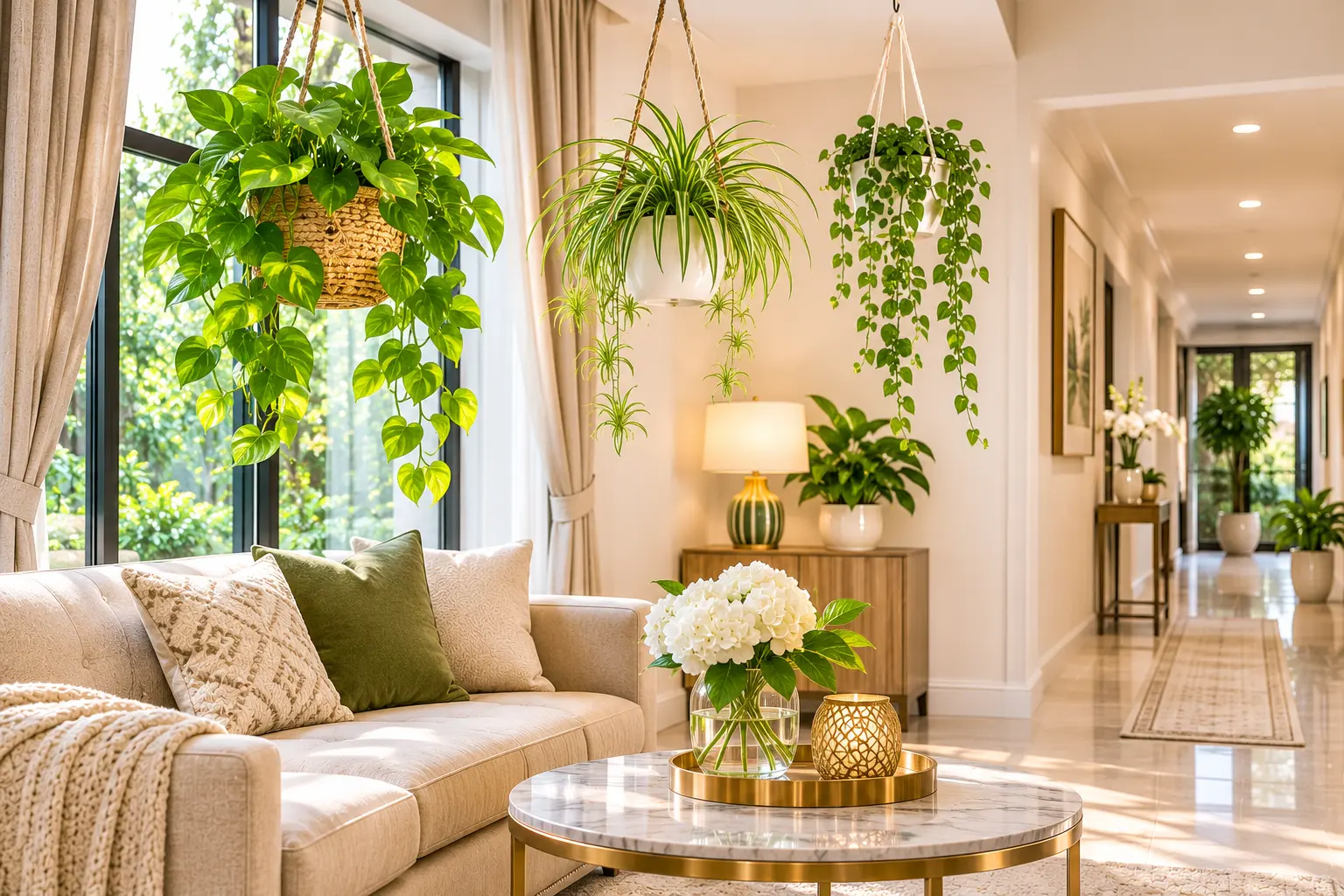
Hanging baskets can be a practical solution for curious pets. A Spider Plant or Boston Fern displayed safely above pet height helps protect both the plant and your animals while adding greenery to unused vertical space.
Pet-Safe Flowering Plants
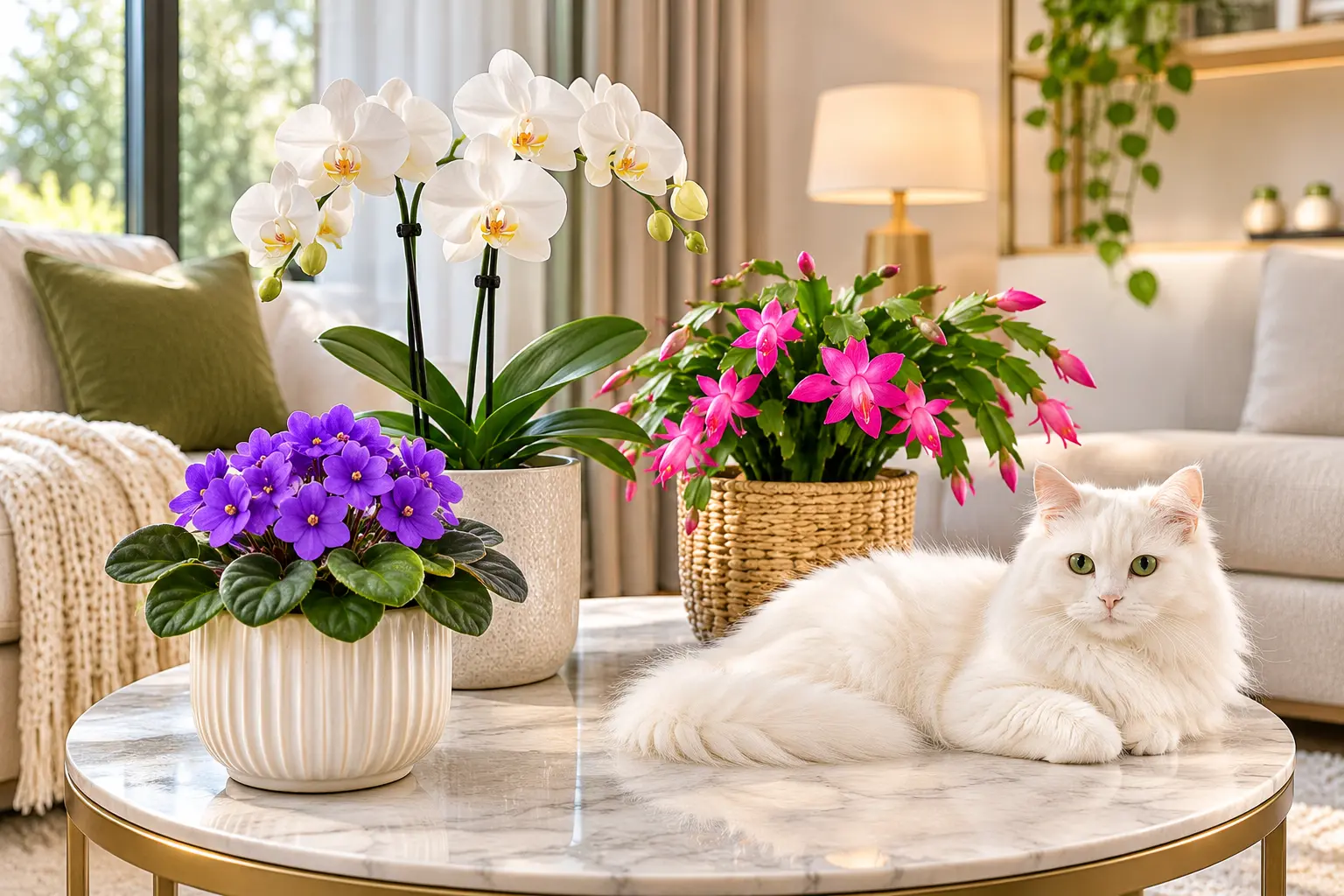
If you enjoy colorful blooms indoors, consider African Violets, Orchids, or Christmas Cactus. These plants provide seasonal beauty while remaining suitable for homes with both dogs and cats when properly cared for.
Large Statement Plants for Pet-Friendly Homes
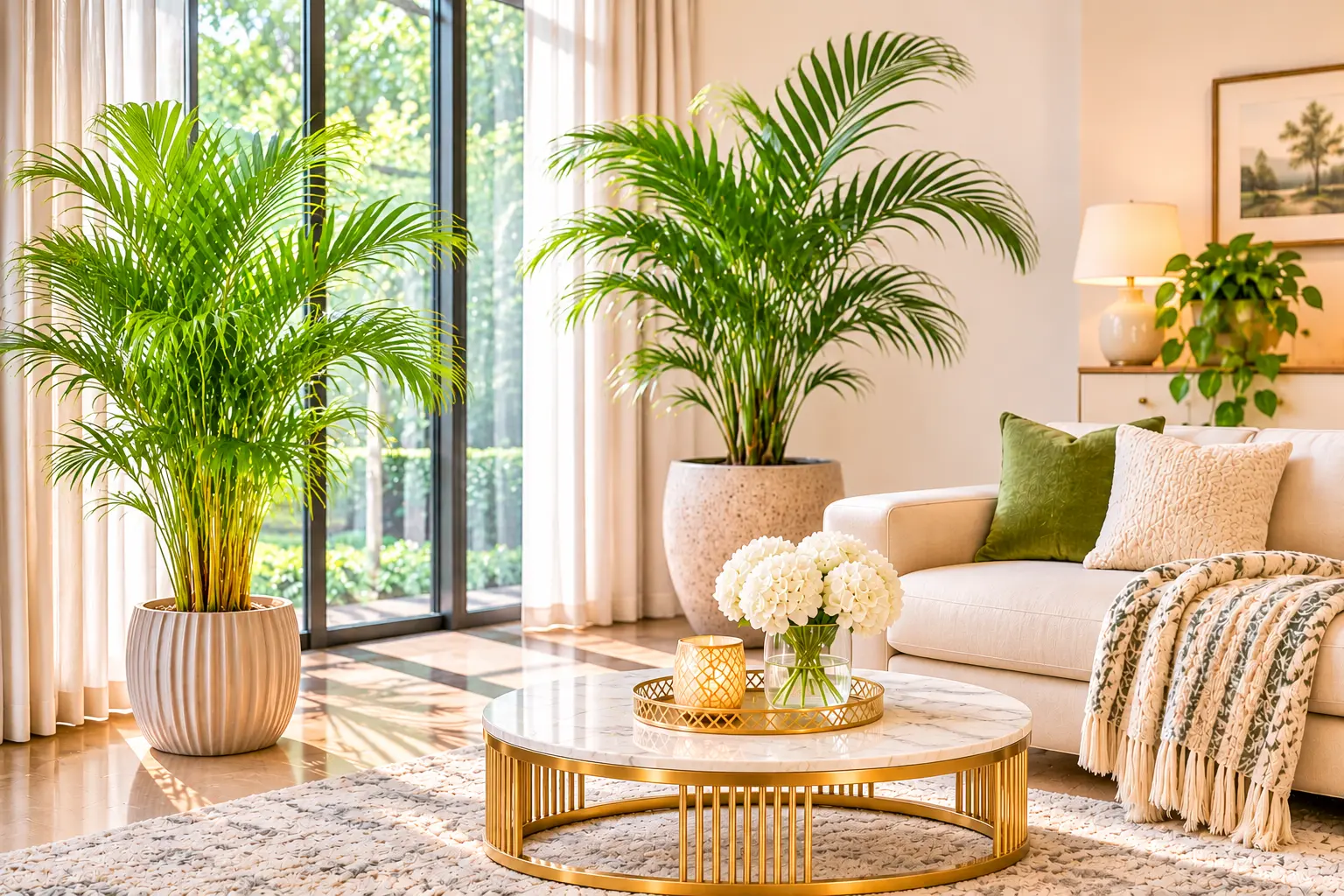
For Pet-Safe Plants for Dogs and Cats, Areca Palm and Parlor Palm are excellent choices. These safe house plants for pets make a beautiful statement in spacious living rooms, bright entryways, and open-plan homes while creating a welcoming, natural atmosphere.
Pet-Safe Leafy Houseplants
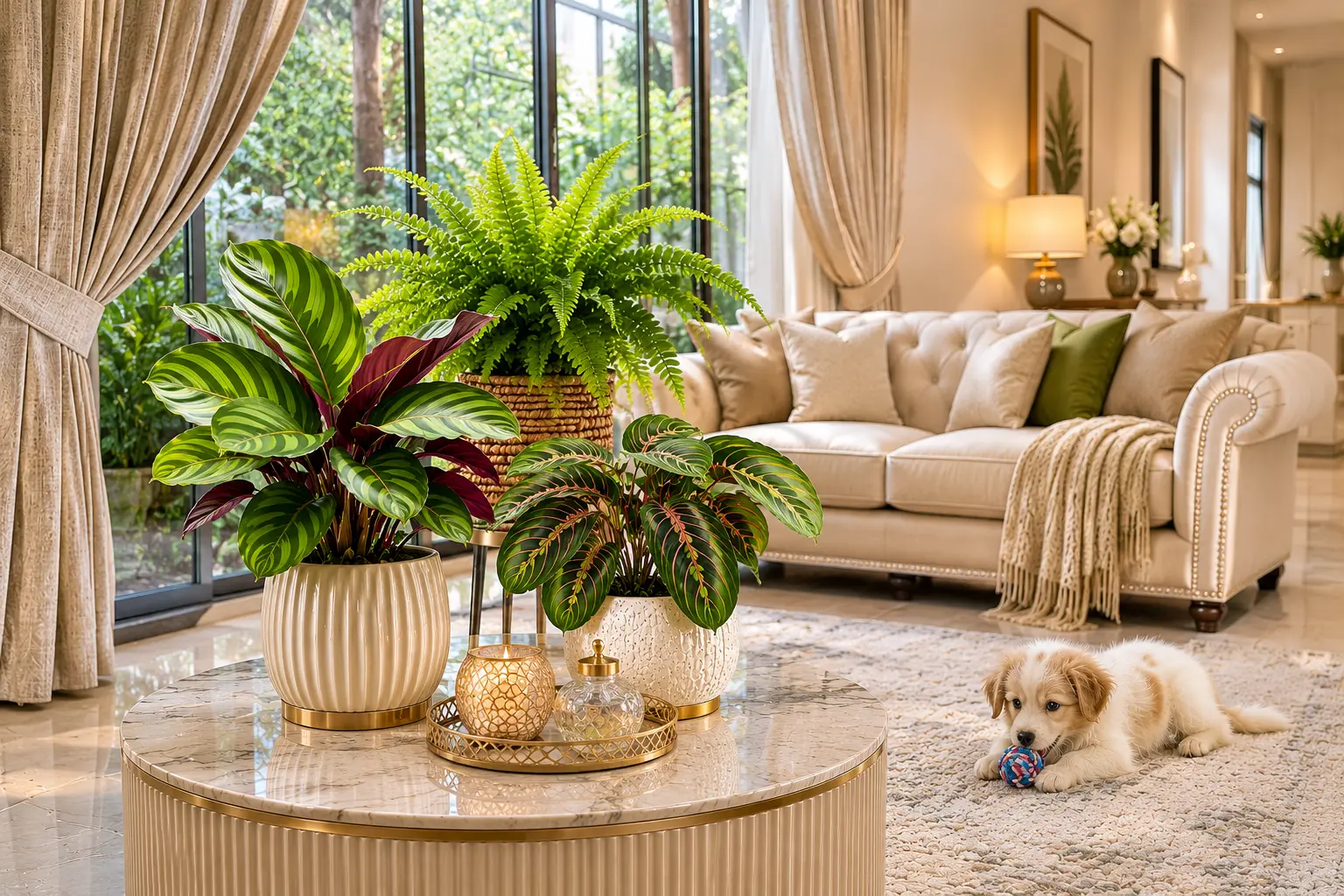
Leafy plants such as Calathea, Prayer Plant, and Boston Fern are popular because of their attractive foliage and compatibility with pet-friendly homes. They also fit well into modern, Scandinavian, and nature-inspired interiors.
Popular Toxic Houseplants To Avoid
Knowing which plants to avoid is just as important as choosing pet-safe alternatives. Some of the most common decorative houseplants can cause anything from mild mouth irritation to life-threatening poisoning if chewed or swallowed.
Before bringing a new plant home, always check its common and scientific name against a trusted resource such as the ASPCA Toxic & Non-Toxic Plants Database. Plant labels can be incomplete or use different names, making verification worthwhile.
Highly Toxic Plants to Avoid
Some popular ornamental plants can cause serious poisoning in dogs or cats. The risks vary by species, plant part, and amount of exposure. Use this table to identify plants that deserve particular caution.
| Plant | Dogs | Cats | Main Concern |
|---|---|---|---|
| True Lilies Lilium and Hemerocallis | Species-specific | Critical | Severe, potentially fatal kidney injury in cats |
| Sago Palm Cycas revoluta | Severe | Severe | Serious liver damage; all parts toxic, especially seeds |
| Oleander Nerium oleander | Severe | Severe | Cardiac toxins may cause dangerous heart rhythm changes |
| Azalea Rhododendron species | High Risk | High Risk | Digestive symptoms, weakness, and possible cardiovascular effects |
| Lily of the Valley Convallaria majalis | Severe | Severe | Cardiac glycosides can affect heart rhythm and function |
| Tulips Tulipa species | Toxic | Toxic | Drooling, vomiting, and diarrhea; bulbs are especially concentrated sources of toxins |
Safety note: Risk labels summarize potential hazards, not guaranteed outcomes or precise clinical severity grades. If your pet may have eaten a toxic plant, seek veterinary advice without waiting for symptoms. Verify botanical names using the ASPCA Toxic and Non-Toxic Plants Database .
Common Houseplants That Can Cause Irritation
Not every toxic plant causes a medical emergency, but many can still make pets uncomfortable. Examples include:
Pothos
Contains insoluble calcium oxalate crystals that may cause mouth irritation, drooling, and vomiting.
Philodendron
Chewing may cause oral discomfort, excessive drooling, and difficulty swallowing.
Dieffenbachia
May cause painful mouth irritation and swelling. Significant swelling requires urgent veterinary care.
Aloe Vera
Certain compounds in the plant can cause vomiting, diarrhea, and other digestive symptoms.
Snake Plant
Contains saponins that may cause nausea, vomiting, and diarrhea if ingested.
English Ivy
Can cause vomiting, abdominal discomfort, drooling, and irritation.
Common Symptoms to Watch For
Why Cats Are Especially Vulnerable
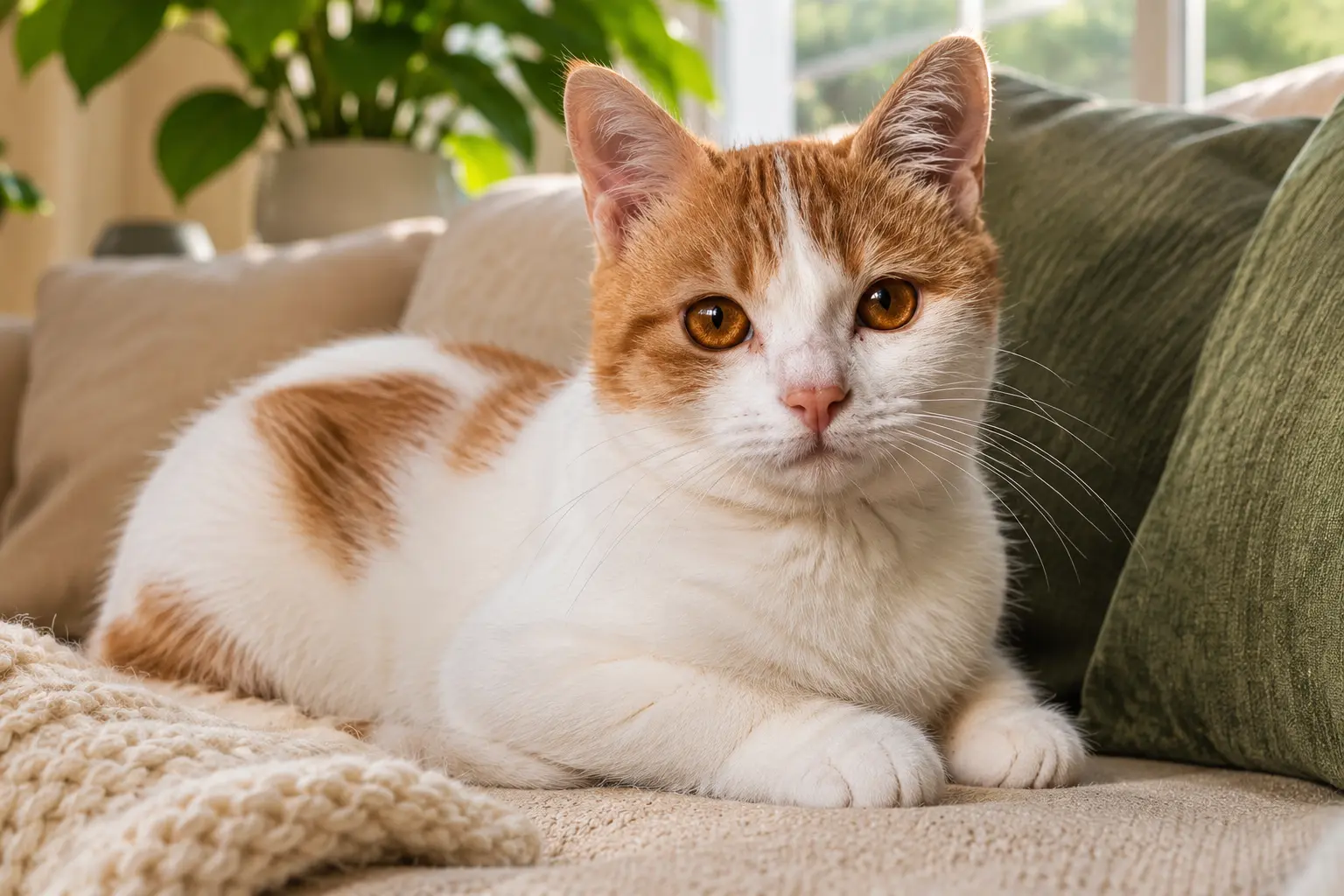
Cats are naturally curious and often investigate their surroundings by chewing leaves, flowers, or grass-like plants. Indoor cats may also nibble plants out of boredom or instinct, making non toxic plants for cats a safer choice for pet-friendly homes.
- Cats frequently climb onto shelves and windowsills.
- They may chew leaves while grooming or exploring.
- Some toxic compounds affect cats more severely than dogs.
- Cats are smaller than many dogs, so even small amounts may have greater effects.
How to Choose the Right Plant for Your Home
The best pet-safe plant isn’t simply the one that’s non-toxic—it should also suit your home, lifestyle, and the behavior of your pets.
Instead of asking, “Which plant is safest?” ask, “Which safe plant is the best fit for my home?”
For Apartments
Apartment living often means limited natural light and smaller spaces. Look for plants that:
- Compact growth
- Manageable light needs
- Simple maintenance
Suggested Plants
- Parlor Palm
- Peperomia
- Prayer Plant
- African Violet
For Homes with Curious Cats
Cats enjoy climbing, jumping, and investigating anything new. If your cat frequently chews plants:
- Choose sturdy, non-toxic varieties
- Secure Hanging Planters
- Rotate enrichment toys
- Offer suitable cat grass
Caution
Even non-toxic plants should not be treated as food.
For Homes with Playful Dogs
Dogs are more likely to bump into pots, dig in soil, or carry leaves around the house. To reduce problems:
- Choose stable containers
- Secure larger planters
- Keep plants away from play areas
- Remove fallen leaves promptly
For Busy Beginners
Start with forgiving plants that suit your lighting and watering routine.
- choose easy-care plants
- check lighting requirements
- avoid overwatering
- inspect soil moisture before watering
Suggested Plants
- Spider Plant
- Parlor Palm
- Peperomia
- Christmas Cactus
Keeping Plants and Pets Safe Together
Creating a pet-friendly home doesn’t stop once you’ve chosen Pet-Safe Plants for Dogs and Cats. Everyday habits and thoughtful plant placement can make a significant difference in preventing accidents and keeping your pets safe.
Choose Verified Non-Toxic Plants
Confirm each plant's scientific name using a trusted veterinary toxicity database before bringing it home.
Position Plants Carefully
Keep plants away from play areas, unstable shelves, and locations easily accessed by curious pets.
Secure Pots and Hanging Baskets
Use stable containers and securely installed hangers to reduce tipping and falling hazards.
Avoid Hazardous Plant-Care Products
Store fertilizers, pesticides, and soil treatments securely away from pets.
Monitor Your Pet's Behavior
Watch for repeated chewing, digging, or unusual symptoms and redirect unwanted behavior with suitable enrichment.
Key Takeaway
A pet-safe home combines verified non-toxic plants, secure placement, responsible plant care, and regular observation of your pet's behavior. Even non-toxic plants should not be treated as food.
What to Do If Your Pet Eats a Plant
Even when choosing Pet-Safe Plants for Dogs and Cats, accidents can happen. Puppies may chew leaves while playing, and curious cats may nibble unfamiliar plants out of instinct. Acting quickly and calmly can make a significant difference. This guide is educational and does not replace professional veterinary advice. If you suspect your pet has eaten a toxic plant, contact your veterinarian immediately.
1. Plant identity
Immediate Action Required
Some plants, especially true lilies in cats, can cause life-threatening poisoning. Contact an emergency veterinarian immediately if exposure is suspected.
Move Your Pet Away
Prevent further access to the plant and remove any loose plant material from the surrounding area.
Contact a Veterinarian Immediately
Call your veterinarian or an emergency veterinary clinic immediately if poisoning is suspected. Explain what happened and follow their instructions. Do not wait for symptoms or plant identification.
Identify the Plant
If readily possible, photograph the plant or safely retain a sample to help your veterinarian identify it. Never delay veterinary contact to collect this information.
Avoid Home Remedies
Do not induce vomiting or give milk, oil, medication, or other treatments unless specifically directed by a veterinarian.
Follow Veterinary Instructions
Note the approximate exposure time, amount, and any symptoms if known. Bring plant information to the clinic if available, without delaying emergency care.
1. Plant identity
You know the plant is toxic. (Name, photo, or sample)
2. Exposure time
When contact occurred
3. Amount involved
What may have been eaten
4. Pet's condition
Symptoms, age, and weight
Key Takeaway
Early advice is often the safest approach. Even if the plant turns out to be non-toxic, your veterinarian can recommend whether monitoring at home is appropriate.
Frequently Asked Questions
Are all non-toxic plants completely safe for cats and dogs?
No. A plant classified as non-toxic is generally considered unlikely to cause poisoning, but even safe houseplants for pets are not necessarily safe to eat. Chewing or swallowing large amounts of plant material may still cause vomiting, diarrhea, or digestive discomfort. Fertilizers, pesticides, and soil treatments can introduce additional risks. Choose verified non-toxic plants and discourage pets from chewing them.
What indoor plants are safe for both cats and dogs?
Several popular indoor plants are classified as non-toxic to both cats and dogs, including Spider Plant (Chlorophytum comosum), Parlor Palm (Chamaedorea elegans), Boston Fern (Nephrolepis exaltata), and certain Peperomia varieties. These plants can add natural greenery to pet-friendly homes. Always verify the exact plant species using a trusted resource, such as the ASPCA Toxic and Non-Toxic Plants Database, before purchasing.
Are spider plants safe for cats?
Yes. Spider plants (Chlorophytum comosum) are listed as non-toxic to cats by the ASPCA. Their arching leaves make them attractive indoor plants, but curious cats may enjoy chewing them. Eating excessive plant material can still cause digestive upset. Position spider plants in secure hanging baskets or suitable locations and provide safe enrichment activities to discourage repeated chewing.
Can cats and dogs get sick from eating pet-safe plants?
Yes. Even non-toxic plants can cause mild digestive problems when pets consume excessive amounts. Symptoms may include vomiting, loose stools, or temporary stomach discomfort. Plant-care chemicals and contaminated soil may also pose risks. If your pet develops persistent symptoms, appears unwell, or has eaten an unidentified plant, contact your veterinarian for guidance.
How can I stop my cat from chewing houseplants?
Start by placing plants in secure locations and providing alternative activities that satisfy your cat’s natural curiosity. Interactive toys, scratching posts, climbing structures, and veterinarian-approved cat grass can help redirect chewing behavior. Avoid using essential oils, homemade chemical sprays, or other potentially harmful deterrents. Remember that elevated shelves and hanging baskets are not always inaccessible to determined cats.
What should I do if I cannot identify a plant my pet has eaten?
Contact your veterinarian or an emergency veterinary clinic immediately if you suspect your pet has eaten a potentially toxic or unidentified plant. If possible, take a clear photograph of the leaves, flowers, and stems to assist identification, but do not delay seeking veterinary advice. Note when the exposure occurred, the estimated amount consumed, and any symptoms. Never induce vomiting or administer home remedies unless specifically instructed by a veterinarian.
References
This guide is informed by educational resources from established veterinary and animal welfare organizations. The following sources provide further information on plant toxicity, pet safety, and responsible pet care.
-
American Society for the Prevention of Cruelty to Animals (ASPCA) Toxic & Non-Toxic Plants Database
-
ASPCA Animal Poison Control Center Animal Poison Control Resources
-
American Veterinary Medical Association (AVMA) Household Hazards for Pets
-
American Animal Hospital Association (AAHA) Veterinary Care and Pet Health Resources
-
World Small Animal Veterinary Association (WSAVA) Global Veterinary Resources
-
International Cat Care Cat Health and Welfare Information
-
VCA Animal Hospitals Pet Care Resources
-
University of Wisconsin School of Veterinary Medicine Veterinary Education and Research
Continue Your Eco Pet Home Journey
Explore All Pet Home Guides designed to help you create a cleaner, greener, and more pet-friendly home.
Core TerraPawHome Guides
Explore our foundational guides for building a cleaner and more pet-friendly home.
Pet Wellness Deep-Dive Guides
Dive deeper into eco-friendly Pet Wellness strategies for everyday pet households.